Author: The Espresso Maker Editorial Team

  • How to Effectively Descale Your Espresso Machine: The Ultimate Guide to Maintenance and Performance

    How to Effectively Descale Your Espresso Machine: The Ultimate Guide to Maintenance and Performance

    Warning: This article does not cover chlorides nor chloramines that can damage espresso machine components.

    Ensuring every shot of espresso delivers its full flavor depends on keeping your machine free of mineral deposits. Unattended limescale can reduce heating efficiency by up to 50 percent, strain the pump, and alter brew temperature. In this comprehensive guide to how to descale espresso machines, you’ll discover why descaling is non-negotiable, how often to perform it, the best solutions to use, and step-by-step methods for every machine type. We’ll also troubleshoot common problems and share preventative maintenance strategies—all backed by expert insights and supported by the high-quality machines and descaling products available at 1st-line.com.

    This article covers:

    • Why descaling preserves flavor, performance, and lifespan

    • Optimal descaling intervals by water hardness and machine type

    • Choosing between commercial solutions and natural alternatives

    • A detailed, featured-snippet-ready descaling process

    • Machine-specific protocols for semi-automatic, super-automatic, and heat-exchange models

    • Troubleshooting stuck descale lights, flow issues, and post-descale taste flaws

    • Daily and long-term tactics to prevent scale buildup

    Why Is Descaling Crucial for Your Espresso Machine?

    Descaling, for those who don’t used softened water, is the process of removing calcium and magnesium deposits that form when hard water is heated inside boilers and piping. This maintenance step restores optimal thermal conductivity, prevents blockages, and maintains consistent extraction pressure. For example, a home barista who neglects descaling may notice bitter, under-extracted espresso and erratic pump noise. Regular descaling safeguards flavor profiles and extends machine lifespan while reducing repair costs. Descaling too often can damage internal metals and gaskets, too.

    What Causes Limescale Buildup in Espresso Machines?

    Limescale forms when dissolved calcium and magnesium ions precipitate out of hard water and accumulate on hot surfaces. Repeated heating cycles in the boiler and group head encourage crystal formation, creating insulating layers that hinder heat transfer. Over time, scale constricts water channels and increases boiler pressure requirements.

    How Does Limescale Affect Coffee Quality and Machine Lifespan?

    Limescale buildup disrupts heat exchange and water flow, causing temperature fluctuations that extract coffee unevenly. This leads to sour or bitter notes and weak crema. Mechanically, scale increases stress on the pump and boiler seals, accelerating wear and risking component failure. Effective descaling reverses these issues and preserves performance.

    What Are the Signs That Your Espresso Machine Needs Descaling?

    When your machine exhibits reduced steam power, slower extraction, or a burnt-metal aroma, hard deposits are likely present. Trigger warning signs include:

    1. Erratic Brew Temperature – Water fails to reach optimal 90 – 94 °C

    2. Weak Steam Output – Steam wand pressure drops and takes longer to build

    3. Scale Flakes in Cup – Visible mineral particles in water or espresso

    4. Noise – Popping noise when machine is warming up indicates scale formation on the heating element.

    Each of these symptoms underlines the need for a descaling cycle, restoring your machine’s reliability and flavor consistency.

    How Often Should You Descale Your Espresso Machine?

    The ideal descaling frequency balances water hardness, usage intensity, and machine complexity. Skipping intervals invites heavier scale formation and costly repairs, while over-descaling can stress components. The following table does not indicate usage – meaning how much water passes through the machine.

    Water Hardness (After Any Treatment)

    Approximate Descale Interval

    Rationale

    Soft (0 – 60 ppm)

    Every 6-24 months

    Low mineral load allows extended intervals. Too soft water may not allow machine to operate properly.

    Moderate (61 – 120 ppm)

    Every 4-18 months

    Consistent buildup in domestic use. Too soft water may not allow machine to operate properly.

    Hard (121 – 180 ppm)

    Every 2–12 months

    Rapid scale deposition shortens safe interval

    Very Hard (181 – 250 ppm)

    Every 1–6 months

    High mineral content accelerates scale formation

    Extremely Hard (251+ ppm)

    Monthly or more often

    Very high mineral content necessitates frequent descaling

    This table illustrates common recommendations. Adjust intervals if your machine’s descale indicator or your water test results differ, ensuring reliable performance. Water hardness can change over time. Therefore, testing water weekly or monthly is essential.

    How Does Water Hardness Influence Descaling Frequency?

    Hard water contains higher concentrations of calcium and magnesium, which accelerate scale deposition. Testing with strip kits helps you customize descaling intervals and avoid unnecessary cycles. As hardness rises, deposits form faster, so machines in hard-water regions demand more frequent maintenance. Test strips may not always provide detailed ppm counts.

    What Is the Recommended Descaling Schedule for Different Machine Types?

    Semi-automatic and manual lever machines benefit from monthly descaling under heavy use, while super-automatic models often include programmed cycles that you activate every 1–2 months. Commercial or heat-exchange systems in cafes may require weekly or monthly descaling during peak operations to prevent downtime.

    Do Espresso Machines Have Descale Indicator Lights?

    Many modern machines incorporate sensor-based descale alerts that monitor flow rate and pressure. When limescale restricts channels, the system triggers a warning light. Responding promptly to these indicators prevents scale from accumulating beyond manageable levels and safeguards internal components.

    What Is the Best Descaling Solution for Espresso Machines?

    Choosing the correct descaler dissolves scale without harming seals, gaskets, or metal surfaces. The right formula enhances cleaning action and protects machine internals.

    Why Are Commercial Descalers Recommended Over DIY Alternatives?

    Commercial formulations blend acids with corrosion inhibitors and surfactants to dissolve scale safely. They provide consistent pH control and rinse totally, avoiding residue or lingering flavors. By contrast, home remedies lack stabilizers and can weaken rubber parts or leave organic residues that compromise coffee taste and machine warranty.

    What Are the Active Ingredients in Effective Descaling Solutions?

    Effective descalers rely on food-grade acids that dissolve scale while preserving metal and polymer components.

    • Citric Acid: Chelates calcium carbonate into soluble complexes

    • Lactic Acid: Penetrates dense scale layers for thorough removal

    • Sulfamic Acid: Rapidly dissolves stubborn deposits without excessive foaming

    Ingredient Mechanism Benefit

    Ingredient

    Mechanism

    Benefit

    Citric Acid

    Chelation of calcium carbonate into soluble complexes

    Soft-rinse with minimal odor

    Lactic Acid

    Penetration of dense scale layers for thorough removal

    Uniform cleaning without metal corrosion

    Sulfamic Acid

    Rapid dissolution of stubborn deposits without excessive foaming

    Effective on heavy buildup

    Can You Use Vinegar or Natural Alternatives to Descale?

    Vinegar (acetic acid) can strip light scale, but its low acidity requires prolonged contact and risks rubber seal degradation. Citric acid powder from the supermarket provides better results than plain vinegar but may still void manufacturer warranties.

    Method Issue Addressed Limitations

    Method

    Issue Addressed

    Limitations

    White Vinegar

    Mild scale removal

    Lingering aroma; seal damage risk

    Citric Acid Powder

    Improved descaling

    May leave fine residue; warranty concerns

    Commercial Descaler

    Complete scale dissolution

    Engineered to protect gaskets and finishes

    Although natural alternatives offer cost savings, they introduce trade-offs in safety, machine compatibility, and taste neutrality.

    What Are the Environmental Benefits of Eco-Friendly Descalers?

    Biodegradable formulations reduce wastewater impact and eliminate phosphates and harsh sulfates. Eco-friendly descalers maintain cleaning performance while supporting sustainability goals in commercial and home settings.

    How to Descale Your Espresso Machine: Step-by-Step Process
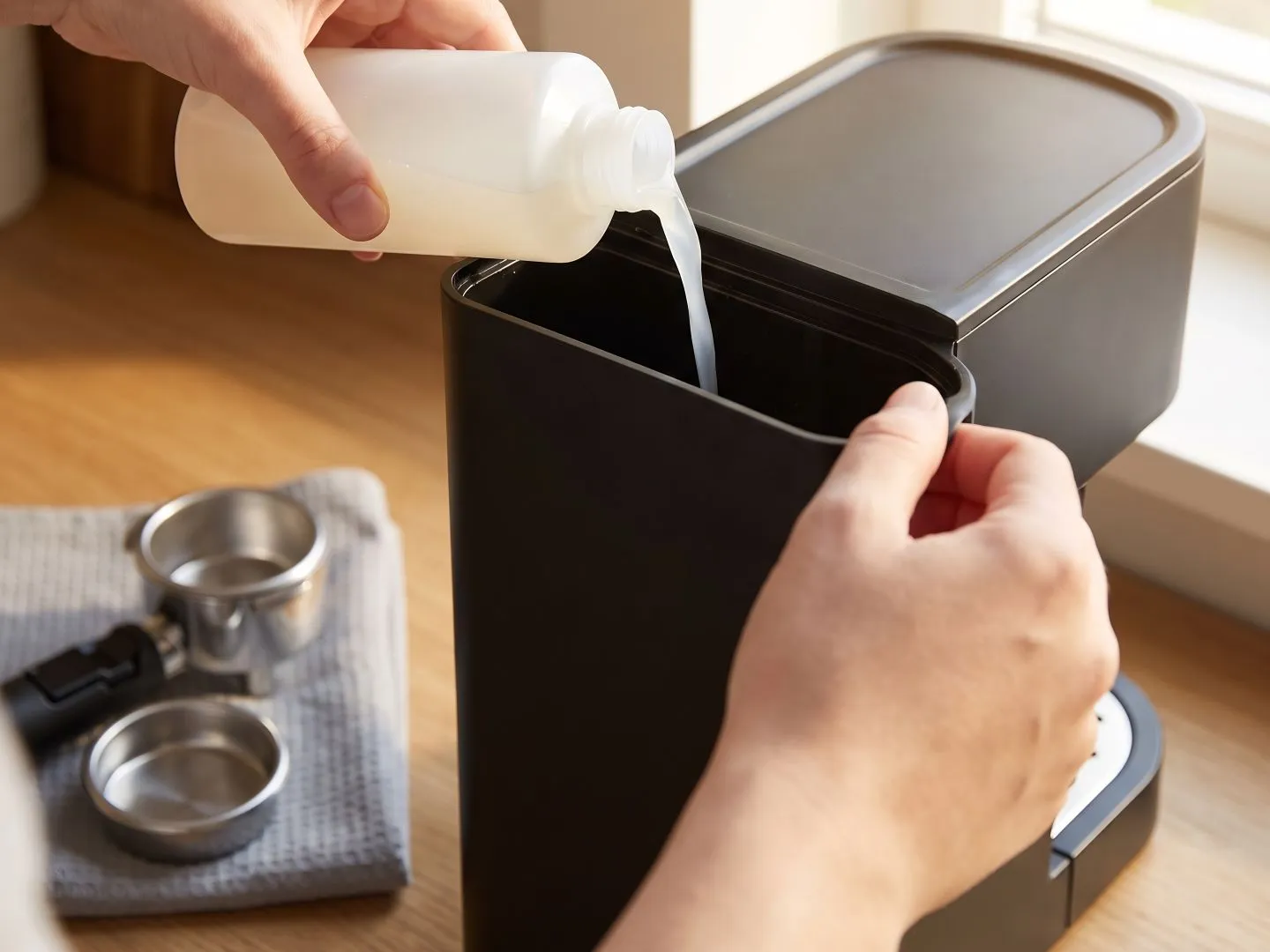
    Pouring a descaling solution into the water tank of an espresso machine

    A precise sequence of preparation, application, and rinsing ensures complete scale removal without damaging internal parts. Follow these steps for a featured-snippet-ready descaling cycle.

    What Preparations Are Needed Before Descaling?

    Begin by draining the water tank, removing any inline filter cartridges, and emptying the drip tray. Ensure the portafilter holder and steam wand are clear of residual water or milk. This prevents contamination of the descaling solution and protects your drain from solid deposits.

    How Do You Mix and Apply the Descaling Solution?

    Measure the recommended descaler volume and mix with warm water in the reservoir, following manufacturer guidelines. A typical ratio is one tablet or 30 ml of liquid solution per liter of water. Pour the mixture into the machine’s tank and secure the lid.

    What Are the Key Steps in Running the Descaling Cycle?

    1. Activate the descaling program or manually run water through the brew head until the tank is half empty.

    2. Flush the steam or water wand by opening it intermittently to allow solution into the boiler.

    3. Pause the cycle for 10–15 minutes to let acids penetrate scale layers.

    4. Complete the descaling run until the tank is empty.

    These actions remove deposits from all water-contacting passages and ensure internal surfaces are treated. Review the detailed instructions for each machine type.

    How Do You Rinse and Finish the Descaling Process?

    Remove and thoroughly rinse the water reservoir. Refill the water tank with fresh water and repeat the brew-head and steam-wand rinse cycle at least twice. This thorough flushing removes any acid residue, preserving coffee flavor and protecting seals. After final rinse, wipe external surfaces and reset your machine’s descaling indicator.

    How Do You Descale Different Types of Espresso Machines?

    Each machine architecture requires tailored handling to avoid damage and maximize scale removal.

    What Is the Best Descaling Method for Semi-Automatic Machines?

    Semi-automatic models need descaling solution run through the group head only, with manual soaking in removable boiler units if accessible. Use the procedure above but monitor water flow manually and adjust pause intervals to ensure the group head channels clear completely.

    How to Descale Super-Automatic Espresso Machines Safely?

    Super-automatic machines incorporate automatic rinsing programs. Engage the built-in descaling cycle via the control panel, ensuring you use the manufacturer-approved solution. Bypass the grinder by removing beans to avoid contamination, and follow on-screen prompts for steam-wand and milk-circuit treatment.

    What Are the Steps for Descaling Heat Exchange Espresso Machines?

    Heat exchange boilers demand gradual acid exposure to prevent thermal shock. Start with lukewarm solution, run partial cycles, and allow the machine to rest with the solution in place before completing the process. After descaling, perform additional back-flush steps with a blind portafilter to clear the group-head loop thoroughly with descaling solution.

    What Are Common Descaling Problems and How Can You Troubleshoot Them?

    Even well-executed descaling cycles can encounter issues that require targeted fixes.

    Why Does the Descale Light Stay On After Descaling?

    If the indicator remains lit, the machine’s scale sensor may detect residual deposits or the counter wasn’t reset. Run an extra rinse cycle and manually reset the maintenance counter per your machine’s instructions to clear the alert.

    What to Do If the Descaling Solution Does Not Flow Properly?

    Restricted flow often indicates severe buildup or a clogged line. Reduce solution viscosity by adding warm water, then run short cycles and increase pause intervals. If flow remains poor, consult a technician for internal cleaning or filter replacement.

    How to Fix Poor Coffee Taste After Descaling?

    Acid residue can linger and affect flavor. Perform at least two full water-only flush cycles, brew several blank shots, and purge the steam/water wand thoroughly until no sour aroma remains. Re-prime the boiler by running a short brew-head cycle before brewing espresso.

    How Can You Prevent Limescale Buildup and Extend Machine Lifespan?
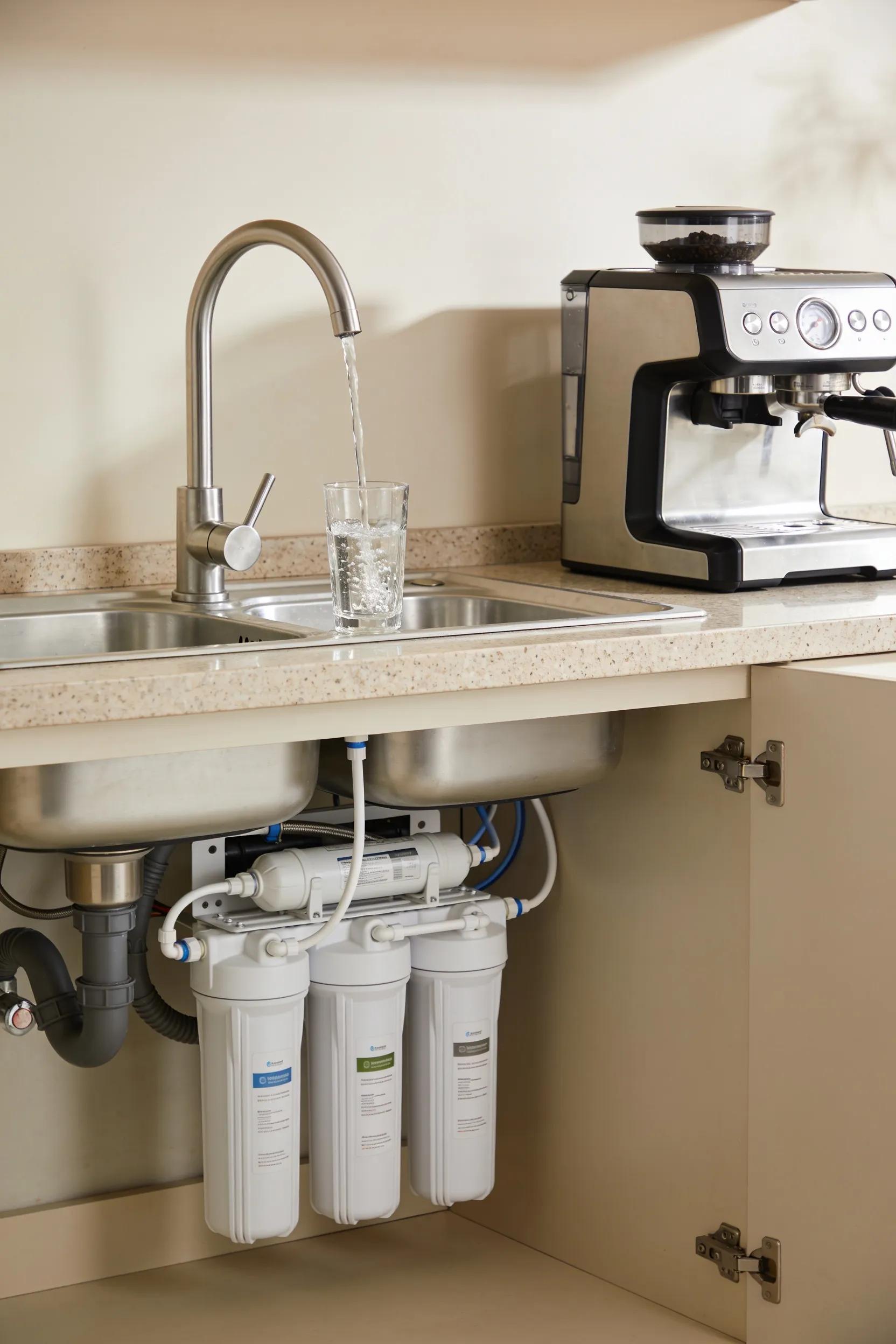
    Water filtration system under a kitchen sink with filtered water coming out of the faucet and an espresso machine on the counter top

    Proactive measures reduce the frequency of full descaling and support consistent coffee quality.

    How Does Water Filtration Help Prevent Limescale?

    Inline water filters or proprietary systems can reduce hardness minerals before they enter the boiler. By capturing calcium and magnesium ions, filtered water slows scale formation and extends descaling intervals.

    What Daily Cleaning Practices Support Limescale Prevention?

    Flushing the group head and steam wand after each use clears residual water, coffee oils, and milk deposits. Wiping the portafilter gasket and removing drip-tray overflow ensures no standing water remains to deposit minerals overnight.

    How Does Regular Descaling Improve Energy Efficiency and Coffee Quality?

    Consistent removal of mineral films restores heat transfer efficiency, reducing cycle times and energy consumption. Clean internal passages maintain optimal extraction pressure and temperature stability, delivering balanced flavors shot after shot.

    Regular descaling and preventative care protect your investment in a high-quality espresso machine and maximize the performance of the grinders and accessories you choose from 1st-line.com. By integrating these maintenance rituals into your routine, you’ll enjoy a lifetime of flavorful, reliable espresso.
  • Best Compact Espresso Machines for Small Spaces: Expert Guide to Choosing the Perfect Small Espresso Machine

    Best Compact Espresso Machines for Small Spaces: Expert Guide to Choosing the Perfect Small Espresso Machine

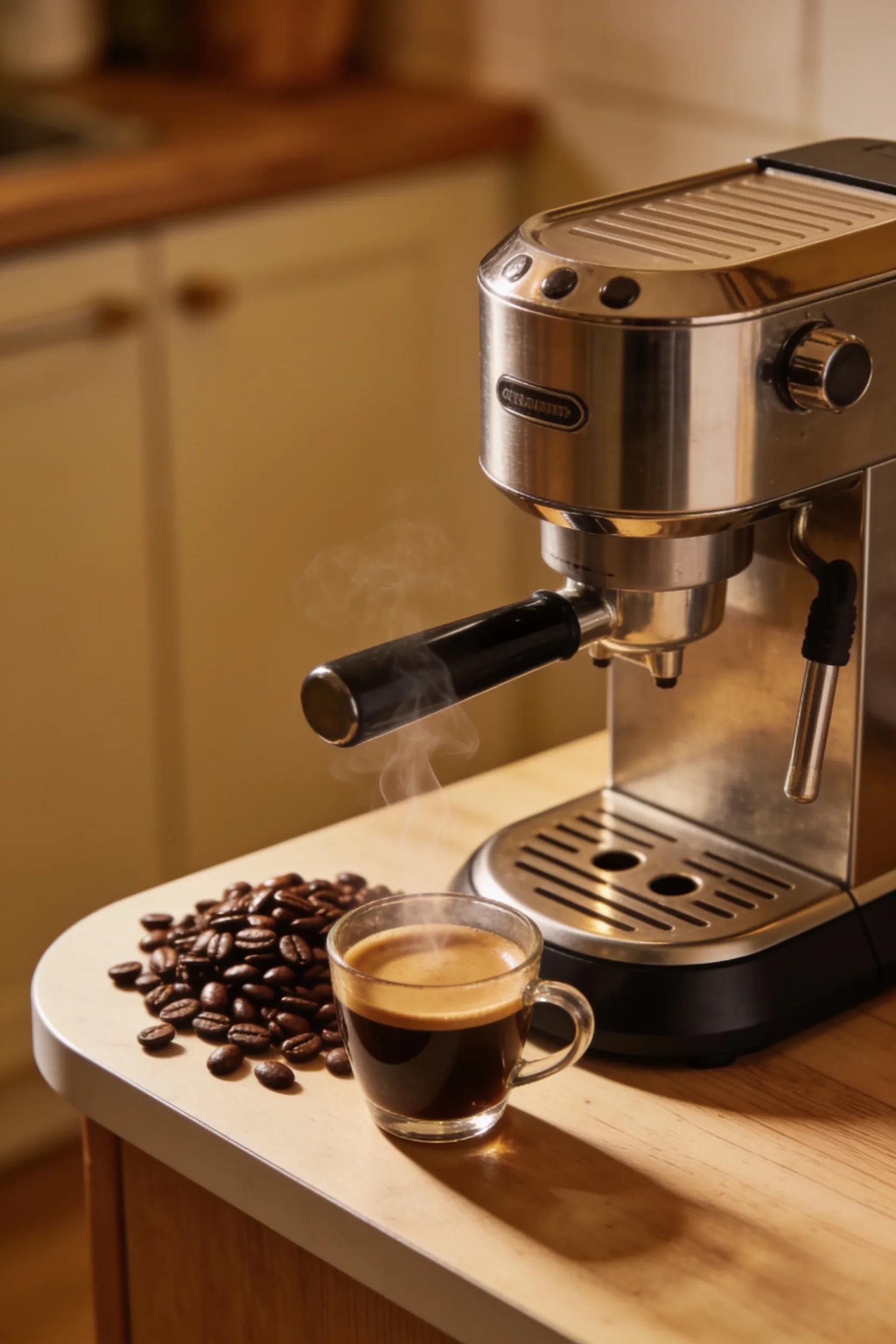
    Compact espresso machine on a small kitchen countertop with coffee beans and a steaming cup of espresso

    Compact espresso machines deliver café-quality shots in environments where counter space is scarce, blending professional performance with streamlined dimensions to transform tiny kitchens, apartments, and workstations into premium coffee stations. In this guide, you’ll discover why a small footprint espresso machine enhances efficiency, which features matter most when space is limited, our top picks for 2026-2027 models, pairing recommendations for compact grinders, step-by-step coffee station setup strategies, common considerations reimagined, and a decision framework to match the ideal mini maker to your specific environment. Whether you’re a home enthusiast, pro barista, café owner or mobile coffee vendor, you’ll gain actionable insights to maximize your espresso experience without sacrificing quality or style.

    Why Choose a Compact Espresso Machine for Small Kitchens in Apartments and Small Shared Workspace?

    A compact espresso machine is a semi-automatic or automatic brewer engineered to occupy minimal counter area while delivering consistent pressure, temperature control, and frothing capabilities. By reducing width, depth, and height, these machines free up valuable workspace and blend seamlessly into constrained environments, such as apartment galley kitchens or work desks. For example, a model under 8 inches high can sit comfortably beneath overhead cabinets, enabling both utility and design harmony in tight quarters.

    Compact machines reduce clutter while supporting professional-grade brewing, laying the groundwork to explore the key benefits in detail.

    What Are the Benefits of a Small Footprint Espresso Machine?

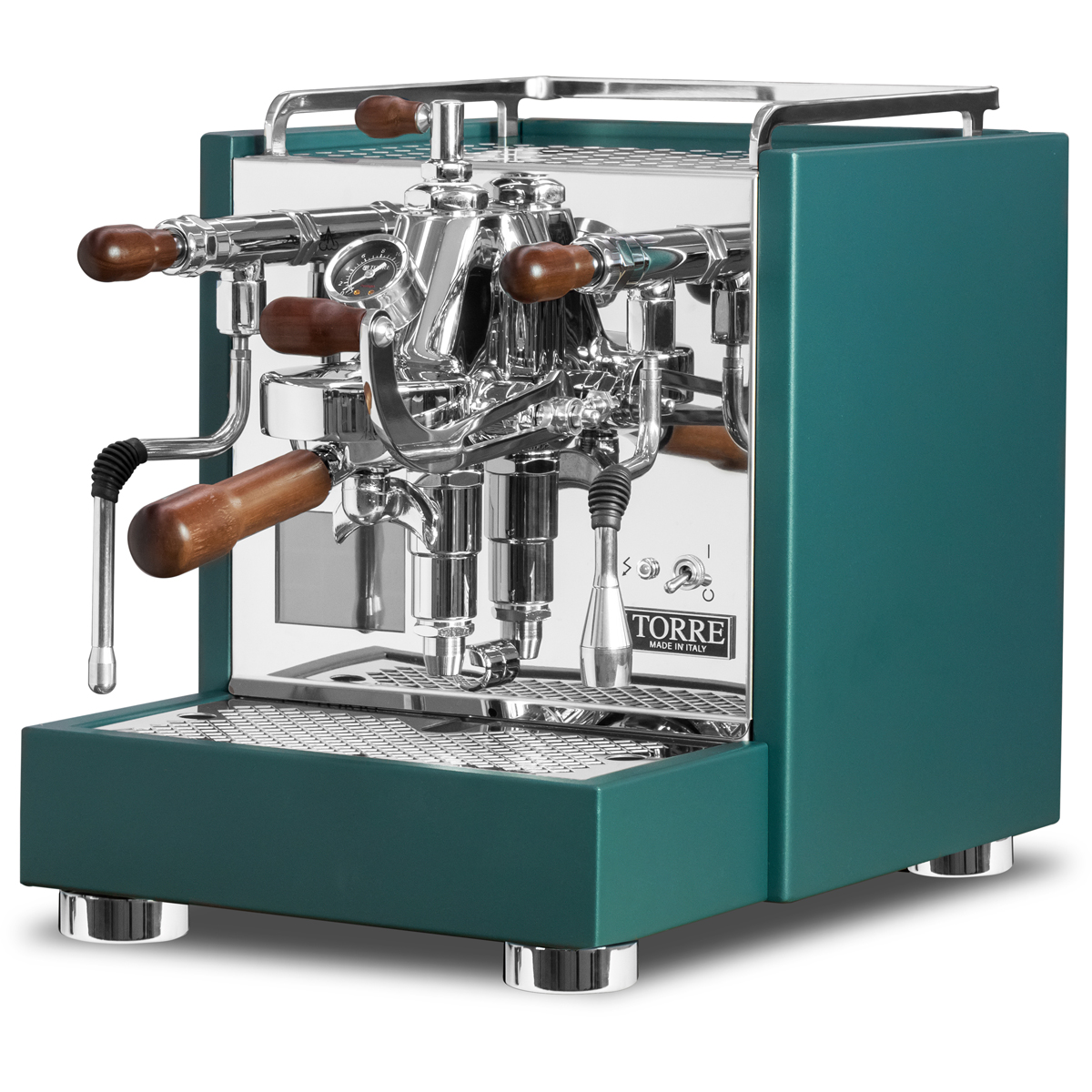
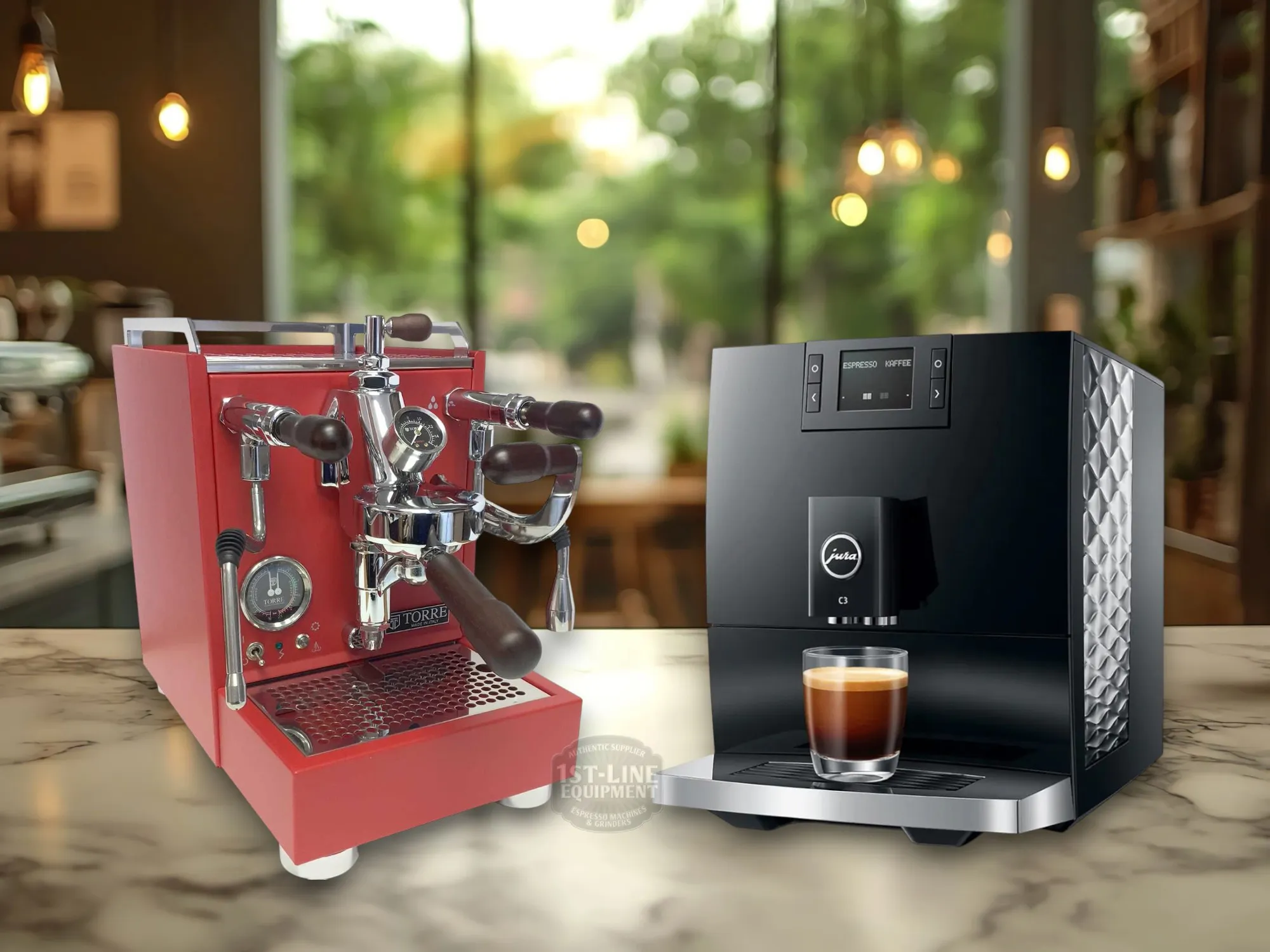
    Two compact small footprint espresso machines Torre Luigino HX in red and Jura C3 in black

    Before diving into model comparisons, consider three core advantages that small-footprint brewers deliver:

    1. Space Optimization – A narrow chassis and shallow depth ensure cabinets and wall cupboards remain accessible.

    2. Energy Efficiency – Rapid heat-up systems minimize idle power draw, reducing energy consumption by up to 30% compared to full-size boilers.

    3. Aesthetic Integration – Sleek profiles and minimalist controls enhance modern décor without overwhelming compact kitchens.

    These benefits collectively elevate daily routines, guiding the selection of features that maintain quality while maximizing space savings.

    How Do Compact Espresso Machines Save Space Without Sacrificing Quality?

    Compact design strategies trim chassis dimensions but preserve essential components—namely a 9-11-bar pump, precision PID, and a commercial-style portafilter.

    [The Science of Espresso Extraction]

    Espresso machines use a 15–20 bar pump to force hot water through finely-ground coffee, creating the characteristic crema and rich flavor of espresso. The pressure and temperature are crucial for optimal extraction, which is the process of dissolving the coffee’s soluble compounds into the water. This process is what gives espresso its unique taste profile.

    • Reduced chassis size is achieved through ThermoJet or thermoblock heating systems that forgo bulky boilers on some models.

    • Integrated PID controllers ensure temperature stability comparable to dual-boiler machines.

    • Fold-away steam wands and removable drip trays accommodate taller cups when needed.

    By embedding professional components into a lightweight frame, these machines deliver café-quality extraction in minimal cubic inches.

    Who Should Consider a Compact Espresso Machine?

    Compact espresso machines cater to diverse user profiles seeking café performance in constrained settings:

    • Urban apartment dwellers craving barista-level espresso on limited counters.

    • Home work or coworking spaces requiring streamlined equipment.

    • Pop-up stands, coffee truck, and coffee cart vendors needing portable, powerful brewers.

    • Prosumer enthusiasts wanting advanced features without a large footprint.

    Understanding your environment and usage frequency will inform which model aligns with your spatial and performance requirements.

    What Key Features Define the Best Compact Espresso Machines?

    Optimal compact espresso machines balance physical dimensions with brewing integrity, frothing ease, and maintenance simplicity. Look for five critical attributes:

    1. Dimensions & Footprint – Explicit width, depth and height should match your intended counter space.

    2. Brewing System – A 9-11-bar pump coupled with a thermoblock or ThermoJet heater ensures rapid, consistent heating. Boilers require longer heating, but can be more temperature stable.

    3. Milk Frothing – Manual steam wands versus automatic frothers impact microfoam quality and user control.

    4. Water Tank Capacity – A removable reservoir sized for daily use reduces refilling frequency in small spaces.

    5. Grinder Integration – Deciding between a built-in grinder and a separate compact grinder influences noise, maintenance, and countertop layout. Built-in grinders an absorb heat from machine and beans may be preheated to offer inferior flavor.

    Evaluating these features side by side prepares you to make an informed choice that suits both your space constraints and brewing aspirations.

    These measurements anchor expectations for under-cabinet clearance and countertop footprint, ensuring the chosen machine integrates seamlessly into your unique setting.

    How Important Are Milk Frothing Capabilities in Mini Espresso Makers?

    Milk texturing options vary by design:

    • Manual Steam Wand – Offers complete control over microfoam quality but requires some technique.

    • Automatic Frother – Delivers consistent, user-friendly frothing at the push of a button, ideal for beginners. Downside may be steamed milk is not hot enough.

    [Milk Frothing and Microfoam]Manual steam wands and automatic frothers create microfoam, which is essential for the texture of milk-based espresso drinks. The quality of the microfoam depends on the technique used with a manual wand or the settings of an automatic frother. Proper milk texturing is key to the overall experience of espresso beverages.

    Choosing between manual and automatic depends on your skill level and the style of beverages you prefer to craft.

    What Role Does Water Tank Capacity Play in Space-Saving Machines?

    A removable tank between 37–61 oz balances refill frequency and compact form factor. In tight quarters, a slim, front-access reservoir that slides out prevents awkward corner maneuvers, ensuring quick top-ups without disassembling equipment.

    Rapid heat-up accelerator for near-instant shots.

    • Automatic steam wand with adjustable milk temperature.

    • 1.9 L removable tank with front access.

    These features deliver barista-grade performance while fitting beneath low cabinets, making it our top recommendation for balanced speed, quality, and size.

    What Makes Casabrews CM5418 the Best Value Compact Espresso Machine?

    Casabrews CM5418 combines a 20-bar Italian pump with a stainless steel thermoblock in a sub-8-inch width chassis:

    • High-pressure extraction for rich crema.

    • Durable stainless steel housing (body and framing).

    • Simple knob controls for intuitive operation.

    This model supports daily espresso needs at an entry-level price, offering professional features without premium costs.

    How Does the Torre Luigino HX Stand Out as a Slim Profile Pick?

    The Torre Luigino HX espresso machine with flow control pairs a heat-exchanger boiler with a narrow chassis, allowing simultaneous espresso extraction and steam production without the wait time of single-boiler designs:

    • Heat-exchanger system for near-instant switching between brewing and steaming.

    • Slim, vertical-oriented housing suited to tight countertop runs.

    • Stainless steel construction for durability and heat retention.

    Its slim profile and dual-function heating make it a strong fit for users who want faster milk-based drink preparation without expanding their counter footprint.

    Why Choose the Jura C3 for Prosumer Compact Espresso Needs?

    The Jura C3 Super-Automatic Espresso Machine integrates automatic bean-to-cup brewing into a compact frame, catering to advanced users who want consistency without manual intervention:

    • One-touch preparation of espresso and coffee specialties via Pulse Extraction Process (P.E.P.) for full flavor extraction.

    • Integrated ceramic disc grinder for precise, low-noise grinding directly before each brew.

    • Height-adjustable spout and intuitive rotary selector for streamlined operation.

    Prosumer brewers will appreciate the high-end automation and repeatable quality the Jura C3 delivers in a small form factor.

    What Are the Durability Benefits of the Rancilio Silvia Compact Classic?

    The Rancilio Silvia delivers commercial-grade components in a compact footprint:

    • Brass boiler for stable temperature retention.

    • Professional portafilter and steam wand assembly.

    • Sturdy stainless steel exterior built to last.

    Its robust build quality ensures years of reliable service, especially in low-use environments like food trucks and home cafés.

    How to Pair Your Compact Espresso Machine with the Right Grinder for Small Spaces?

    Achieving café-quality espresso begins with precise grind consistency. A dedicated compact grinder optimizes shot flavor and maximizes counter flexibility.

    Which Compact Coffee Grinders Are Best for Small Espresso Machines?

    Three stand-alone grinders excel in minimal footprint and grind performance:

    • Quamar Nemo QE – Flat burrs, low-RPM motor to minimize heat transfer, electronic dosing control, compact footprint.

    • Eureka Mignon Zero – Flat burrs, compact footprint, stepless micrometric adjustment for precise espresso grinding.

    • Baratza Sette 270 – Three-wave burr design, 270 g hopper.

    What Are the Advantages of Using a Separate Grinder vs. Built-in Grinder?

    Standalone grinders offer:

    1. Superior Grind Consistency – Dedicated burr geometry tuned for espresso.

    2. Modular Flexibility – Position grinder independently for ergonomic workflow.

    3. Ease of Maintenance – Simplified burr replacement and cleaning.

    4. No Heating of Beans – Beans are not exposed to the heat generated by the boiler in espresso machinew with integrated grinders.

    Built-in grinders save countertop count but often sacrifice grind flexibility and serviceability.

    How to Optimize Grinder Settings for Compact Espresso Machines?

    To refine grind size and shot quality:

    • Start at a fine setting (equivalent to table salt) and adjust by one notch based on flow rate.

    • Aim for a 23–27 second extraction for a 2 oz shot.

    • Calibrate burr alignment regularly to maintain uniform particle size.

    These adjustments ensure your compact machine brews with maximum flavor clarity and crema stability.

    How Can You Set Up an Efficient Small Space Coffee Station?

    Designing a compact coffee station maximizes workflow and visual appeal while safeguarding machine longevity.

    What Are the Best Space-Saving Accessories for Compact Espresso Machines?

    • Slim Tamping Mat – Protects surfaces while compact enough to store upright.

    • Stackable Shot Glass Set – Nesting design reduces drawer footprint.

    • Stainless Steel Knock Box – Fast pivot for spent puck disposal without extra counter depth.

    How to Organize Your Coffee Station in Apartments, Offices, and Coffee Trucks?

    Efficient station layouts share common principles:

    • Vertical Storage – Install floating shelves above your machine for cups and supplies.

    • Dedicated Zones – Group grinders, beans, and tools in designated areas to speed workflows.

    • Mobile Carts – Use compact carts with lockable castors for food trucks or multi-use spaces.

    Implementing these strategies transforms tight counters into optimized coffee hubs.

    What Maintenance Practices Keep Compact Machines Running Smoothly in Tight Spaces?

    Routine care prevents breakdowns and preserves quality:

    1. Daily Backflush – Use detergent-free cycles to clean the group head. Backflush with detergent every 50 extractions.

    2. Descaling – Run a citric-acid solution to remove mineral buildup dependent upon water hardness.

    3. Monthly Gasket Check – Inspect and replace group head seals for consistent pressure.

    Consistent maintenance extends machine lifespan and protects your investment.

    What Are the Most Frequently Asked Questions About Compact Espresso Machines?

    Compact espresso buyers often ask similar questions about size, integration, and sustainability. Understanding these concerns guides smarter purchases and setup strategies.

    What Is the Smallest Espresso Machine Suitable for Home Use?

    Ultra-mini machines include capsule-based brewers like the Nespresso Essenza Mini and compact semi-automatics such as the Breville Bambino Plus. Both occupy under 7 inches of width and deliver efficient, high-pressure extraction suitable for one-cup routines.

    Do Compact Espresso Machines Require a Separate Grinder?

    While some compact models feature built-in grinders, a separate grinder typically provides better grind consistency and flexibility. A dedicated burr grinder also reduces heat transfer and vibration within the espresso unit, preserving shot flavor and machine longevity.

    Which Brands Offer the Best Compact Espresso Machines for Small Kitchens?

    Leading brands include Breville, Jura, Casabrews, Torre, and Rancilio. Each manufacturer combines space-saving design with signature features—ThermoJet heating, thermoblock systems, PID control, and commercial-grade portafilters—tailored to specific user needs and environments.

    How Do Energy Efficiency and Sustainability Impact Compact Espresso Machines?

    Advanced heating elements like ThermoJet and smart standby modes minimize both water and power usage. Sustainable materials, such as recycled stainless steel panels and BPA-free reservoirs, reduce environmental impact while maintaining top-tier performance in compact housings. However, fast heating systems cannot keep up with back-to-back espresso extractions.

    How to Choose the Best Compact Espresso Machine for Your Specific Small Space?

    Selecting the optimal mini maker hinges on matching technical specifications to your environment and usage patterns. Focus on key factors to frame your final decision.

    What Factors Should You Consider for Apartment vs Office Desk Espresso Machines?

    1. Counter Clearance – Measure under-cabinet height for ignition clearance.

    2. Noise Tolerance – Choose low-noise, rotary pumps in shared workspaces.

    3. Usage Frequency – Larger tanks suit home routines; single-serve pods may suffice for occasional workspace use.

    These considerations ensure your machine adapts to both physical and social constraints.

    How to Balance Budget and Features When Buying a Mini Espresso Maker?

    Weigh essential performance attributes against price:

    • Core Extraction – Ensure a 9-11-bar pump and reliable temperature control.

    • Frothing Requirements – Manual wands cost less; automatic systems add convenience at premium price.

    • Build Quality – Stainless steel bodies may increase cost but yield long-term durability.

    By prioritizing must-have features, you invest where it matters most.

    What Are the Pros and Cons of Semi-Automatic vs Automatic Compact Machines?

    • Semi-Automatic Greater control over extraction and manual pre-infusion. Requires barista technique and time investment.

    • Automatic One-touch brewing and frothing for consistent results. Less tactile engagement for enthusiasts seeking hands-on experience.

    Your skill level and beverage preferences will determine which control style aligns best with your small-space setup.

    Compact espresso machines revolutionize small kitchens, workspaces, and mobile operations by combining professional-grade components with space-saving designs. By assessing dimensions, heating systems, frothing controls, and grinder options alongside your environment and budget, you can pinpoint the ideal machine that harmonizes performance and practicality. Ready to elevate your compact coffee experience? Explore our curated selection of top-rated espresso machines and grinders at 1st-line.com to find your perfect fit.

  • Master Latte Art Techniques for Stunning Espresso Creations: How to Make Latte Art at Home with Expert Milk Frothing and Equipment Guidance

    Master Latte Art Techniques for Stunning Espresso Creations: How to Make Latte Art at Home with Expert Milk Frothing and Equipment Guidance

    Can mastering latte art transform your morning espresso into a café-quality masterpiece? Discover professional barista tips for latte art techniques that bridge foundational principles, beginner patterns, advanced pours, essential equipment selection, milk frothing mastery, and home-practice strategies—all in one comprehensive guide. Whether you’re refining your microfoam, perfecting a heart or rosetta, or choosing the right grinder and steam wand, this article unifies every aspect of latte art to elevate your at-home espresso experience and support your journey with expert equipment insights from our sponsor 1st-line.com.

    What Are the Essential Foundations for Mastering Latte Art?

    Mastering latte art depends on a perfectly extracted espresso base, silky microfoam, and the right set of tools, ensuring each pour yields clear contrast, stable texture, and lasting visual appeal. Building these foundations promotes consistent designs and empowers you to tackle beginner and advanced patterns alike.

    How Does Espresso Crema Affect Latte Art Quality?

    Espresso crema is the golden-brown emulsified coffee oils that float atop a fresh shot, acting as the canvas for latte art by providing contrast and holding microfoam in place. Rich crema forms through proper grind size, tamp pressure, and water temperature, and it enhances pattern clarity while supporting the milk layer’s stability. For example, a dense crema from a precision grinder yields sharper heart outlines and smoother rosetta patterns.

    Brown, C., Coffee Brewing Techniques (2023)

    [Espresso Crema and Design Clarity]

    Studies have shown that the quality of espresso crema significantly impacts the clarity and definition of latte art patterns. A dense and stable crema, achieved through proper grinding and extraction, provides a contrasting canvas for the microfoam, allowing designs to be more visible and hold their shape. The research highlights the importance of the espresso base in achieving the desired visual effect.

    This research supports the article’s discussion on the role of espresso crema in creating effective latte art.

    What Is Microfoam and Why Is It Crucial for Latte Art?

    Barista steaming milk to create microfoam for latte art

    Microfoam is finely aerated milk with uniform, velvety bubbles that integrate seamlessly into espresso, creating a cohesive canvas for pour techniques and preventing design break-up. Introducing steam slowly into cold milk denatures proteins and disperses air, resulting in a glossy, ribbon-like texture that highlights contrast and sustains crisp patterns. Practically, microfoam preserves the symmetry of a tulip or rosetta by resisting separation during the pour.

    Smith, A., Journal of Culinary Science (2022)

    [The Science of Milk Frothing]

    Research indicates that the creation of microfoam, essential for latte art, relies on the denaturation of milk proteins through the introduction of steam. This process results in the formation of small, uniform bubbles that contribute to the velvety texture and stability of the foam, allowing for the creation of intricate designs. The temperature of the milk and the technique used in steaming are critical factors in achieving the desired microfoam consistency.

    This research supports the article’s emphasis on the importance of microfoam and proper steaming techniques for successful latte art.

    Which Tools Are Essential for Creating Stunning Latte Art?

    Essential tools for latte art including espresso machine, grinder, and frothing pitcher

    Creating consistent latte art requires an espresso machine with a controllable steam valve, a precision grinder for uniform crema, and a well-designed milk frothing pitcher for controlled pours. These three tools form the core toolkit enabling repeatable temperature control, microfoam quality, and pour accuracy.

    1. Espresso machine with adjustable steam pressure

    2. Burr grinder offering fine and consistent particle size

    3. Stainless steel pitcher with pointed spout and comfortable handle

    A seamless interaction among these tools ensures each pour builds on a solid foundation, preparing you to explore more advanced equipment features.

    How Do Espresso Machines with Powerful Steam Wands Enhance Latte Art?

    Espresso machines equipped with high-pressure steam wands produce consistent, high-velocity steam that denatures milk proteins more efficiently, embedding micro-bubbles and achieving stable microfoam. Adjustable steam pressure and temperature controls enable precise texturing for different milk types, while a well-insulated boiler maintains consistent steam output. This level of control yields fine-textured milk that pours smoothly without large bubbles, enhancing pattern detail and durability.

    How Can Beginners Learn Basic Latte Art Designs?

    Basic latte art designs introduce home baristas to simple pour mechanics and visual strategies, building confidence through patterns like hearts, tulips, and rosettas. Mastering these foundational shapes establishes muscle memory, refines milk-espresso integration, and sets the stage for more intricate free-pour techniques.

    What Are the Step-by-Step Instructions for Pouring a Heart Latte Art?

    1. Pull a 1–1.5-ounce shot of espresso with creamy crema.

    2. Steam 4–6 ounces of whole milk to 55–60 °C with a whirlpool motion.

    3. Begin pouring from 1 inch above the cup’s edge to mix milk and crema evenly.

    4. Lower the pitcher spout to cup level and center the pour, creating a white circle.

    5. Once the circle fills, draw the pitcher back in a quick motion to form the heart’s tip.

    Perfecting heart pours lays the groundwork for layered patterns like tulips and rosettas.

    How Do You Create a Simple Tulip Latte Art Design?

    1. Pour a small heart at the cup’s center as in step 3 above.

    2. Move the pitcher back and pour a slightly larger heart above the first.

    3. Repeat for a third heart, aligning each shape vertically.

    4. Finish with a swift pull-through to sharpen the design’s stem.

    What Is the Rosetta Latte Art and How Can Beginners Master It?

    1. Start with a steady spiral pour from 1 inch above, moving the pitcher in a slight side-to-side motion.

    2. Maintain a consistent pour speed to form parallel lines of microfoam.

    3. Lower the pitcher spout near the cup surface as the leaf forms.

    4. Pull the stream through the center to define the stem, completing the pattern.

    Rosetta practice solidifies your ability to modulate wrist movement and flow rate.

    What Common Mistakes Should Beginners Avoid When Pouring Latte Art?

    • Pouring too fast, which breaks crema and causes large bubbles.

    • Holding the pitcher too high, leading to weak contrast and splashing.

    • Incorrect milk temperature, resulting in overly thin or thick foam.

    • Uneven pitcher tilt, which skews pattern symmetry.

    Avoiding these errors accelerates learning and leads to cleaner, more defined art.

    What Advanced Latte Art Techniques Can Elevate Your Espresso Creations?

    Advanced latte art techniques combine intricate pours, multi-layered designs, and alternative milks, expanding creativity and visual complexity. Mastery of free-pour control, troubleshooting finesse, and adaptability to plant-based milks enables baristas to craft signature patterns that stand out.

    How Do You Master Free Pour Latte Art for Complex Designs?

    1. Practice smooth lift-and-lower motions to shape petals and hearts seamlessly.

    2. Vary wrist speed to modulate line thickness and branching angles.

    3. Combine multiple pattern layers—hearts, rosettas, ribbons—into cohesive designs.

    Consistent microfoam and steady hands allow fluid transitions between elements.

    What Are Effective Troubleshooting Tips for Common Latte Art Problems?

    Many latte art issues stem from crema breakdown, inconsistent foam, or pouring errors. The table below identifies frequent problems and solutions.

    Issue

    Root Cause

    Fix

    Blurred edges

    Too much air in foam

    Lower steam wand, create gentler whirlpool

    Large bubbles

    Over-aeration during steaming

    Submerge tip deeper, reduce steam pressure

    Pattern collapse

    Incorrect pour height or speed

    Start high then lower gradually, steady pace

    Weak contrast

    Thin crema or diluted microfoam

    Adjust grind finer, focus on foam density

    Resolving these core issues refines your technique and supports advanced design stability.

    How Can You Create Latte Art Using Alternative Milks Like Oat or Almond?

    Alternative milks demand modified steaming and pouring strategies due to lower protein content:

    • Oat milk benefits from 58–62 °C steaming and slightly faster pours to prevent separation.

    • Almond milk requires gentler aeration and minimal steam time to avoid curdling.

    • Combining a dash of whole milk can enhance your almond or oat blend for improved foam stability.

    Adapting temperature, aeration rate, and pour timing ensures clear patterns with plant-based alternatives.

    Which Equipment Is Best for Achieving Professional Latte Art Results?

    Selecting top-tier equipment with precise controls and robust components directly impacts latte art quality, enabling baristas to reproduce café-level patterns consistently and efficiently. Check out our sponsor, www.1st-line.com for authentic espresso machines.

    What Are the Best Espresso Machines for Latte Art and Their Key Features?

    High-performance machines for latte art combine stable boiler systems, precise temperature management, and powerful steam wands.

    Product

    Feature

    Benefit

    Dual-boiler machines

    Independent brew/steam boilers

    Consistent steam while pulling shots

    PID-controlled espresso machine

    Digital temperature control

    Exact thermal stability for crema

    Heat-exchange models

    Rapid steam recovery

    Minimal downtime between pours

    These configurations deliver unwavering steam pressure and shot consistency, elevating your latte art performance.

    How Does Coffee Grinder Quality Impact Espresso Crema and Latte Art?

    A precision grinder produces a uniform particle distribution, promoting even extraction and rich crema necessary for stable microfoam integration. Fine adjustment mechanisms prevent channeling and support bold contrast in pour patterns. Consistency in grind size directly correlates to crema thickness and design clarity.

    What Should You Look for in Milk Frothing Pitchers for Latte Art?

    Choosing the right pitcher maximizes control over foam texture and pour accuracy.

    Material

    Spout Design

    Consistency Outcome

    Stainless steel

    Narrow, pointed

    Smooth, precise stream

    Insulated handle

    Ergonomic grip

    Stable wrist support

    12 oz capacity

    Curved lip

    Balanced foam release

    A pitcher tailored for latte art enables deliberate microfoam flow and crisp design edges.

    How Do Steam Wand Types Influence Milk Frothing and Latte Art Texture?

    Manual pivot wands require skill to position the tip, offering nuanced control over aeration and whirlpool; automatic steam arms deliver consistent air injection but may limit fine-tuning. Choosing a wand with adjustable steam valves lets you customize foam density and swirl intensity, directly affecting pattern detail and microfoam sheen.

    How Do You Perfect Milk Frothing Techniques for Consistent Latte Art Microfoam?

    Consistent microfoam underpins every latte art design by ensuring uniform bubble size, optimal viscosity, and sustained contrast with espresso, enabling predictable and lasting patterns.

    What Are the Step-by-Step Milk Frothing Techniques for Velvety Microfoam?

    1. Purge steam wand to eliminate residual water.

    2. Position tip just below the milk surface to introduce fine air.

    3. Submerge wand deeper to create a centrifugal whirlpool.

    4. Monitor temperature with a thermometer until reaching 55–60 °C.

    5. Finish with a gentle swirling motion to collapse larger bubbles.

    Adhering to these steps produces microfoam ideal for all latte art pours.

    How Does Steam Wand Positioning Affect Milk Texture?

    Precise wand placement at a 15–30° angle just below the surface creates controlled air incorporation, while deeper submersion maintains circulation without large bubbles. Adjusting the angle and depth during steaming balances aeration and emulsification, ensuring consistent viscosity for pattern stability.

    What Are Tips for Frothing Milk with Different Types of Milk?

    Milk varieties require distinct approaches:

    • Whole milk yields stable foam with moderate aeration and whirlpool.

    • Low-fat milk needs slightly less steam time to avoid over-aeration.

    • Oat milk benefits from longer gentle steaming to develop creaminess.

    • Almond milk demands lower temperature and minimal air for smooth texture.

    Tailoring steam pressure, duration, and tip depth to each milk type secures optimum microfoam characteristics.

    What Are the Best Practices for Practicing and Improving Latte Art Skills at Home?

    Regular, deliberate practice using structured methods refines technique, builds muscle memory, and accelerates progress toward professional-level designs without overusing costly milk.

    How Can You Practice Latte Art Without Using Milk?

    Alternative media like warm water mixed with dish soap or non-staining paint in a pitcher simulate pour dynamics at minimal cost:

    • Soap solution replicates viscosity for heart and tulip motions.

    • Food-safe paint allows visual feedback on flow patterns.

    • Dry practice with an empty pitcher hones wrist angles and movements.

    These methods let you focus on pour mechanics before returning to real microfoam.

    What Are Pro Tips for Improving Pouring Mechanics and Design Precision?

    Enhance your technique with these pointers:

    1. Keep your wrist steady and pivot from the elbow.

    2. Use a gentle lift and tilt to modulate stream thickness.

    3. Practice mirror-image pours to reinforce muscle memory.

    4. Record video of your pours to review flow fluidity and angle.

    Applying these methods sharpens control, leading to consistently crisp patterns.

    How Can Home Baristas Track Progress and Troubleshoot Their Latte Art?

    Documenting your sessions and analyzing results accelerates improvement:

    • Photograph each pour from above to compare symmetry.

    • Note steam pressures, milk temperatures, and cup size.

    • Create a progress log tracking design success rates.

    • Review troubleshooting table entries to address persistent issues.

    Systematic tracking builds self-awareness, guiding targeted practice and equipment adjustments.

    What Frequently Asked Questions Do Latte Art Beginners Have?

    Latte art beginners often wonder how to start simple pours, choose the best milk, and diagnose common issues—questions that reveal core challenges and shape effective learning pathways.

    How Do You Make Latte Art for Beginners in Simple Steps?

    Start by pulling a balanced espresso shot, steaming milk to a glossy microfoam, pouring from a height to blend layers, lowering the pitcher to build pattern contrast, and finishing with a smooth pull-through. These concise steps form a reliable template for heart and tulip designs.

    What Kind of Milk Is Best for Latte Art and Why?

    Whole milk is best for latte art because its ideal protein and fat content produce stable microfoam with a creamy texture, supporting clear contrast and lasting patterns. Oat milk serves as the top non-dairy alternative due to its natural sweetness and effective foam retention.

    Can You Do Latte Art with Any Espresso Machine?

    Yes, you can create latte art on most machines, but quality varies—machines with precise temperature control, adequate steam pressure, and consistent boiler performance yield superior microfoam and crema essential for pronounced designs.

    Why Is My Latte Art Not Working and How Can I Fix It?

    Latte art fails when foam lacks stability, crema is too thin, or pour technique is inconsistent. Fix this by adjusting steam wand position, refining grind size for richer crema, and practicing steady pour heights—approaches that restore contrast and pattern integrity.

    Mastering these elements equips you to refine every core aspect of latte art and achieve café-quality results at home. Elevate your coffee routine and unlock new creative possibilities by exploring premium espresso machines, grinders, and accessories designed to support advanced pouring techniques at 1st-line.com.

    Your journey from foundational principles to complex free-pour patterns is complete with practiced microfoam, precise equipment choices, and structured troubleshooting—transforming each espresso creation into a stunning visual and sensory experience. Learn more about mastering the art of frothing milk!

  • Manual Temperature Surfing on Espresso Machines

    Manual Temperature Surfing on Espresso Machines

    Key Takeaways

    • Manual temperature surfing optimizes espresso extraction on machines without PID temperature controllers like the Rancilio Silvia.

    • Baristas time their shots strategically after the boiler cycles to catch the ideal brewing temperature window.

    • Proper temperature and pressure conditions create the perfect environment for pulling consistently excellent espresso shots.

    • This analog technique requires skill and attention, transforming espresso machines into tools for precision coffee craftsmanship.

    Rancilio Silvia Miss M Single Boiler Espresso machine in stainless steel

    What Does Manual Temperature Surfing Mean?

    Manual temperature surfing describes a workflow for brewing on machines that lack an algorithmic temperature controller, or PID. Operators use the technique to estimate and time the brew temperature without digital feedback. The practice applies directly to machines like those in the single boiler category. The boiler heats past the ideal brew point before settling back down.

    1st-line Equipment carries multiple espresso machine categories, including dual boiler, heat exchange, manual and lever, single boiler, thermoblock, super automatic, and commercial grade models. Single boiler designs are the ones most likely to demand this manual approach. They cycle through wide temperature swings between heating and brewing phases. Dual boiler and PID-equipped models remove most of this guesswork by managing heat electronically.

    Why does temperature matter for espresso extraction?

    Brew temperature shapes how coffee solubles extract from the grounds, directly affecting balance and flavor. Water that is too hot pulls bitter, burnt notes; water that runs too cool produces a sour, underdeveloped shot. Temperature consistency shot to shot separates a repeatable espresso routine from one governed by chance.

    Where can home baristas learn this technique?

    Manual temperature surfing is not intuitive on first attempt, and most single boiler owners benefit from structured guidance. 1st-line Equipment provides online technical support, repair services, and diagrams for the household models it represents, giving enthusiasts a resource for learning workflows like surfing alongside proper machine upkeep.

    Why Does Boiler Heat Cycle Affect Temperature?

    A single boiler paired with a simple thermostat creates the central challenge behind an unstable espresso machine brewing environment. Thermostats cycle the heating element on and off around a fixed range. Water temperature drifts upward and downward rather than holding steady. That drift explains why identical grind settings. Dose weights still produce shots that taste sour one pull and bitter the next. Manual temperature surfing exists precisely to counter this mechanical reality, giving home baristas a way to time their shot pull against the heating cycle rather than fight it.

    What Causes Temperature Swings in a Single-Boiler Machine?

    Mineral buildup inside the boiler compounds the thermostat’s natural instability by insulating the heating element from the water itself. Scale deposits slow heat transfer and distort the timing of each cycle, making the swings harder to predict. Water treatment solutions and routine descaling reduce this buildup, helping preserve a more consistent heating pattern over months of daily use.

    How Does Analog Equipment Depend on Technique?

    Analog espresso equipment places more responsibility on the operator than digital models do. Lever machines demonstrate this principle clearly: they extract espresso through mechanical piston displacement inside the grouphead rather than an electric pump, demanding hands-on control at every stage. Temperature consistency on such equipment comes from learned routine, not automated correction, which is the same logic that governs surfing technique.

    How Can Baristas Achieve Temperature Consistency?

    Consistency comes from repetition, not luck. Baristas who follow a fixed routine before each shot give the boiler a predictable window to settle at the right brewing point. Manual temperature surfing builds that routine by timing the machine’s heating cycle. The group head reaches a similar temperature on every pull. According to How to Temperature Surf the Gaggia Classic, this practice improves shot-to-shot consistency. The barista draws each shot at a comparable temperature rather than guessing whether the boiler has overheated or cooled.

    Does Equipment Beyond the Machine Matter for Temperature Consistency?

    Precision tools matter as much as timing. A reliable scale and proper dosing accessories let baristas pair exact coffee weights with their surfing routine, removing a second variable from the equation. Without consistent dosing, even a perfectly timed espresso machine cycle produces uneven results. Grind mass and extraction time shift the ideal brewing window.

    What Role Does Water Quality Play in Long-Term Temperature Stability?

    Scale buildup is the silent enemy of stable temperature. Mineral deposits insulate the boiler and heating elements, slowing recovery and distorting the surfing timeline a barista has learned by feel. Routine cleaning and proper water treatment keep those surfaces clear, preserving accurate heat transfer for months rather than weeks.

    Three habits reinforce temperature consistency over time:

    • Following the same pre-shot cooling or surfing sequence every session

    • Weighing doses precisely with a dedicated scale

    • Descaling and treating water on a regular schedule (dependent upon water hardness)

    Together, these habits turn an analog machine’s quirks into a repeatable craft.

    FAQ

    What is manual temperature surfing?

    Manual temperature surfing is a brewing workflow for espresso machines without a PID controller, like the Rancilio Silvia. Operators time their shot pull after the boiler cycles to hit the ideal brewing temperature window without digital feedback.

    Why does temperature matter for espresso extraction?

    Brew temperature shapes how coffee solubles extract, directly affecting flavor balance. Water too hot creates bitter, burnt notes, while water too cool produces a sour, underdeveloped shot.

    What causes temperature swings in single boiler machines?

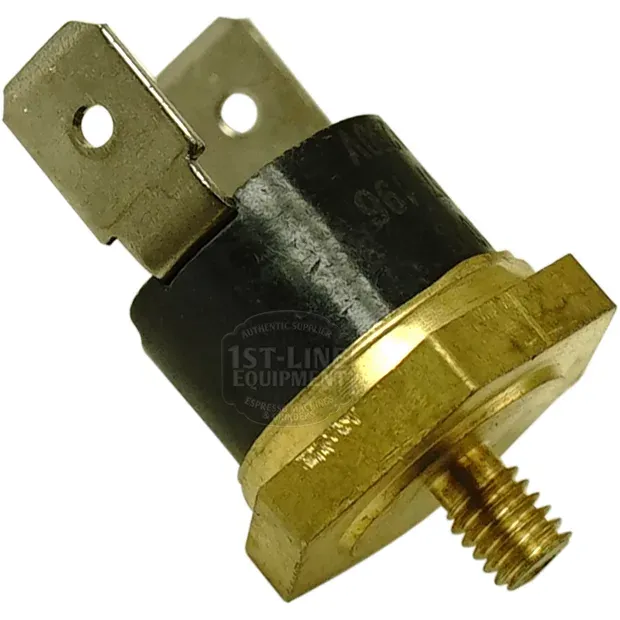
    GI.357 Coffee Thermostat for an espresso machine

    A simple thermostat cycles the heating element on and off, causing water temperature to drift rather than hold steady. Mineral buildup inside the boiler further insulates the heating element, distorting cycle timing.

    Conclusion

    In closing, manual temperature surfing represents a fundamental technique that distinguishes engaged espresso enthusiasts from casual operators. By mastering the relationship between machine heat cycles. Extraction timing, practitioners achieve measurable improvements in shot consistency and flavor development without requiring expensive dual boiler or heat exchange equipment. This method demands attention and discipline, yet it remains accessible to anyone committed to understanding their machine’s thermal dynamics and willing to invest the necessary practice to execute it reliably.

  • Single Boiler vs. Dual Boiler: Which Espresso Machine Reigns Supreme for Your Home?

    Single Boiler vs. Dual Boiler: Which Espresso Machine Reigns Supreme for Your Home?

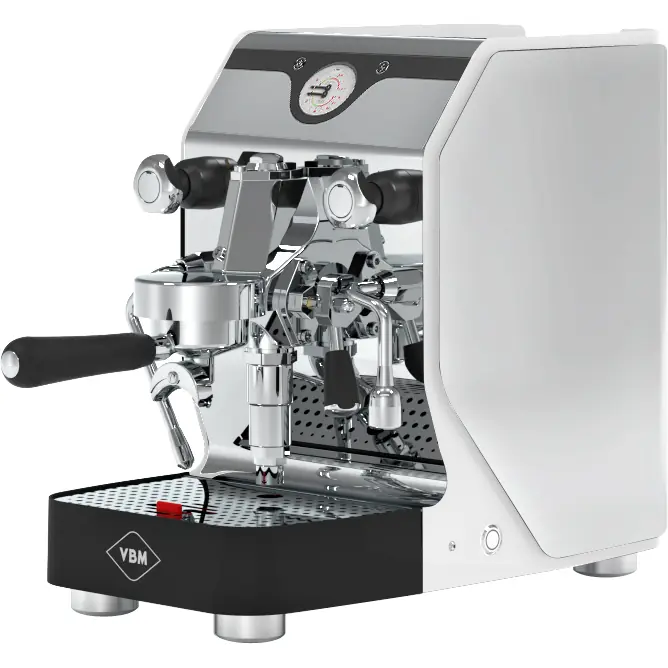
    Three espresso machines with text VBM Domobar Single Boiler PID Torre Luigino TSP HX ACS Minima Dual Boiler

    Pinpointing the perfect home espresso machine boils down to understanding how different boiler setups influence your shot’s character, your milk-steaming prowess, and your overall coffee-making rhythm. Whether you’re a budget-conscious espresso purist, a multitasking milk-drink aficionado, or somewhere in between, single boiler, dual boiler, and heat exchanger machines each bring their own unique strengths to the table. This guide will illuminate:

    • What truly defines a single boiler espresso machine and when it shines brightest

    • How dual boiler systems unlock commercial-grade precision and unwavering consistency

    • Why heat exchanger machines offer a smart, versatile middle ground

    • A head-to-head look at workflow, temperature steadiness, price tags, and spatial demands

    • Spotlighted machines—the Torre Luigino, ACS Minima, and VBM Single Boiler PID—to vividly illustrate each boiler type

    • Expert advice to help you make the smartest investment based on your coffee habits, available space, and long-term aspirations

    Grasping these boiler distinctions is your key to selecting the ultimate espresso setup for your home. Ready to explore top-tier equipment? Discover an exceptional range at 1st-line.com.

    What Exactly Is a Single Boiler Espresso Machine and How Does It Work?

    A single boiler espresso machine cleverly combines brewing and steaming functions within a single heating chamber. This means you’ll need to adjust the temperature between tasks. While this design champions affordability and straightforward operation, it requires a bit of skillful “temperature surfing” to nail both your espresso extraction and your milk frothing.

    How Does a Single Boiler Espresso Machine Operate?

    At its core, a single boiler system relies on one sealed vessel of water. It heats this water to your ideal brewing temperature (typically around 90–96 °C or 194–205 °F). Once your shot is pulled and you depress the steam switch on, the machine then ramps up the boiler’s temperature to achieve steaming levels (around 125–135 °C or 257–275 °F). Once done, depress the steam switch off and run water through the wand until the heat light indicates the boiler is heating. This sequential dance keeps the machine compact but means your workflow isn’t quite as seamless.

    What Are the Advantages of Single Boiler Espresso Machines?

    Here are three compelling reasons to consider a single boiler design:

    1. Budget-Friendly: With fewer components, single boilers are less expensive to manufacture, translating to lower retail prices for you.

    2. Space-Saving Design: Fewer parts mean a smaller footprint, making them a perfect fit for kitchens where counter space is a precious commodity.

    3. Quick to Get Started: The smaller water volume heats up rapidly, meaning you’re ready to brew sooner.

    These benefits make single boilers an excellent choice for home baristas who want great espresso without breaking the bank or sacrificing precious kitchen real estate.

    What Are the Downsides and Limitations of Single Boiler Machines?

    • Patience Required Between Tasks: After brewing, you’ll typically wait 45 seconds to 2 minutes for the boiler to reach steaming temperature, which can disrupt a busy morning routine. After steaming, run water through the boiler to bring the temperature down.

    • Temperature Juggling Act: Manual temperature surfing introduces a degree of variability, making consistent shot quality a bit more challenging.

    • Modest Steam Power: The smaller boiler size means less steam power, which can make achieving that perfect, dense microfoam for multiple drinks a bit of a stretch.

    • Manual Boiler Refill: Manual refiling of the boiler after steaming is needed to avoid damage to the heating element.

    Given these points, single boilers are often best suited for those who primarily enjoy black coffee or espresso, or have a lower volume of drinks to prepare.

    Who Should Opt for a Single Boiler Machine at Home?

    Home coffee lovers who enjoy espresso now and then, and who place a high value on affordability and counter space, will find single boiler machines incredibly appealing. If you’re an espresso purist focused on the quality of your black espresso shots or a budget-conscious individual seeking a straightforward brewing experience, a single boiler machine delivers exactly what you need without unnecessary complexity.

    How Do Dual Boiler Espresso Machines Operate and What Are Their Benefits?

    What’s the Engineering Behind Dual Boiler Espresso Machines?

    Dual boiler systems feature two distinct boilers: one meticulously calibrated for brewing temperatures (around 90–96 °C or 194–205 °F) and a separate one dedicated to steaming (around 125–135 °C or 257–275 °F). Sophisticated electronic controls, often enhanced with PID (Proportional-Integral-Derivative) regulation, ensure each boiler maintains its precise setpoint. This setup allows you to pull espresso shots and steam milk simultaneously, all without any compromise in temperature stability.

    What Are the Key Advantages of Dual Boiler Machines?

    Dual boiler systems offer:

    • Brew and Steam at Once: Effortlessly pull espresso shots while simultaneously steaming milk, eliminating any waiting time.

    • Pinpoint Temperature Accuracy: PID controllers help maintain brew temperatures, unlocking the full flavor potential of your coffee.

    • Unwavering Consistency: With independent boilers, there’s no need for temperature surfing, ensuring every shot is as perfect as the last.

    • Commercial-Grade Steam Power: The dedicated steam boiler delivers high-pressure steam, perfect for crafting velvety microfoam and stunning latte art.

    Single vs. Dual Boiler Coffee Machines: A Clear Comparison

    When comparing espresso machine boiler types, dual boiler systems stand out for their superior consistency and the distinct advantage of separate boilers for brewing and steaming. This design provides superior thermal stability and the sheer convenience of preparing both coffee and milk simultaneously at their optimal temperatures. In contrast, single boiler machines require users to pause between brewing and steaming tasks.

    This insight perfectly complements our discussion on workflow efficiency, highlighting how dual boiler machines excel at multitasking compared to the sequential nature of single boiler systems.

    What Are the Drawbacks and Considerations for Dual Boiler Machines?

    • Higher Initial Investment: The advanced hardware and sophisticated electronics naturally lead to a higher purchase price.

    • Larger Footprint: Housing two boilers requires more internal space, resulting in a more substantial machine size.

    • More Complex Maintenance: Two boilers and advanced electronics may necessitate more involved or frequent servicing.

    • Longer Warm Up Time: Two boilers using two non-simultaneous heating elements to heat up.

    Potential buyers should carefully weigh these factors against their daily drink volume and long-term coffee aspirations.

    Who Is the Ideal Home User for a Dual Boiler Espresso Machine?

    A dual boiler setup is the ultimate choice for devoted milk-drink enthusiasts, those who love to entertain, and ambitious home baristas who prioritize a seamless workflow, precise temperature management, and consistently outstanding results across a variety of beverages.

    What Is a Heat Exchanger Espresso Machine and How Does It Stack Up?

    How Does a Heat Exchanger Espresso Machine Function?

    A heat exchanger (HX) machine utilizes a single, larger steam boiler that’s kept at steaming temperatures. A crucial component is a stainless steel tube, or “heat exchanger,” that runs through this boiler. As fresh water flows through this tube on its way to the brew group, it’s heated indirectly by the steam boiler, reaching ideal brewing temperature. This clever design allows you to pull shots while steam is readily available, though achieving perfect brew temperature often requires a brief cooling flush.

    What Are the Advantages and Disadvantages of Heat Exchanger Machines?

    Advantages:

    • Brew and Steam Simultaneously: Enjoy the convenience of pulling shots and steaming milk at the same time, no waiting required.

    • Fresh Brew Water: The internal coil ensures your brew water is fresh and hasn’t been sitting in the boiler long-term.

    • Mid-Range Pricing: Generally more affordable than dual boiler machines while offering similar workflow benefits.

    • Steam Recovery: Can be faster than dual boilers that have two heating elements which usually only one can be energized at a time.

    Disadvantages:

    • Cooling Flush Needed: You’ll often need to perform a short cooling flush before pulling a shot to stabilize the brew temperature. Flush grouphead until steam stops.

    • Less Precise Brew Control: Lacking a dedicated brew boiler means minor temperature fluctuations can occur.

    • Larger Size and Longer Heat-Up: The larger boiler volume contributes to a bigger machine footprint and a longer initial heat-up time.

    When Should You Consider a Heat Exchanger Machine for Your Home Espresso Setup?

    An HX machine is an excellent choice if you crave café-style simultaneous brewing and steaming but find dual boilers outside your budget. If you’re comfortable performing a quick cooling flush to ensure optimal shot temperature, this type of machine offers a fantastic balance of performance and value. An HX espresso machine (110 volt) can also offer more efficient steam recovery since only one heating element needs to be energized.

    How Do Single Boiler, Dual Boiler, and Heat Exchanger Machines Compare on Key Factors?

    Let’s break down the core attributes of each boiler type to see how they align with your priorities.

    Workflow and Efficiency

    Espresso boiler systems differ significantly in their multitasking capabilities and temperature management workflows:

    Boiler System

    Workflow Advantage

    Impact on Home Use

    Single Boiler

    Brew then Steam (Sequential)

    Ideal for low-volume (2-6 cups); or black-coffee-only routines.

    Heat Exchanger

    Simultaneous Brew and Steam

    A smart balance of cost and efficiency for moderate users. Steaming efficiency in recovery.

    Dual Boiler

    Independent Brew and Steam Temperatures

    Perfect for high-volume, milk-drink-focused workflows. Longest warm up.

    Temperature Stability and Control

    Using most (but not all) espresso blends, temperature consistency is paramount for achieving optimal extraction and unlocking nuanced flavors:

    Boiler System

    Control Mechanism

    Typical Variation (at Boiler)

    Single Boiler

    Manual Temperature Surfing

    ±4-6 °C (±7.2-10.8 °F) during temperature transitions

    Heat Exchanger

    Cooling Flush Required

    ±2–3 °C (±3.6 – 5.4 °F) after a proper flush

    Dual Boiler

    PID Regulation

    ±0.2-1.0 °C (±0.9 – 1.8 °F) – exceptionally stable range

    Temperature Stability in Espresso Machines: A Comparative Study

    Research consistently shows that maintaining a stable brewing temperature is absolutely critical for achieving consistent espresso quality with most blends. Single boiler machines often experience temperature fluctuations of ±4 °C to ±6 °C (±7.2 °F to ±10.8 °F) because they must switch between brewing and steaming modes. Heat exchanger systems typically exhibit variations of ±2 °C to ±3 °C (±3.6 °F to ±5.4 °F), while dual boiler machines equipped with PID controllers achieve superior stability, reducing fluctuations to an impressive ±0.2 °C to ±1 °C (±0.9 °F to ±1.8 °F).

    This research directly validates our detailed comparisons of temperature stability and control across single boiler, heat exchanger, and dual boiler systems, underscoring the profound impact on extraction quality.

    Cost and Long-Term Value

    Your investment in an espresso machine includes not just the purchase price but also ongoing operational and maintenance costs:

    Boiler System

    Initial Investment

    (As of September 2026)

    Operating Cost (Electricity/Maintenance)

    Single Boiler

    $400–$1,500

    Lower, thanks to simpler components

    Heat Exchanger

    $1,800–$4,000

    Moderate; one boiler to maintain

    Dual Boiler

    $1,800–$4,000+

    Higher; due to dual systems and advanced electronics

    • Pricing subject to change without notice.

    Size and Design Impact

    Consider how much counter space you have and the aesthetic you’re aiming for:

    Boiler System

    Approximate Footprint

    Design Considerations

    Single Boiler

    Compact (25–35 cm or 9.8–13.8 inches W)

    Fits easily into smaller kitchens; often features minimalist designs

    Heat Exchanger

    Medium (30–40 cm or 11.8–15.7 inches W)

    Slightly bulkier due to the larger boiler; often presents a professional look

    Dual Boiler

    Large (35–50 cm or 13.8–19.7 inches W)

    A substantial presence; typically conveys a commercial-grade aesthetic

    Which Specific Espresso Machines Exemplify Each Boiler Type?

    Let’s look at some real-world, commercial grade examples to see how manufacturers bring these boiler architectures to life.

    What Makes the Torre Luigino a Leading Heat Exchanger Machine?

    The Torre Luigino TSP HX espresso machine boasts an iconic E61 group head and a robust heat exchanger coil integrated within its substantial steam boiler. This design facilitates simultaneous brewing and steaming, while the E61 group head’s thermal mass contributes to impressive temperature stability. Its relatively compact dimensions and a PID-controlled boiler make it a highly attractive option for home baristas seeking prosumer-level performance.

    Why Is the ACS Minima a Top Dual Boiler Choice?

    The ACS Minima features two independent stainless steel boilers—one dedicated to brewing and the other to steam—complete with full PID control and programmable pre-infusion capabilities. Its simple touchscreen interface and sleek stainless steel finish blend commercial-grade functionality with user-friendly ergonomics, positioning it as a standout dual boiler machine.

    How Does the VBM Single Boiler PID Represent Single Boiler Precision?

    The VBM Single Boiler PID masterfully pairs a high-quality single boiler with a classic E61 group head and an integrated PID controller. This combination allows for exceptionally precise temperature surfing, leading to outstanding shot consistency. Coupled with its premium components, accurate pressure gauge, and polished aesthetic, this single boiler model is a favorite among dedicated espresso purists.

    Is a Dual Boiler Espresso Machine Worth the Investment for Home Use?

    Committing to a dual boiler system is a significant decision. Carefully evaluate your daily brewing demands, available space, and budget to determine if its considerable advantages justify the investment.

    When Does Investing in a Dual Boiler Make Sense?

    For households, small offices, and low volume commercial outlets that craft multiple milk-based beverages daily—think lattes, cappuccinos, and flat whites—the ability to brew and steam concurrently is a game-changer, ensuring efficient service and consistently excellent quality. If you frequently host guests or consider yourself a true coffee aficionado who demands repeatable shot precision, the commercial-style workflow of a dual boiler will prove invaluable.

    How Do Budget and Space Influence Your Boiler Type Decision?

    If your counter space is limited or your budget is a primary concern, single boiler or heat exchanger models offer the essential features you need at more accessible price points and with smaller footprints. Conversely, if you have ample kitchen real estate and the budget for professional-grade performance, a dual boiler machine justifies its cost through unparalleled multitasking capabilities and superior temperature control.

    How Can You Future-Proof Your Home Espresso Setup?

    Opt for a machine that allows for modular upgrades—look for features like PID control, digital interfaces, and compatibility with water filtration systems to enhance its capabilities over time. Pairing your chosen boiler system with a high-precision grinder and committing to a rigorous maintenance routine will safeguard your shot quality and extend the lifespan of your equipment, ensuring long-term satisfaction with your home coffee sanctuary.

    Choosing the right boiler system is transformative for your home espresso journey. Whether you’re drawn to the simplicity of a budget-friendly single boiler, the versatile middle ground of a heat exchanger, or the ultimate control offered by a dual boiler, there’s a perfect fit for you. Explore an expertly curated selection of single boiler, heat exchanger, and dual boiler espresso machines, alongside premium grinders, at 1st-line.com to discover the ideal match for your coffee passion.

  • Why Regular Gasket and Shower Screen Replacement Matters for Espresso Quality

    Why Regular Gasket and Shower Screen Replacement Matters for Espresso Quality

    Espresso extraction depends on a deceptively simple principle: water, held at roughly 9 bars of pressure, must pass evenly through a puck of finely ground coffee inside a sealed chamber. Two small, inexpensive components make that possible — the group head (portafilter) gasket and the dispersion shower screen. Neither gets much attention until something goes wrong, but both are wear items that require a scheduled maintenance routine, not just a repair after they fail. Understanding what each part does, how often to service it, and what happens when that service is skipped can save a machine owner — home or commercial — a great deal of money, mess, and bad coffee.

    The Gasket: A Small Ring With a Big Job

    Faema E61 group head gasket, 8mm soft rubber ring

    The group gasket is the ring of rubber or silicone that compresses between the portafilter and the group head when the portafilter is locked in. Its purpose is straightforward: it forces all of the pressurized water down through the coffee rather than letting it escape sideways around the basket. With repeated exposure to heat, pressure cycling, and coffee oils, the material gradually loses elasticity, hardens, and eventually cracks — at which point it can no longer create a reliable seal.

    The practical signs of a failing gasket are hard to miss once you know what to look for: visible dripping around the edge of the portafilter during a shot, having to twist the handle further and further to the side to get it to seal, a hissing or air-sucking sound as the shot pulls, and weaker, less consistent extractions as pressure escapes instead of pushing through the puck. Left unaddressed, a hardened gasket can eventually crumble or fuse to the group head, turning a simple swap into a more involved repair.

    The Shower Screen: Turning a Jet Into an Even Spray

    Sitting just above the gasket, the dispersion (or shower) screen has a different but equally critical job: breaking the single stream of hot water leaving the group head into a broad, even spray across the entire surface of the coffee puck. When the screen is clean, water saturates the grounds uniformly. When it’s clogged with dried coffee oils and fine grounds, water is forced disproportionately through whatever holes remain open, distorting the spray pattern.

    Because the shower screen and the small dispersion block behind it sit directly beneath the group head, they’re also the first line of defense against oils and fines working their way deeper into the machine’s internals, so neglecting them can shorten the life of components well beyond the screen itself.

    Recommended Replacement and Cleaning Schedule

    Espresso machine maintenance schedule for gasket and shower screen upkeep

    Because gaskets and shower screens degrade at different rates and respond to different kinds of maintenance, it helps to think of them on two separate timelines — one for routine cleaning and one for full replacement.

    Dispersion shower screen

    • After every shot: Purge the group head for a second or two to flush loose grounds and oils before the next pull.

    • Daily: Backflush with plain water using a blind (solid) portafilter basket to clean the valve and the underside of the screen, where by permitted by the manufacturer.

    • Every 50 espresso extractions: Backflush with a dedicated espresso machine detergent (such as Puly Caff or a comparable powder) to break down oils that plain water can’t touch. Busier E61-style machines are often better serviced monthly, per manufacturer guidance.

    • Monthly (home) / weekly (commercial): Remove the screen, and if held in by a screw, entirely and soak it, along with the retaining screw and dispersion block, in a hot detergent solution for 15–30 minutes, then scrub and rinse thoroughly.

    • Full replacement: Roughly once a year for moderate home use, or sooner if cleaning no longer restores even water flow. A screen that stays clogged or visibly warped despite regular soaking should be replaced rather than repeatedly scrubbed.

    Portafilter (group) gasket

    • Light home use (a few shots a day): Every 12-24 months.

    • Heavier home use or light commercial use: Every 6-12 months.

    • Full commercial café use: Every 3 months, often bundled with a full group service that also replaces the screen and screw at the same time.

    • Silicone gaskets: Can often stretch these intervals toward the upper end, sometimes lasting 18–24 months, since the material resists heat degradation better than standard rubber.

    These intervals are reasonable defaults rather than fixed rules — water hardness, chlorine levels, and how often the machine cycles on and off all affect wear rate. The most reliable guide is performance: if the portafilter still locks in smoothly and shots pull without leaking, the current gasket still has life in it.

    What Happens When You Skip It

    Neglecting either part doesn’t just make a slightly worse cup — it compounds into a chain of mechanical and flavor problems.

    If the gasket goes too long without replacement:

    Worn portafilter gasket showing signs of wear
    • Leaking and mess: Water escapes around the portafilter instead of through the coffee, dripping down the group head and machine face.

    • Pressure loss: A poor seal bleeds off brewing pressure, leading to weak, watery, under-extracted shots with thin or absent crema.

    • Difficult or impossible lock-in: As the gasket hardens and loses compressibility, the portafilter becomes harder to seat, sometimes requiring excessive force that stresses the group head’s mounting ears.

    • Component damage: A gasket that’s been left in place for years can harden to the point of fusing or crumbling into the group head, requiring it to be chiseled out in pieces — a job that risks scratching or damaging the group head itself.

    • Increased strain on the pump and boiler: As the machine works harder to compensate for lost pressure, other components wear faster than they should.

    If the shower screen goes too long without cleaning or replacement:

    Clogged espresso shower screen with dried coffee residue
    • Channeling: Water forces its way through the few open holes rather than spreading evenly, carving fast paths through parts of the puck while leaving other areas nearly untouched. This produces a shot that is simultaneously over-extracted (bitter, harsh) and under-extracted (sour, thin) in different parts of the same cup.

    • Inconsistent shot times and flavor: Even when a recipe, grind, and dose stay identical, a degraded screen makes results unpredictable from shot to shot, undermining any attempt to dial in consistently.

    • Off-flavors: Rancid, oxidized coffee oils trapped in the screen and dispersion block can contaminate fresh shots with stale, bitter, or soapy notes that have nothing to do with the beans being used.

    • Clogging that spreads deeper into the machine: Oils and fines that aren’t cleared at the screen can migrate further into the group head and solenoid valve, leading to more invasive and expensive cleaning or repair down the line.

    • Reduced crema and body: Poor water dispersion disrupts the emulsification of oils and gases that create crema, leaving shots looking flat and thin even when the underlying espresso is otherwise well made.

    The Bottom Line

    Both the gasket and the shower screen are cheap, simple parts — a gasket typically costs only a few dollars, and a screen not much more — but the cost of ignoring them shows up everywhere else: in wasted coffee, inconsistent shots, avoidable repairs, and reduced machine lifespan. A simple routine — daily purging and water backflushing, biweekly detergent backflushing, a monthly full screen soak, and a gasket swap every 6 to 24 months depending on use — is enough to keep both extraction quality and the machine itself in good shape for years.

  • 7 Warning Signs Your Espresso Machine or Grinder Needs Professional Repair or Service Immediately

    Detecting early warning signs can save your espresso machine from catastrophic failure and preserve every shot’s flavor and crema. In this article, you’ll discover seven critical symptoms—from visible leaks to cryptic error codes—that signal when professional repair or service is essential. You’ll learn how to interpret each symptom, understand underlying causes, and take preventative steps. Along the way, you’ll see how 1st-line.com’s expert support and premium parts can help you maintain peak performance and extend your machine’s lifespan.

    How Can You Tell If Your Espresso Machine Is Leaking Water?

    A leaking espresso machine wastes water, compromises pressure, and can damage internal components. Water escaping around the group head or dripping beneath the drip tray indicates seals or connections are failing, putting your machine at risk of corrosion and poor extraction.

    What Does Water Leakage Indicate About Your Espresso Machine’s Condition?

    Water leakage often reveals worn gaskets or cracks in hoses that let pressurized water escape. Persistent drips reduce brew pressure and may lead to limescale buildup around critical parts, diminishing performance and risking electrical faults.

    What Are the Common Causes of Espresso Machine Leaks?

    The most frequent leak sources include:

    1. Worn group head gaskets compromising the seal

    2. Loose water line connections allowing seepage

    3. Degraded portafilter seals failing to hold pressure

    4. Faulty boiler welds, gaskets, or fittings degrading under heat

    Each cause erodes machine integrity and warrants targeted inspection.

    Summary: Identifying these root causes sets the stage for precise repairs and effective leak prevention.

    How Do Worn Group Head Gaskets Cause Leaks?

    Group head gaskets wear down over time, losing elasticity and failing to seal the brew chamber. As a result, pressurized water escapes around the portafilter, leading to drips during extraction. Inspect the gasket for cracks or flattening and replace it to restore a tight seal.

    Can Loose Water Line Connections Lead to Leaking?

    Vibrations and thermal cycles can loosen the clamps on internal water lines. Loose fittings let water seep into the chassis or drip onto electronics. Tightening or re-crimping connections stops leaks and prevents corrosion around pumps and valves.

    What Role Does a Faulty Boiler Play in Water Leakage?

    Boiler corrosion or welds from water too pure or having high mineral content can produce hairline cracks or break seals that leak under pressure. Since boiler repairs involve replacement, engaging a professional technician ensures safety and restores reliable heating performance.

    When Should You Seek Professional Help for Espresso Machine Leaks?

    Persistent leaks after gasket and connection checks signal deeper issues such as boiler cracks or internal manifold failures. If you observe pressure loss, rust around fittings, or water pooling near electrical components, arrange expert repair immediately.

    How Can Preventative Maintenance Help Avoid Leaks?

    Regular water testing and appropriate treatment, descaling when needed, backflushing with cleaning agents, and scheduled gasket inspections prevent seal degradation and blockages. Replacing water filters every 3–6 months minimizes mineral buildup, reducing corrosion and ensuring leak-free operation.

    [Journal of Food Engineering, (2018)]

    [The Impact of Water Quality on Espresso Machine Performance]

    Research indicates that the quality of water used in espresso machines significantly impacts the machine’s performance and lifespan. Hard water, rich in minerals, can lead to scale buildup, which clogs components like boilers and heating elements, reducing efficiency and potentially causing breakdowns. Regular descaling and the use of water filters are crucial for maintaining optimal machine function and preventing premature wear and tear.

    This research supports the article’s emphasis on preventative maintenance, such as descaling and water filtration, to avoid leaks and heating failures in espresso machines. However, descaling can cause gasket and metal degradation internally, leading to leaks.

    Transition: While leaks manifest visually, heating failures often hide behind lukewarm shots.

    Why Is My Espresso Machine Not Heating Properly?

    Inadequate heating results in weak shots, uneven extraction, and can strain the boiler. When your machine fails to reach brewing or steam temperature, the quality of every cup declines and component stress increases.

    What Does Inadequate Heating Mean for Espresso Quality and Machine Health?

    Underheated water extracts fewer solubles, producing sour or underdeveloped flavors. Mechanically, a failing heating element or boiler forces the pump to work harder, accelerating wear and risking electrical failures.

    What Are the Main Causes of Heating Failures?

    Heating breakdowns often stem from:

    • Boiler malfunctions that prevent water from reaching target temperature

    • PID Sensor, Pressurstat, or Thermostat faults misreading or miscommunicating temperature levels

    • Electrical wiring issues interrupting power to heating elements

    This breakdown clarifies where to focus diagnostic efforts.

    Component

    Failure Mode

    Impact on Heating

    Boiler

    Scale buildup or crack

    Uneven or no heating

    Thermostat

    Sensor drift or fault

    Incorrect temperature

    Electrical

    Loose wiring or fault

    No power to elements

    This comparison highlights distinct failure points and guides targeted repairs.

    How Does a Malfunctioning Boiler Affect Heating?

    A boiler clogged with limescale or cracked at a seam no longer transfers heat efficiently. Blockages inhibit water circulation, causing cold spots and preventing stable temperature control. Professional descaling or replacement restores full heating capacity.

    Can Electrical Faults Cause Heating Problems?

    Defective wiring, blown fuses, or corroded terminals cut power to heating elements. These electrical interruptions leave the boiler cold regardless of thermostat settings. A certified technician safely tests circuits and replaces damaged wiring.

    When Is Professional Repair Necessary for Heating Issues?

    If DIY maintenance—like descaling and fuse replacement—fails to restore temperature, professional service is vital. Complex boiler work and electrical diagnostics demand specialized tools and expertise to avoid safety hazards.

    What Preventative Steps Can Maintain Proper Heating?

    Descaling every 3–12 months, inspecting wiring harnesses, and checking pressure relief valves determine scale accumulation and electrical degradation. Following manufacturer maintenance schedules prolongs heating efficiency and reduces service calls.

    Transition: Even with reliable heating, espresso extraction relies on precise pump pressure control.

    How Do You Identify Inconsistent Pump Pressure in Your Espresso Machine?

    Fluctuating pressure yields uneven extraction, channeling, and inconsistent shot volume. Recognizing pressure irregularities ensures each espresso maintains optimal crema and balanced taste.

    Why Is Consistent Pressure Critical for Espresso Extraction?

    Espresso brewing demands 9 bars of pressure to force water through a compacted puck. Variations in pressure alter flow rates, causing over- or under-extraction, bitterness, or watery shots that undermine overall quality.

    [Specialty Coffee Association, (2022)]

    [Espresso Extraction: The Science of Pressure and Flow]

    Studies on espresso extraction highlight the critical role of consistent pressure in achieving optimal flavor and crema. Maintaining a pressure of around 9 bars is essential for proper extraction, as variations can lead to under- or over-extraction, resulting in bitter or weak espresso. The research emphasizes the importance of regular maintenance and calibration of espresso machine components, such as pumps and filters, to ensure consistent pressure and high-quality espresso.

    This citation reinforces the article’s discussion of pressure fluctuations and their impact on espresso quality, underscoring the need for regular maintenance to ensure consistent pressure.

    What Causes Pump Pressure Fluctuations in Espresso Machines?

    Key culprits of pressure instability include:

    1. Pump failure reducing or cutting off pressure

    2. Clogged filters obstructing flow and affecting pump load

    3. Worn seals allowing pressure leaks

    4. Damage to internal pipes, fittings and boilers due to corrosiveness of purified water or due to buildup of limescale

    Understanding these issues enables precise troubleshooting.

    Summary: Addressing pump, filter, and seal health is essential for stable extraction.

    How Does a Faulty Pump Lead to Pump Pressure Issues?

    A worn or failing pump cannot sustain the required bars, leading to stalls or pressure drops mid-brew. Pump replacement or motor servicing by a professional technician restores consistent pressure and prolongs machine lifespan.

    Can Blocked Filters Affect Pump Pressure Consistency?

    Fine coffee grounds or scale can clog filter baskets and shower screens, creating back pressure that confuses pump regulation. Regular backflushing and filter cleaning maintain unobstructed flow and stable pressure curves.

    When Should You Contact a Professional for Pump Pressure Problems?

    If pressure gauges fail to reach target bars despite clean filters and a functioning pump, the internal pressure regulator or pump motor may require expert adjustment or replacement. Professional calibration ensures precise pressure control.

    How Can Regular Maintenance Prevent Pressure Inconsistencies?

    Implement quarterly backflushing with cleaning powder, replace shower screens every 6 to 24 months, and inspect pump mounts for vibration damping. These preventative measures maintain pump health and steady extraction pressure.

    Transition: Beyond pressure, unusual sounds offer clues to hidden wear.

    What Do Strange Noises from Your Espresso Machine Indicate?

    Unusual bangs, hisses, or grinding sounds often signal internal friction, blockages, leaks or component fatigue. Paying attention to these auditory cues protects delicate parts from consequential or irreversible damage.

    How Can Unusual Sounds Signal Internal Machine Problems?

    Grinding or rattling suggests burr misalignment or pump strain, while high-pitched squeals may come from blocked steam wands or overheating valves. Interpreting these sounds directs you to the failing part before complete breakdown.

    What Are Common Causes of Strange Noises?

    Frequent noise sources include:

    • Worn grinder burrs scraping against each other

    • Pump issues producing whirring or clanking

    • Steam wand blockages generating high-pressure whistles

    Recognizing each noise profile speeds diagnosis and repair.

    Summary: Identifying noise origins prevents secondary damage and preserves performance.

    How Do Worn Grinder Burrs Cause Noise?

    As burrs dull, coffee grounds accumulate unevenly, creating metallic scraping sounds during grinding. Replacing burrs at recommended intervals ensures smooth grinding and protects the grinder motor.

    Can Steam Wand Blockages Produce Unusual Sounds?

    Milk residue or mineral deposits can negatively impact the boiler, can clog the steam passage, causing high-pressure whistles or gurgling. Regular steam wand purges and thorough cleaning remove blockages and restore silent steam function.

    When Is Professional Service Required for Noise Issues?

    If noise persists after burr replacement and wand cleaning, pump bearings or motor mounts may need expert overhaul. Professional service ensures precise component alignment and prevents vibration-induced failures.

    What Maintenance Can Reduce Noise Problems?

    Schedule grinder burr replacements after 300–600 kg of coffee, clean steam circuits weekly, and lubricate, with food grade grease, moving parts on schedule. Consistent maintenance keeps your machine running quietly and efficiently.

    Transition: When visuals and sounds align, extraction quality reveals deeper issues.

    How Can You Recognize Poor Extraction in Your Espresso Machine?

    Poor extraction produces pale, fast drips, sour or weak flavors, and lacking crema. This symptom directly impacts cup quality and signals mechanical or operational inconsistencies.

    What Does Poor Extraction Mean for Coffee Quality?

    Insufficient extraction leaves under-solubilized oils and acids behind, resulting in thin body and raw flavors. Such imbalance indicates inadequate contact time, pressure, or water temperature control.

    What Are the Typical Causes of Poor Extraction?

    Extraction issues frequently stem from:

    • Clogged group head impeding even flow

    • Inconsistent and/or incorrect grind size disrupting puck density

    • Water temperature inconsistencies affecting solubility

    Diagnosing these factors restores balanced shots and rich crema.

    Summary: Addressing flow, grind, and temperature variables refines extraction.

    How Does a Clogged Group Head Affect Extraction?

    Spent coffee oils and grounds accumulate in the group head, creating channeling and uneven flow. Regular backflushing and brush cleaning clear blockages and ensure uniform saturation of the coffee puck.

    Can Incorrect Grind Size Lead to Extraction Problems?

    Too coarse a grind lets water pass too quickly, while too fine a grind chokes flow. Calibrating your grinder to match bean type, brewing method, and roast level achieves optimal resistance and consistent extraction yields.

    When Should You Seek Professional Repair for Extraction Issues?

    If extraction remains erratic despite clean group heads and correct grind, flow meters or thermostats may need calibration by a technician. Fine-tuning internal water lines and temperature circuits improves consistency.

    How Does Preventative Maintenance Improve Extraction Quality?

    Implement a daily cleaning ritual, schedule monthly deep group head service, and replace shower screens every 6-24 months dependent upon usage. These measures preserve flow stability and flavor integrity.

    Transition: Beyond extraction, error codes offer digital diagnostics.

    What Do Error Codes on Some Espresso Machines Mean?

    Error codes are digital alarms that pinpoint sensor, heater, or pressure failures. Understanding these alerts can save diagnostic time and prevent further damage.

    How Do Error Codes Help Diagnose Machine Problems?

    Each code corresponds to a specific fault—overpressure, overtemperature, water level errors—allowing you to isolate the malfunction without disassembling the machine. Prompt interpretation leads to targeted fixes.

    What Are the Most Common Espresso Machine Error Codes?

    Typical error codes include:

    • E1: Boiler overheating detected

    • E2: Insufficient water level

    • E3: Pressure sensor failure

    These alerts guide you to inspect boilers, water lines, or electronic sensors.

    Summary: Recognizing code patterns expedites corrective action and protects components.

    When Is Professional Repair Needed for Error Code Issues?

    Persistent codes after resetting point to failed sensors, damaged wiring, or control board defects. Professional technicians possess specialized tools to test and replace electronic modules safely.

    How Can You Troubleshoot Error Codes Before Calling a Technician?

    Begin by powering down and rebooting the machine, checking water supply and filter condition, and ensuring proper voltage to the unit. Document the code and conditions when it occurred to expedite professional service.

    Transition: Error codes reveal internal faults; component wear demands specialized attention.

    When Should You Call a Professional for Steam Wand and Other Component Issues?

    Persistent wand blockages, leaking steam valves, or broken gauges indicate complex component failures that exceed routine cleaning and adjustment.

    What Are Common Steam Wand Problems Indicating Repair Needs?

    Worn steam valves leak water, and degraded seals in detachable wands produce drips. These failures require seal replacements or valve rebuilds by a qualified technician.

    How Do Component Failures Affect Overall Machine Performance?

    Malfunctioning gauges give false readings, leaking valves waste water and pressure, and broken safety valves risk overpressure incidents. These faults undermine safety and espresso consistency.

    What Preventative Maintenance Can Extend Steam Wand and Component Life?

    Purge and wipe down the wand after each use, perform monthly valve lubrications, and replace steam gaskets every 6–24 months. Proactive care limits buildup and maintains reliable steam performance.

    How Does Professional Service Address Complex Component Issues?

    Expert technicians disassemble assemblies, replace worn parts, replace safety valves, and pressure-test systems. This comprehensive approach restores full functionality and ensures lasting reliability.

    Serving a range of audiences—from home coffee enthusiasts to cafe owners and food service managers—recognizing these seven warning signs empowers you to protect your investment and enjoy consistently excellent espresso. Whether you choose DIY maintenance or professional service from 1st-line.com, our sponsor, timely action prevents costly repairs and preserves every shot’s integrity.

  • Essential Espresso Machine Accessories: Boost Your Home Barista Setup with Premium Tools and Workflow Upgrades

    Creating the perfect espresso at home requires more than just a high-quality machine; it also demands the right accessories. Essential espresso machine accessories can significantly enhance your brewing experience, ensuring that every cup is crafted to perfection. This article will explore the must-have tools that elevate your espresso game, from precision tampers to milk frothing pitchers. Many home baristas struggle with consistency and quality, often leading to disappointing results. By investing in the right accessories, you can solve these issues and enjoy café-quality espresso in the comfort of your home. We will cover essential accessories for espresso extraction, measurement tools, milk frothing equipment, cleaning supplies, and storage solutions.

    Which Accessories Are Essential for Enhancing Espresso Extraction and Puck Preparation?

    To achieve the best espresso extraction, several accessories are crucial. These tools help ensure that the coffee puck is prepared correctly, leading to optimal flavor and consistency in every shot.

    How Do Precision Tampers Improve Espresso Consistency and Flavor?

    Precision tampers are designed to apply even pressure to the coffee grounds, which is essential for consistent extraction. By ensuring uniformity in tamping, these tools help prevent channeling, where water flows unevenly through the coffee puck. This results in a more balanced flavor profile and improved extraction quality. High-quality tampers often feature ergonomic designs and calibrated bases, allowing baristas to achieve the perfect tamp every time.

    What Roles Do Distribution Tools Like WDT and Dosing Funnels Play in Extraction Quality?

    Distribution tools, such as the Weiss Distribution Technique (WDT) tool and dosing funnels, play a vital role in enhancing extraction quality. The WDT tool helps to break up clumps in the coffee grounds, promoting even distribution before tamping. This technique minimizes the risk of channeling and ensures that water flows evenly through the puck. Dosing funnels, on the other hand, assist in transferring coffee grounds into the portafilter without spilling, maintaining a clean workspace and ensuring accurate dosing.

    Further research highlights innovative methods for preparing the coffee puck to ensure even and reliable extraction.

    Innovative Puck Preparation for Consistent Espresso Extraction

    This study tests an innovative method to prepare coffee powder puck, designed to reduce variability in flow rate between extractions. The method is based on stratified layers of ground coffee with different granulometry, and it was tested in three trials with different coffees and grinders. The flow rate associated with the new method (Patent WO/2020/148258- PCT/EP2020/050773) was more stable than the rate in a conventional system, reliability was optimized by placing larger coffee particles at the bottom, and finer particles at the top of the filter basket.

    Test of an innovative method to prepare coffee powder puck, improving espresso extraction reliability, G Angeloni, 2022

    • Precision Tampers: Ensure even pressure for consistent extraction.

    • WDT Tools: Break up clumps for uniform distribution.

    • Dosing Funnels: Prevent spills and maintain a clean workspace.

    These accessories are essential for any home barista looking to improve their espresso extraction process.

    Scientific studies continue to explore and validate the impact of various supplementary tools on optimizing the espresso extraction process.

    Optimizing Espresso Extraction with Supplementary Tools

    This PhD dissertation is the result of three years of research work, aimed at scientifically optimizing the espresso coffee extraction, particularly through a sustainable development approach to the process of brewing. For this purpose, a broad theoretical and applied research was carried out including experimental studies with espresso coffee supplementary tools, analytical methods and mathematical simulation programs.

    Advanced experimental and analytical study for the optimization of the Espresso Coffee extraction., G Khamitova, 2020

    How Can Measurement Tools Boost Espresso Shot Quality and Consistency?

    Measurement tools are critical for achieving the perfect espresso shot. They help baristas maintain consistency in dosing and timing, which are essential for optimal flavor extraction.

    Why Are Digital Coffee Scales Crucial for Accurate Dosing and Timing?

    Digital coffee scales are indispensable for precise dosing and timing. They allow baristas to measure the exact amount of coffee grounds used, ensuring consistency across different shots. Additionally, these scales often feature timers that help track the extraction time, which is crucial for achieving the desired flavor profile. By using a digital scale, home baristas can replicate their best shots with accuracy.

    How Do Espresso Shot Glasses Aid in Monitoring Extraction Yield?

    Espresso shot glasses are designed with measurement markings that help baristas monitor extraction yield. By observing the amount of espresso produced, baristas can adjust their grind size, dose, or tamping technique to achieve the desired flavor. These glasses also allow for visual inspection of the shot, helping to identify issues such as under-extraction or over-extraction.

    Incorporating these measurement tools into your espresso routine can significantly enhance shot quality and consistency.

    What Are the Best Milk Frothing and Latte Art Accessories for Home Baristas?

    For those who enjoy milk-based espresso drinks, having the right frothing and latte art accessories is essential. These tools help create creamy microfoam and beautiful designs, elevating your coffee experience.

    How Do Stainless Steel Milk Pitchers Enhance Microfoam Quality?

    Stainless steel milk pitchers are favored by baristas for their ability to retain heat and facilitate precise pouring. The design of these pitchers allows for better control when frothing milk, resulting in a velvety microfoam that is perfect for lattes and cappuccinos. Additionally, the spout design aids in creating intricate latte art, making it easier to pour designs like hearts and rosettas.

    Which Latte Art Tools Help Create Professional Designs at Home?

    Latte art tools, such as etching tools and thermometer attachments, can help home baristas achieve professional-quality designs. Etching tools allow for more detailed artwork, while thermometers ensure that milk is heated to the optimal temperature for frothing (between 55°C and 65°C or 130°F and 150°F). By using these tools, home baristas can impress their guests with beautifully crafted beverages.

    Indeed, research confirms that precise temperature control and milk type are critical factors in achieving the ideal microfoam for milk-based espresso drinks.

    Achieving Optimal Microfoam: Milk Frothing Conditions

    This study focuses on the evaluation of microfoam produced from processed dairy milk using the steaming function of the espresso machine as a function of temperature (30 – 80°C), milk type (pasteurised or UHT), and whey protein contents. Foam characteristics, i.e., foam stability, viscosity, bubble size distribution noticeably varied depending on milk processing type and steam heating temperature. Foams made from pasteurised whole milk tend to be more stable. Bubbles in pasteurised milk foam were better distributed, especially at the temperature of 60°C. It was observed that the optimal final temperature of steam frothing was in the range of 50°C to 60°C.

    Effect of milk processing and steam frothing conditions on microfoam formation., 2023

    These accessories are essential for any home barista looking to master milk frothing and latte art.

    Which Cleaning and Maintenance Accessories Are Vital for Espresso Machine Longevity?

    Maintaining your espresso machine is crucial for ensuring its longevity and performance. Several cleaning and maintenance accessories can help keep your equipment in top shape.

    How Do Knock Boxes and Cleaning Brushes Maintain Workflow Efficiency and Cleanliness?

    Knock boxes are designed for disposing of used coffee pucks, allowing for a clean and efficient workflow. They help prevent messes and make it easy to dispose of grounds after each shot. Cleaning brushes, on the other hand, are essential for maintaining the cleanliness of the group head and portafilter. Regular cleaning with these tools helps prevent coffee oils and residues from affecting the flavor of future shots.

    What Are the Benefits of Descaling Solutions and Water Filtration for Espresso Machines?

    Descaling solutions and water filtration systems are vital for maintaining the health of your espresso machine. Descaling solutions help remove mineral buildup that can occur over time, ensuring optimal performance and longevity. Water filtration systems improve the quality of the water used in brewing, which can significantly impact the flavor of the espresso and reduce scale buildup. By using these maintenance accessories, you can extend the life of your machine and enhance the quality of your coffee.

    • Knock Boxes: Facilitate efficient disposal of used coffee pucks.

    • Cleaning Brushes: Maintain cleanliness and prevent flavor contamination.

    • Descaling Solutions: Remove mineral buildup for optimal machine performance.

    Investing in these cleaning and maintenance accessories is essential for any home barista looking to preserve their espresso machine’s longevity.

    How Does Proper Coffee Storage and Organization Improve Your Espresso Workflow?

    Proper storage and organization of coffee and accessories can greatly enhance your espresso workflow. By keeping everything in order, you can streamline your brewing process and ensure that your coffee remains fresh.

    Why Use Airtight Coffee Storage Canisters to Preserve Bean Freshness?

    Airtight coffee storage canisters are designed to keep coffee beans fresh by preventing exposure to air, moisture, and light. These factors can lead to stale coffee, which negatively impacts flavor. By using airtight canisters, home baristas can maintain the freshness of their beans for longer periods, ensuring that each cup of espresso is as flavorful as possible.

    How Do Tamping Mats and Barista Tool Stations Enhance Workspace Efficiency?

    Tamping mats and barista tool stations help organize your workspace, making it easier to access tools and ingredients. Tamping mats protect surfaces from damage while providing a stable area for tamping. Barista tool stations can hold various accessories, ensuring that everything is within reach during the brewing process. This organization not only improves workflow efficiency but also enhances the overall brewing experience.

    • Airtight Coffee Storage Canisters: Preserve bean freshness and flavor.

    • Tamping Mats: Protect surfaces and provide stability for tamping.

    • Barista Tool Stations: Organize tools for improved workflow efficiency.

    By implementing proper storage and organization techniques, home baristas can significantly enhance their espresso workflow.

    Accessory Type

    Purpose

    Key Benefits

    Precision Tampers

    Promotes even pressure

    Consistent extraction, improved flavor

    Digital Coffee Scales

    Measure coffee and timing

    Accurate dosing, consistent shots

    Stainless Steel Milk Pitchers

    Froth milk

    High-quality microfoam, control

    Knock Boxes

    Dispose of used pucks

    Clean workspace, efficient workflow

    Airtight Canisters

    Store coffee

    Prolong freshness, prevent staleness

    In conclusion, investing in essential espresso machine accessories can significantly improve your home brewing experience. From precision tampers to cleaning tools, each accessory plays a vital role in ensuring that you achieve the best possible espresso. By incorporating these tools into your routine, you can elevate your skills as a home barista and enjoy café-quality coffee at home.

  • Essential Espresso Accessories Guide: Comprehensive Selection and Expert Insights for Optimal Machine Performance

    Espresso enthusiasts know that having the right accessories is crucial for crafting the perfect brew. This guide delves into the essential espresso accessories that elevate your coffee-making experience, whether at home or in a commercial setting. By understanding the significance of each accessory, you’ll unlock the full potential of your espresso machine and ensure top-quality extraction and flavor. In this article, we will explore key accessories, maintenance tools, barista tools, emerging trends, and how to ensure compatibility between different brands. Prepare to enhance your espresso journey with expert insights and practical advice on must-have coffee tools.

    What Are the Key Espresso Machine Accessories for Commercial and Home Use?

    The realm of espresso accessories encompasses various tools that significantly enhance the brewing process. Understanding these accessories can help both novice and experienced baristas elevate their coffee creations. Each accessory plays a vital role in ensuring optimal extraction and flavor in your espresso shots. This section outlines essential tools that are fundamental for both commercial and home espresso setups.

    Accessory

    Purpose

    Type

    Portafilter

    Holds the coffee grounds during extraction

    Essential for all machines

    Espresso Tamper

    Packs the coffee grounds to achieve proper extraction

    Must-have for consistency

    Milk Pitcher

    Used for steaming milk for lattes and cappuccinos

    Essential for milky drinks

    How Do Espresso Tampers Enhance Extraction Quality?

    Espresso tampers are crucial for achieving a consistent and quality extraction. By firmly packing the coffee grounds evenly, they ensure water flows uniformly through the puck, enhancing flavor extraction. Variations in tamper design and weight can lead to different outcomes, affecting the taste of the espresso. A well-designed tamper allows for precision and control, making it a must-have for any espresso setup.

    Which Coffee Grinder Accessories Are Essential for Precision Grinding?

    In the realm of coffee grinding, accessories such as calibrators and dosing tools are vital for precise grinding. Consistent grind size correlates directly to extraction quality, affecting the overall taste of the espresso. Essential grinder accessories include adjustment tools for grind size and dosing funnels to minimize mess. Precision is key in espresso preparation, and the right accessories can make a significant difference.

    This research highlights an innovative method for preparing the coffee puck that significantly stabilizes flow rate and enhances extraction reliability.

    Optimizing Espresso Extraction: Innovative Coffee Powder Puck Method

    Coffee powder is obtained with a grinding machine. Espresso coffee is prepared when hot water is forced under pressure through the puck of coffee powder, and the optimal espresso flow rate is 1 g s−1. However, this flow rate can change for different extractions, forcing baristas to frequently change the setup of the grinder. Grinding grade is one of the most important sources of variation in the quality of espresso. This study tests an innovative method to prepare coffee powder puck, designed to reduce variability in flow rate between extractions. The method is based on stratified layers of ground coffee with different granulometry, and it was tested in three trials with different coffees and grinders. The flow rate associated with the new method (Patent WO/2020/148258- PCT/EP2020/050773) was more stable than the rate in a conventional system, reliability was optimized by placing larger coffee particles at the bottom, and finer particles at the top of the filter basket. Test of an innovative method to prepare coffee powder puck, improving espresso extraction reliability, G Angeloni, 2022

    How to Select the Best Espresso Cleaning Kits and Maintenance Tools?

    Maintaining your espresso machine is fundamental to ensuring both performance and longevity. The right cleaning kits and maintenance tools keep your machine in prime condition, which reflects directly on the quality of your espresso. Factors such as the frequency of use and machine type influence the selection of cleaning tools to pursue. Regular maintenance ensures better tasting coffee and minimizes costly repairs.

    What Frequency and Methods Are Recommended for Cleaning Espresso Machines?

    Experts suggest cleaning your espresso machine daily and performing deeper cleans weekly or monthly. Daily rituals include clearing the group head and backflushing with water. A detailed schedule ensures that your equipment remains in great shape, prolonging its lifespan and maintaining optimal coffee flavor. Use specialized cleaning solutions designed for espresso machines to avoid the build-up of oils and residues.

    Which Eco-Friendly Cleaning Brushes and Kits Are Effective for Machine Longevity?

    Investing in eco-friendly cleaning tools can benefit both the environment and the lifespan of your espresso machine. Look for biodegradable brushes and organic cleaning solutions that effectively remove build-up without harsh chemicals. These tools maintain machine integrity while contributing to sustainable practices, making them a valuable addition to any barista’s toolkit.

    What Barista Tools Are Necessary for Milk Frothing and Beverage Preparation?

    To create beautifully crafted beverages, several barista tools are essential for both milk frothing and espresso preparation. Understanding the functions and benefits of these tools is vital for achieving café-quality drinks at home or in a commercial setting. Utilizing specialized barista tools can enhance the presentation and taste of your espresso-based beverages significantly.

    How to Choose Stainless Steel Milk Pitchers for Optimal Frothing?

    When selecting a milk pitcher, it’s essential to consider materials and design features. Stainless steel pitchers are favored for their durability and insulation properties, which help maintain temperature during frothing. Ideal pitchers have a tapered shape to facilitate frothing control and spouts designed for latte art pouring. Effective frothing practice results in a creamy texture and delightful presentation.

    Which Measurement and Distribution Tools Improve Consistency in Espresso Shots?

    Consistency in espresso preparation requires precise measurement and distribution tools. Essential items include scales for weighing coffee doses and distribution tools to evenly spread the grounds in the portafilter. These tools ensure that each extraction is uniform, enhancing flavor profiles and reducing variations that might occur from manual handling.

    What Are the Latest Trends in Smart and Sustainable Espresso Accessories?

    The espresso accessory market is rapidly evolving, with trends leaning towards smart technology and sustainability. Innovations such as IoT-integrated espresso machines are making waves, providing users with connectivity options for monitoring and perfecting their brewing process. Additionally, sustainable practices are becoming more prominent, with manufacturers focusing on eco-friendly materials and packaging.

    How Is IoT Integration Transforming Espresso Accessory Functionality?

    IoT integration allows for smarter functionality in espresso machines and accessories. Users can track machine performance, receive maintenance alerts, and optimize their brewing methods through connected applications. This technological advancement empowers baristas to enhance coffee quality and consistency by providing data-driven insights for their espresso machines.

    Which Sustainable Materials Are Emerging in Espresso Accessories Manufacturing?

    As environmental awareness grows, many brands are transitioning to sustainable materials in their espresso accessories. Innovations include biodegradable components and materials sourced from recycled products. This shift not only caters to eco-conscious consumers but also highlights the industry’s commitment to reducing environmental impact while maintaining high product standards.

    How to Ensure Compatibility Between Accessories and Espresso Machine Brands?

    Understanding compatibility is crucial in espresso preparation. Selecting the right accessories that fit your specific machine brand can have a significant impact on performance and quality. Barista tools, grinder attachments, and cleaning kits must align with the intended coffee machine to optimize the brewing experience effectively.

    Which Accessories Are Compatible with Leading Brands Like La Marzocco and Nuova Simonelli?

    Popular espresso machine brands like La Marzocco and Nuova Simonelli offer a range of compatible accessories designed to work seamlessly with their machines. Portafilters, tampers, and cleaning accessories are often brand-specific to ensure optimal function and delivery. Researching manufacturer recommendations can ensure that enthusiasts choose the best accessories to match their machines.

    What Semantic Properties Define Accessory-Machine Relationships?

    Exploring the relationships between accessories and machines involves understanding how various tools complement each other. Compatibility includes assessing dimensions, functional specifications, and use cases in espresso preparation. Understanding these alignments enhances the performance optimization of both machines and accessories, contributing to better quality espresso overall.

  • E61 Group Head Explained

    Torre espresso machine with E61-style group head

    Design, History, Espresso Machine Brands & Compatibility

    The E61 group head is one of the most recognizable and influential designs in espresso machine history. Originally introduced by Faema in 1961, the E61 group head changed the way espresso machines approached brewing temperature, water circulation, and mechanical extraction.

    More than 60 years after its introduction, the E61 espresso machine group head remains widely used on home, prosumer, and commercial espresso machines. Its combination of substantial brass construction, thermosyphon circulation, mechanical pre-infusion, and proven mechanical components has made the design a long-standing favorite among espresso-machine manufacturers and enthusiasts.

    The original E61 patent expired in 1996, allowing other manufacturers to adopt the underlying design and develop their own versions. As a result, there is now a large ecosystem of E61 espresso machines, E61-style group heads, and E61 replacement parts.

    However, one important point should be understood: not every group head described as E61 uses exactly the same internal components or dimensions.

    Understanding the differences is especially important when purchasing an E61 group gasket, shower screen, portafilter, valve, or other replacement part.

    What Is an E61 Group Head?

    An E61 group head is a mechanically operated espresso machine brewing group originally developed by Faema.

    The traditional E61 group uses a large brass group head combined with a mechanical valve system and thermosyphon circulation. A lever on the side of the group operates internal cams, valves, and springs that control the flow of brewing water.

    Unlike many modern espresso machines that use electronic controls or saturated group systems, the classic E61 relies heavily on mechanical operation.

    The traditional design incorporates:

    • Large brass group-head construction

    • Thermosyphon water circulation

    • Mechanical brewing valves

    • Mechanical pre-infusion

    • Pressure-release functionality

    • Lever-operated brewing

    • Substantial thermal mass

    These characteristics are responsible for much of the E61’s distinctive operating behavior.

    E61 Group Head History

    The E61 group head was introduced by Faema in 1961. It represented a major development in espresso-machine engineering at the time.

    One of the design’s important innovations was the use of continuous heated-water circulation between the boiler and group head.

    This thermosyphon system helped keep the group head heated and ready for brewing while the machine was operating.

    The E61 also introduced a mechanical approach to pre-infusion and brewing control that became highly influential in later espresso-machine designs.

    The design proved sufficiently successful that it became one of the most recognizable group-head architectures in espresso.

    When Did the E61 Patent Expire?

    The original E61 patent expired in 1996.

    After the patent expired, other espresso-machine manufacturers could legally produce machines based on the underlying E61 design.

    This helped create the enormous variety of E61-style espresso machines available today.

    Manufacturers subsequently modified the original concept by adding technologies such as:

    • PID temperature controllers

    • Dual boilers

    • Rotary pumps

    • Vibration pumps

    • Flow-control valves

    • Pressure profiling

    • Digital temperature displays

    • Electronic controls

    As a result, the modern E61 market includes both traditional machines and highly sophisticated prosumer espresso machines.

    How Does an E61 Group Head Work?

    A traditional E61 group head uses a combination of thermosyphon circulation and mechanical valve operation.

    When the espresso machine is heated, water circulates between the boiler and group head. This continuous circulation helps maintain the temperature of the substantial brass group.

    When the user raises the group lever, the internal mechanical system opens the appropriate valves and begins the brewing sequence.

    The traditional sequence includes a period of mechanical pre-infusion before full brewing pressure is applied to the coffee.

    When the lever is lowered, the group mechanism closes the water path and allows pressure in the brewing circuit to be released.

    This mechanical sequence is one of the defining characteristics of a traditional E61.

    Why Is the E61 Group Head Thermally Stable?

    One of the main reasons the E61 design remains popular is its thermal mass and thermosyphon system.

    The large brass group head retains heat, while heated water continuously circulates through the group.

    This helps reduce temperature fluctuations during normal operation.

    However, an E61 group head should not be considered a guarantee of perfect temperature stability. Actual performance depends on the complete espresso-machine design, including:

    • Boiler size

    • Boiler type

    • Thermosyphon configuration

    • Group-head construction

    • PID temperature control

    • Water flow

    • Machine insulation

    • Ambient temperature

    • Brewing frequency

    Two espresso machines can therefore use E61 group heads while exhibiting different thermal behavior.

    E61 vs. E61-Style Group Heads

    The terms E61 group head and E61-style group head are sometimes used interchangeably, but there can be meaningful differences.

    A traditional E61 generally follows the original mechanical architecture, including the characteristic lever-operated valve system and thermosyphon arrangement.

    An E61-style group may retain the familiar external appearance while using modified internal components.

    Manufacturers have developed proprietary variations to accommodate modern machine designs and features.

    For consumers and parts suppliers, this distinction is important.

    An E61-compatible gasket or shower screen should not be selected solely because the product description says “E61.” The exact dimensions and machine model should also be checked.

    Which Espresso Machine Brands Use E61 Group Heads?

    Many major Italian and international espresso-machine manufacturers have used E61 or E61-style group-head technology.

    Faema

    Faema is the original manufacturer associated with the E61 group head.

    The company introduced the design in 1961 and continues to have a strong historical connection to E61 technology.

    The Faema E61 Legend is an example of a machine that preserves the classic E61 heritage.

    VBM (Vibiemme)

    VBM Vibiemme Domobar espresso machine with E61 group head

    VBM, or Vibiemme, has deep historical connections to the E61 design.

    The company became particularly well known for prosumer espresso machines such as the Domobar series.

    Bezzera

    Bezzera is another historic Italian espresso-machine manufacturer associated with E61-style groups.

    Models such as the Aria, Mitica, and DUO combine traditional group-head construction with modern espresso technology.

    Rocket Espresso

    Rocket Espresso is one of the most recognizable modern E61 espresso-machine manufacturers.

    Its machines have included the Appartamento, Giotto, and R58 Cinquantotto.

    Rocket combines the traditional E61 group-head appearance with modern prosumer machine features.

    Profitec

    Profitec offers numerous machines built around E61-style group technology.

    Models such as the Pro 700, Pro 600, Pro 400, Drive, and RIDE demonstrate how the E61 design can be combined with modern temperature and flow-control technologies.

    ECM

    ECM Espresso Coffee Machines is well known for premium E61 prosumer machines.

    Models such as the Synchronika II and Classika PID combine traditional E61 group technology with modern temperature control and premium stainless-steel construction.

    Lelit

    Lelit MaraX espresso machine in black with E61 group head

    Lelit MaraX espresso machine in black with E61 group head

    Lelit has incorporated E61 groups into several popular home espresso machines.

    The Lelit Bianca is particularly notable for combining an E61 group with manual flow control.

    The compact MaraX is another well-known E61-style machine.

    Quick Mill

    Quick Mill produces a number of machines using E61-style group technology, including models such as the Carola Evo, QM67, Aquila, and Anita.

    Izzo

    Izzo uses E61-style group technology on machines including the Vivi PID and Alex Duetto.

    Isomac

    Isomac has a long history of producing E61-style prosumer machines, including the Tea, Zaffiro, and Millennium.

    Sanremo

    Sanremo has used E61-style technology and proprietary variations on selected machines.

    The company is known for combining traditional espresso engineering with modern machine design.

    La Pavoni

    While La Pavoni is particularly famous for its manual lever espresso machines, the company has also produced pump-driven machines using E61-style groups, including the Cellini Premium.

    Expobar

    Expobar became particularly popular among home espresso enthusiasts for machines such as the Brewtus, which brought E61-style group technology and dual-boiler configurations to a relatively accessible segment of the market.

    Torre

    Torre is an Italian boutique manufacturer offering machines incorporating E61-style technology, including the Peppina Evo.

    La Nuova Era

    La Nuova Era produces machines such as the Cuadra and Altea, which incorporate robust commercial and prosumer group-head designs.

    Wega and Promac

    Wega and Promac are established Italian commercial espresso-machine manufacturers whose equipment demonstrates the broader use of traditional group-head engineering in professional café environments.

    E61 Group Head Replacement Parts

    Because E61 machines are produced by many manufacturers, there is a large aftermarket for E61 group head replacement parts.

    Common E61 replacement components include:

    • E61 group head gaskets

    • Portafilter holder gaskets

    • E61 shower screens

    • Dispersion screens

    • Group valves

    • Valve springs

    • Cam assemblies

    • Lever components

    • Portafilters

    • Filter baskets

    • Group-head O-rings

    • Paper gasket shims

    However, compatibility must always be verified.

    E61 Group Head Gasket Compatibility

    An E61 group head gasket is responsible for creating the seal between the portafilter and group head.

    E61 gaskets are available in several thicknesses and dimensions. Common configurations include approximately 8 mm and 9 mm thick gaskets, although exact dimensions vary by manufacturer and machine.

    The gasket’s:

    • Outside diameter

    • Inside diameter

    • Thickness

    • Profile

    • Material

    • Sealing surface

    can all affect compatibility.

    A gasket that fits one E61 machine may not necessarily be the correct gasket for another machine.

    Why E61 Gasket Thickness Matters

    The thickness of the group gasket determines the position of the portafilter when it locks into the group head.

    As the original gasket wears, the portafilter may rotate farther into the group.

    Replacing the gasket with the correct thickness can restore the proper portafilter locking position.

    Some machines may also use a paper gasket shim or spacer to compensate for portafilter wear or adjust group-head sealing depth.

    For this reason, replacement gaskets should be selected using the machine model, original part number, or exact gasket dimensions whenever possible.

    E61 Shower Screens

    The E61 shower screen distributes brewing water across the coffee puck.

    Although many E61 machines share similar shower screens, mounting methods and dimensions can vary.

    When replacing an E61 shower screen, check:

    • Screen diameter

    • Center hole

    • Mounting method

    • Thickness

    • Group-head model

    • Original part number

    A product described simply as an “E61 shower screen” should therefore be verified against the specific espresso machine.

    E61 vs. Saturated Group Head

    Stainless steel espresso machine with wooden handles and dual spouts

    Stainless steel espresso machine with wooden handles and dual spouts

    The E61 is often compared with the saturated group head, but the two designs use fundamentally different approaches.

    A traditional E61 group uses thermosyphon circulation and mechanical components to maintain temperature and control brewing.

    A saturated group is designed as part of the boiler or water-heating system, with the group exposed to heated water from the boiler to help maintain a stable brewing temperature.

    Saturated groups are particularly common on commercial espresso machines.

    The important point is that a 58 mm portafilter does not automatically mean an espresso machine uses an E61 group head.

    Brands such as La Marzocco, Nuova Simonelli, and Rancilio commonly use 58 mm portafilters or related accessories, but their signature machines generally employ saturated or proprietary group architectures rather than a traditional E61 thermosyphon mechanism.

    Why Are E61 Espresso Machines Still Popular?

    The E61 design has remained popular for several reasons.

    Proven Engineering

    The basic architecture has been refined and used for decades.

    Thermal Mass

    The substantial group-head construction helps retain heat.

    Thermosyphon Circulation

    Continuous water circulation helps maintain the group at brewing temperature.

    Mechanical Pre-Infusion

    The traditional mechanism provides mechanical pre-infusion before full brewing pressure is reached.

    Serviceability

    The mechanical design is well understood by espresso-machine technicians, and many replacement components are readily available.

    Modern Adaptability

    Manufacturers can combine E61 groups with modern technologies such as PID controllers, dual boilers, rotary pumps, and manual flow control.

    Are All E61 Group Heads the Same?

    No.

    This is one of the most important things to understand about E61 espresso machines.

    Although many machines share the E61 architecture, manufacturers have introduced differences in:

    • Internal valve designs

    • Thermosyphon passages

    • Group dimensions

    • Gasket dimensions

    • Gasket thickness

    • Shower-screen mounting

    • Portafilter locking geometry

    • Flow-control systems

    • Pre-infusion systems

    • Internal components

    Therefore, an E61 replacement part should be matched to the specific espresso machine model and group-head configuration whenever possible.

    E61 Group Head FAQ

    What does E61 mean on an espresso machine?

    E61 refers to a famous espresso-machine group-head design originally introduced by Faema in 1961. The traditional design uses a large brass group, thermosyphon circulation, and mechanical valve operation.

    Who invented the E61 group head?

    The E61 group head was developed and introduced by Faema in 1961. Faema is historically recognized as the original manufacturer and patent holder of the E61 design.

    When did the E61 patent expire?

    The original E61 patent expired in 1996, allowing other manufacturers to use the underlying design and develop their own E61-style group heads.

    Why is the E61 group head so popular?

    The E61 remains popular because of its thermal mass, thermosyphon circulation, mechanical pre-infusion, proven design, serviceability, and ability to work with modern espresso technologies.

    Is an E61 group head better than a saturated group?

    Neither design is universally better. E61 and saturated groups use different approaches to temperature management and brewing. Machine design, temperature control, boiler configuration, and intended use are more important than the group-head name alone.

    Do all E61 espresso machines use the same gasket?

    No. E61 machines can use different gasket dimensions and thicknesses. Even machines with similar-looking groups may require different gaskets.

    What size is an E61 group head gasket?

    There is no single universal E61 gasket size. Many traditional E61 machines use gaskets around 8 or 9 mm thick, but inside and outside diameters can vary. Always verify the dimensions and machine compatibility before purchasing a replacement.

    Does an E61 espresso machine use a 58 mm portafilter?

    Many E61 machines use a 58 mm portafilter, but portafilter diameter alone does not determine whether a machine has an E61 group head.

    Are E61 group heads interchangeable?

    Not necessarily. While many E61 components share common dimensions, manufacturers can use different internal mechanisms, gasket profiles, shower screens, valves, and portafilter interfaces.

    Which espresso machine brands use E61 group heads?

    Brands associated with E61 or E61-style group technology include Faema, VBM, Bezzera, Rocket Espresso, Profitec, ECM, Lelit, Quick Mill, Izzo, Isomac, Sanremo, La Pavoni, Expobar, Torre, La Nuova Era, Wega, and Promac, among others.

    Does an E61 group head require maintenance?

    Yes. Like any mechanical espresso-machine group, an E61 should be periodically inspected and maintained. Common service items include the group gasket, shower screen, valves, springs, cam components, and lubrication of appropriate mechanical parts.

    How long does an E61 group gasket last?

    Gasket life depends on machine usage, temperature, cleaning practices, coffee oils, and installation. Regularly inspecting the gasket for hardening, cracking, leakage, or excessive portafilter rotation is a good way to determine when replacement is needed.

    Final Thoughts: The E61 Group Head Legacy

    The E61 group head remains one of the most influential designs in espresso-machine history.

    Introduced by Faema in 1961, the design combined thermal mass, thermosyphon circulation, mechanical pre-infusion, and a durable mechanical brewing system. Following the expiration of the original patent in 1996, numerous manufacturers adopted the architecture and developed their own versions.

    Today, the E61 can be found on everything from traditional Italian espresso machines to advanced dual-boiler prosumer machines with PID temperature control and manual flow profiling.

    For espresso enthusiasts, the E61 offers a combination of heritage, mechanical engineering, thermal stability, and modern adaptability.

    For espresso-machine parts suppliers and technicians, however, the most important lesson is that E61 does not necessarily mean universal compatibility. Group gaskets, shower screens, portafilters, valves, and other components should be selected according to the exact machine and group-head specifications.

    Understanding the differences between traditional E61 groups, E61-style groups, and other group-head technologies makes it easier to choose the correct espresso machine—and the correct replacement parts for keeping it operating properly.

Secret Link