Month: August 2026

  • Essential Espresso Accessories Guide: Comprehensive Selection and Expert Insights for Optimal Machine Performance

    Espresso enthusiasts know that having the right accessories is crucial for crafting the perfect brew. This guide delves into the essential espresso accessories that elevate your coffee-making experience, whether at home or in a commercial setting. By understanding the significance of each accessory, you’ll unlock the full potential of your espresso machine and ensure top-quality extraction and flavor. In this article, we will explore key accessories, maintenance tools, barista tools, emerging trends, and how to ensure compatibility between different brands. Prepare to enhance your espresso journey with expert insights and practical advice on must-have coffee tools.

    What Are the Key Espresso Machine Accessories for Commercial and Home Use?

    The realm of espresso accessories encompasses various tools that significantly enhance the brewing process. Understanding these accessories can help both novice and experienced baristas elevate their coffee creations. Each accessory plays a vital role in ensuring optimal extraction and flavor in your espresso shots. This section outlines essential tools that are fundamental for both commercial and home espresso setups.

    Accessory

    Purpose

    Type

    Portafilter

    Holds the coffee grounds during extraction

    Essential for all machines

    Espresso Tamper

    Packs the coffee grounds to achieve proper extraction

    Must-have for consistency

    Milk Pitcher

    Used for steaming milk for lattes and cappuccinos

    Essential for milky drinks

    How Do Espresso Tampers Enhance Extraction Quality?

    Espresso tampers are crucial for achieving a consistent and quality extraction. By firmly packing the coffee grounds evenly, they ensure water flows uniformly through the puck, enhancing flavor extraction. Variations in tamper design and weight can lead to different outcomes, affecting the taste of the espresso. A well-designed tamper allows for precision and control, making it a must-have for any espresso setup.

    Which Coffee Grinder Accessories Are Essential for Precision Grinding?

    In the realm of coffee grinding, accessories such as calibrators and dosing tools are vital for precise grinding. Consistent grind size correlates directly to extraction quality, affecting the overall taste of the espresso. Essential grinder accessories include adjustment tools for grind size and dosing funnels to minimize mess. Precision is key in espresso preparation, and the right accessories can make a significant difference.

    This research highlights an innovative method for preparing the coffee puck that significantly stabilizes flow rate and enhances extraction reliability.

    Optimizing Espresso Extraction: Innovative Coffee Powder Puck Method

    Coffee powder is obtained with a grinding machine. Espresso coffee is prepared when hot water is forced under pressure through the puck of coffee powder, and the optimal espresso flow rate is 1 g s−1. However, this flow rate can change for different extractions, forcing baristas to frequently change the setup of the grinder. Grinding grade is one of the most important sources of variation in the quality of espresso. This study tests an innovative method to prepare coffee powder puck, designed to reduce variability in flow rate between extractions. The method is based on stratified layers of ground coffee with different granulometry, and it was tested in three trials with different coffees and grinders. The flow rate associated with the new method (Patent WO/2020/148258- PCT/EP2020/050773) was more stable than the rate in a conventional system, reliability was optimized by placing larger coffee particles at the bottom, and finer particles at the top of the filter basket. Test of an innovative method to prepare coffee powder puck, improving espresso extraction reliability, G Angeloni, 2022

    How to Select the Best Espresso Cleaning Kits and Maintenance Tools?

    Maintaining your espresso machine is fundamental to ensuring both performance and longevity. The right cleaning kits and maintenance tools keep your machine in prime condition, which reflects directly on the quality of your espresso. Factors such as the frequency of use and machine type influence the selection of cleaning tools to pursue. Regular maintenance ensures better tasting coffee and minimizes costly repairs.

    What Frequency and Methods Are Recommended for Cleaning Espresso Machines?

    Experts suggest cleaning your espresso machine daily and performing deeper cleans weekly or monthly. Daily rituals include clearing the group head and backflushing with water. A detailed schedule ensures that your equipment remains in great shape, prolonging its lifespan and maintaining optimal coffee flavor. Use specialized cleaning solutions designed for espresso machines to avoid the build-up of oils and residues.

    Which Eco-Friendly Cleaning Brushes and Kits Are Effective for Machine Longevity?

    Investing in eco-friendly cleaning tools can benefit both the environment and the lifespan of your espresso machine. Look for biodegradable brushes and organic cleaning solutions that effectively remove build-up without harsh chemicals. These tools maintain machine integrity while contributing to sustainable practices, making them a valuable addition to any barista’s toolkit.

    What Barista Tools Are Necessary for Milk Frothing and Beverage Preparation?

    To create beautifully crafted beverages, several barista tools are essential for both milk frothing and espresso preparation. Understanding the functions and benefits of these tools is vital for achieving café-quality drinks at home or in a commercial setting. Utilizing specialized barista tools can enhance the presentation and taste of your espresso-based beverages significantly.

    How to Choose Stainless Steel Milk Pitchers for Optimal Frothing?

    When selecting a milk pitcher, it’s essential to consider materials and design features. Stainless steel pitchers are favored for their durability and insulation properties, which help maintain temperature during frothing. Ideal pitchers have a tapered shape to facilitate frothing control and spouts designed for latte art pouring. Effective frothing practice results in a creamy texture and delightful presentation.

    Which Measurement and Distribution Tools Improve Consistency in Espresso Shots?

    Consistency in espresso preparation requires precise measurement and distribution tools. Essential items include scales for weighing coffee doses and distribution tools to evenly spread the grounds in the portafilter. These tools ensure that each extraction is uniform, enhancing flavor profiles and reducing variations that might occur from manual handling.

    What Are the Latest Trends in Smart and Sustainable Espresso Accessories?

    The espresso accessory market is rapidly evolving, with trends leaning towards smart technology and sustainability. Innovations such as IoT-integrated espresso machines are making waves, providing users with connectivity options for monitoring and perfecting their brewing process. Additionally, sustainable practices are becoming more prominent, with manufacturers focusing on eco-friendly materials and packaging.

    How Is IoT Integration Transforming Espresso Accessory Functionality?

    IoT integration allows for smarter functionality in espresso machines and accessories. Users can track machine performance, receive maintenance alerts, and optimize their brewing methods through connected applications. This technological advancement empowers baristas to enhance coffee quality and consistency by providing data-driven insights for their espresso machines.

    Which Sustainable Materials Are Emerging in Espresso Accessories Manufacturing?

    As environmental awareness grows, many brands are transitioning to sustainable materials in their espresso accessories. Innovations include biodegradable components and materials sourced from recycled products. This shift not only caters to eco-conscious consumers but also highlights the industry’s commitment to reducing environmental impact while maintaining high product standards.

    How to Ensure Compatibility Between Accessories and Espresso Machine Brands?

    Understanding compatibility is crucial in espresso preparation. Selecting the right accessories that fit your specific machine brand can have a significant impact on performance and quality. Barista tools, grinder attachments, and cleaning kits must align with the intended coffee machine to optimize the brewing experience effectively.

    Which Accessories Are Compatible with Leading Brands Like La Marzocco and Nuova Simonelli?

    Popular espresso machine brands like La Marzocco and Nuova Simonelli offer a range of compatible accessories designed to work seamlessly with their machines. Portafilters, tampers, and cleaning accessories are often brand-specific to ensure optimal function and delivery. Researching manufacturer recommendations can ensure that enthusiasts choose the best accessories to match their machines.

    What Semantic Properties Define Accessory-Machine Relationships?

    Exploring the relationships between accessories and machines involves understanding how various tools complement each other. Compatibility includes assessing dimensions, functional specifications, and use cases in espresso preparation. Understanding these alignments enhances the performance optimization of both machines and accessories, contributing to better quality espresso overall.
  • E61 Group Head Explained

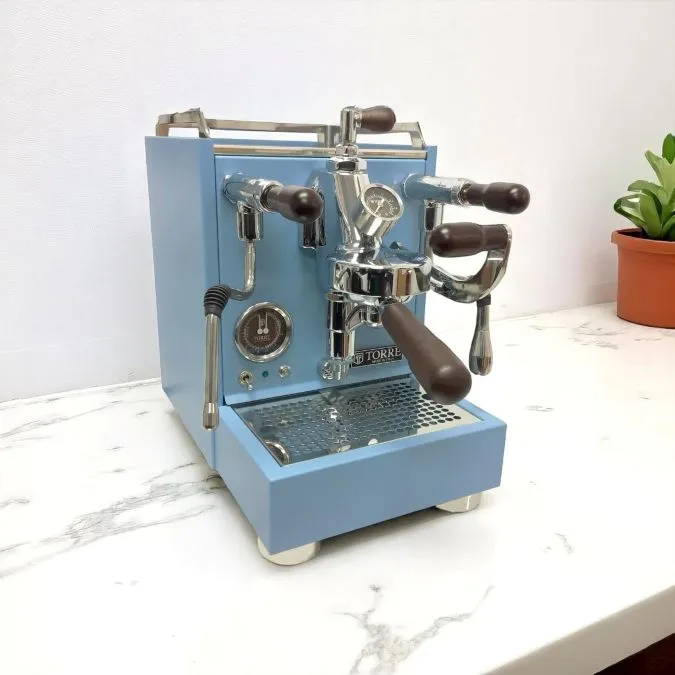
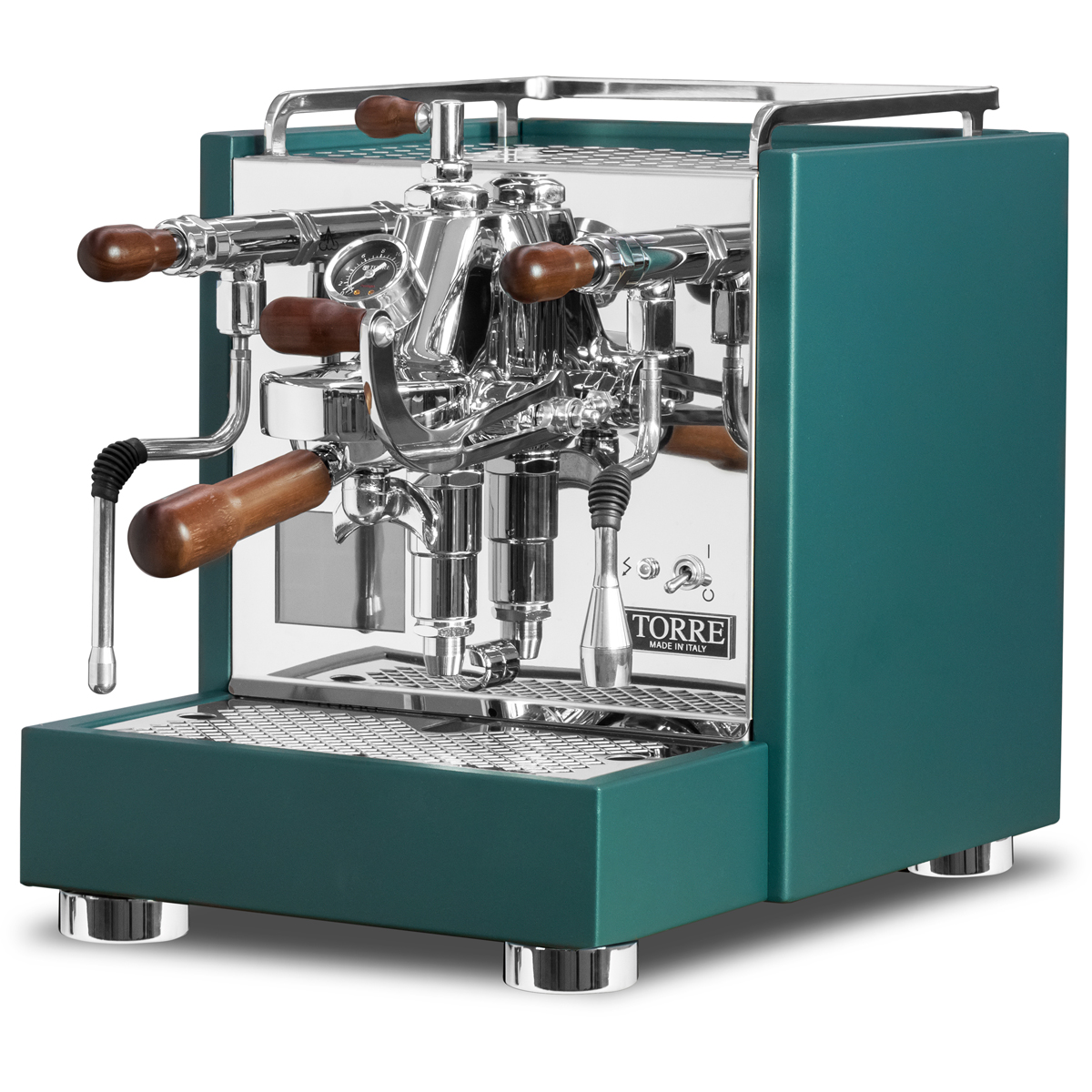
    Torre espresso machine with E61-style group head

    Design, History, Espresso Machine Brands & Compatibility

    The E61 group head is one of the most recognizable and influential designs in espresso machine history. Originally introduced by Faema in 1961, the E61 group head changed the way espresso machines approached brewing temperature, water circulation, and mechanical extraction.

    More than 60 years after its introduction, the E61 espresso machine group head remains widely used on home, prosumer, and commercial espresso machines. Its combination of substantial brass construction, thermosyphon circulation, mechanical pre-infusion, and proven mechanical components has made the design a long-standing favorite among espresso-machine manufacturers and enthusiasts.

    The original E61 patent expired in 1996, allowing other manufacturers to adopt the underlying design and develop their own versions. As a result, there is now a large ecosystem of E61 espresso machines, E61-style group heads, and E61 replacement parts.

    However, one important point should be understood: not every group head described as E61 uses exactly the same internal components or dimensions.

    Understanding the differences is especially important when purchasing an E61 group gasket, shower screen, portafilter, valve, or other replacement part.

    What Is an E61 Group Head?

    An E61 group head is a mechanically operated espresso machine brewing group originally developed by Faema.

    The traditional E61 group uses a large brass group head combined with a mechanical valve system and thermosyphon circulation. A lever on the side of the group operates internal cams, valves, and springs that control the flow of brewing water.

    Unlike many modern espresso machines that use electronic controls or saturated group systems, the classic E61 relies heavily on mechanical operation.

    The traditional design incorporates:

    • Large brass group-head construction

    • Thermosyphon water circulation

    • Mechanical brewing valves

    • Mechanical pre-infusion

    • Pressure-release functionality

    • Lever-operated brewing

    • Substantial thermal mass

    These characteristics are responsible for much of the E61’s distinctive operating behavior.

    E61 Group Head History

    The E61 group head was introduced by Faema in 1961. It represented a major development in espresso-machine engineering at the time.

    One of the design’s important innovations was the use of continuous heated-water circulation between the boiler and group head.

    This thermosyphon system helped keep the group head heated and ready for brewing while the machine was operating.

    The E61 also introduced a mechanical approach to pre-infusion and brewing control that became highly influential in later espresso-machine designs.

    The design proved sufficiently successful that it became one of the most recognizable group-head architectures in espresso.

    When Did the E61 Patent Expire?

    The original E61 patent expired in 1996.

    After the patent expired, other espresso-machine manufacturers could legally produce machines based on the underlying E61 design.

    This helped create the enormous variety of E61-style espresso machines available today.

    Manufacturers subsequently modified the original concept by adding technologies such as:

    • PID temperature controllers

    • Dual boilers

    • Rotary pumps

    • Vibration pumps

    • Flow-control valves

    • Pressure profiling

    • Digital temperature displays

    • Electronic controls

    As a result, the modern E61 market includes both traditional machines and highly sophisticated prosumer espresso machines.

    How Does an E61 Group Head Work?

    A traditional E61 group head uses a combination of thermosyphon circulation and mechanical valve operation.

    When the espresso machine is heated, water circulates between the boiler and group head. This continuous circulation helps maintain the temperature of the substantial brass group.

    When the user raises the group lever, the internal mechanical system opens the appropriate valves and begins the brewing sequence.

    The traditional sequence includes a period of mechanical pre-infusion before full brewing pressure is applied to the coffee.

    When the lever is lowered, the group mechanism closes the water path and allows pressure in the brewing circuit to be released.

    This mechanical sequence is one of the defining characteristics of a traditional E61.

    Why Is the E61 Group Head Thermally Stable?

    One of the main reasons the E61 design remains popular is its thermal mass and thermosyphon system.

    The large brass group head retains heat, while heated water continuously circulates through the group.

    This helps reduce temperature fluctuations during normal operation.

    However, an E61 group head should not be considered a guarantee of perfect temperature stability. Actual performance depends on the complete espresso-machine design, including:

    • Boiler size

    • Boiler type

    • Thermosyphon configuration

    • Group-head construction

    • PID temperature control

    • Water flow

    • Machine insulation

    • Ambient temperature

    • Brewing frequency

    Two espresso machines can therefore use E61 group heads while exhibiting different thermal behavior.

    E61 vs. E61-Style Group Heads

    The terms E61 group head and E61-style group head are sometimes used interchangeably, but there can be meaningful differences.

    A traditional E61 generally follows the original mechanical architecture, including the characteristic lever-operated valve system and thermosyphon arrangement.

    An E61-style group may retain the familiar external appearance while using modified internal components.

    Manufacturers have developed proprietary variations to accommodate modern machine designs and features.

    For consumers and parts suppliers, this distinction is important.

    An E61-compatible gasket or shower screen should not be selected solely because the product description says “E61.” The exact dimensions and machine model should also be checked.

    Which Espresso Machine Brands Use E61 Group Heads?

    Many major Italian and international espresso-machine manufacturers have used E61 or E61-style group-head technology.

    Faema

    Faema is the original manufacturer associated with the E61 group head.

    The company introduced the design in 1961 and continues to have a strong historical connection to E61 technology.

    The Faema E61 Legend is an example of a machine that preserves the classic E61 heritage.

    VBM (Vibiemme)

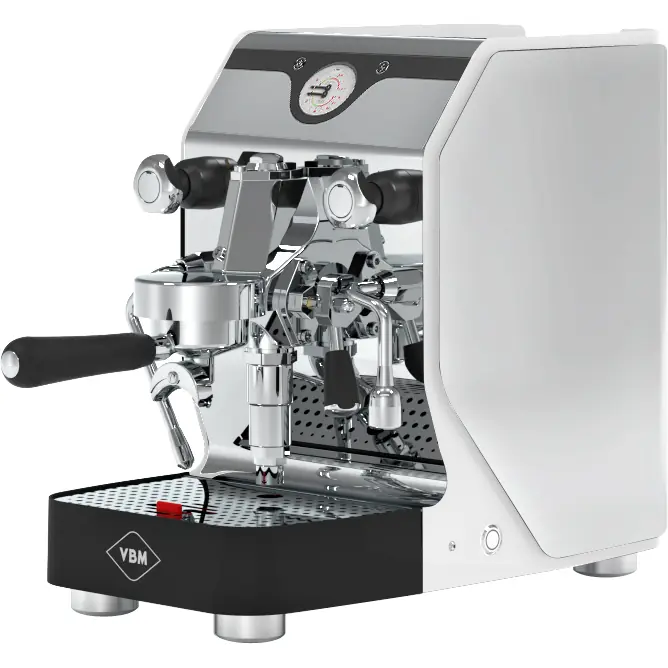
    VBM Vibiemme Domobar espresso machine with E61 group head

    VBM, or Vibiemme, has deep historical connections to the E61 design.

    The company became particularly well known for prosumer espresso machines such as the Domobar series.

    Bezzera

    Bezzera is another historic Italian espresso-machine manufacturer associated with E61-style groups.

    Models such as the Aria, Mitica, and DUO combine traditional group-head construction with modern espresso technology.

    Rocket Espresso

    Rocket Espresso is one of the most recognizable modern E61 espresso-machine manufacturers.

    Its machines have included the Appartamento, Giotto, and R58 Cinquantotto.

    Rocket combines the traditional E61 group-head appearance with modern prosumer machine features.

    Profitec

    Profitec offers numerous machines built around E61-style group technology.

    Models such as the Pro 700, Pro 600, Pro 400, Drive, and RIDE demonstrate how the E61 design can be combined with modern temperature and flow-control technologies.

    ECM

    ECM Espresso Coffee Machines is well known for premium E61 prosumer machines.

    Models such as the Synchronika II and Classika PID combine traditional E61 group technology with modern temperature control and premium stainless-steel construction.

    Lelit

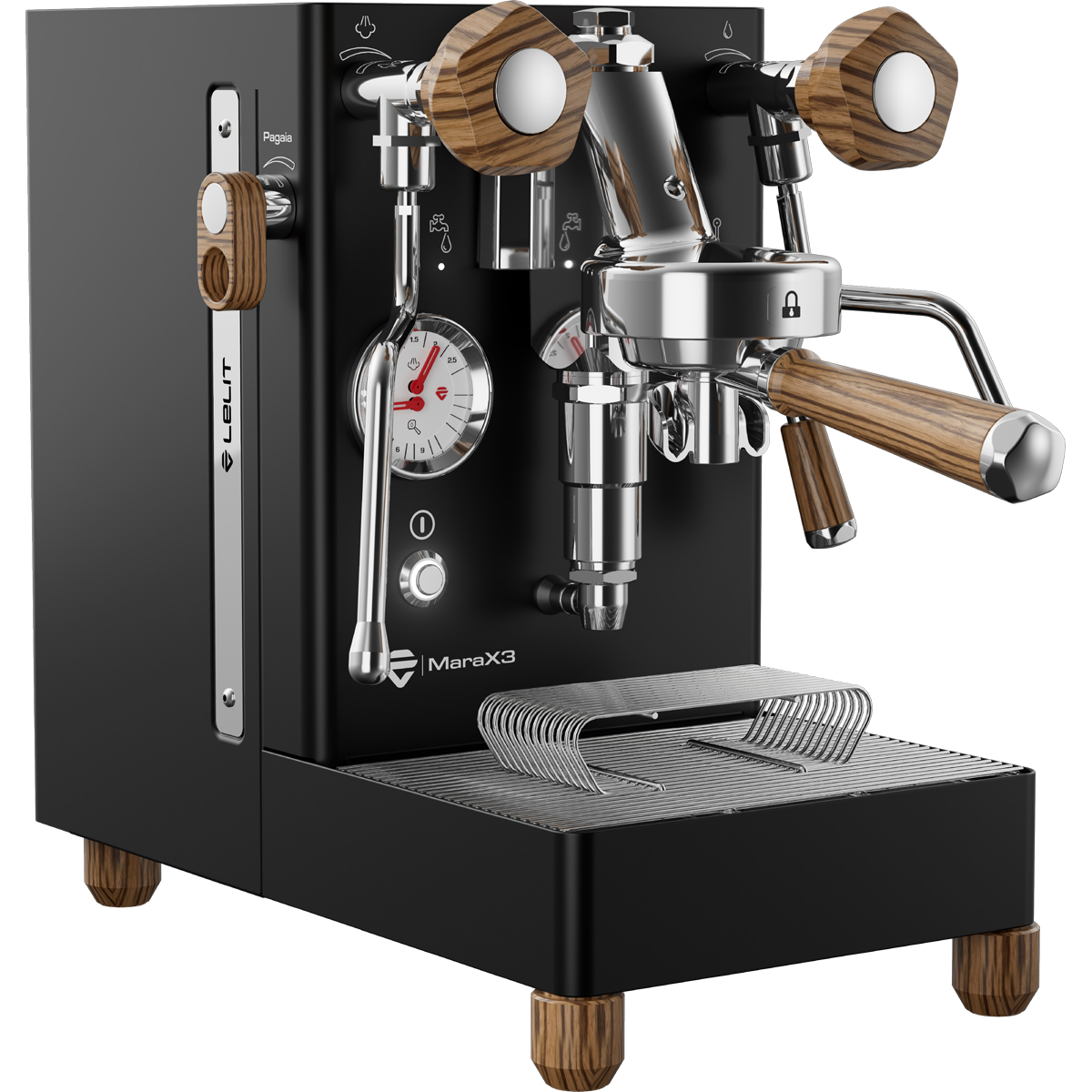
    Lelit MaraX espresso machine in black with E61 group head

    Lelit MaraX espresso machine in black with E61 group head

    Lelit has incorporated E61 groups into several popular home espresso machines.

    The Lelit Bianca is particularly notable for combining an E61 group with manual flow control.

    The compact MaraX is another well-known E61-style machine.

    Quick Mill

    Quick Mill produces a number of machines using E61-style group technology, including models such as the Carola Evo, QM67, Aquila, and Anita.

    Izzo

    Izzo uses E61-style group technology on machines including the Vivi PID and Alex Duetto.

    Isomac

    Isomac has a long history of producing E61-style prosumer machines, including the Tea, Zaffiro, and Millennium.

    Sanremo

    Sanremo has used E61-style technology and proprietary variations on selected machines.

    The company is known for combining traditional espresso engineering with modern machine design.

    La Pavoni

    While La Pavoni is particularly famous for its manual lever espresso machines, the company has also produced pump-driven machines using E61-style groups, including the Cellini Premium.

    Expobar

    Expobar became particularly popular among home espresso enthusiasts for machines such as the Brewtus, which brought E61-style group technology and dual-boiler configurations to a relatively accessible segment of the market.

    Torre

    Torre is an Italian boutique manufacturer offering machines incorporating E61-style technology, including the Peppina Evo.

    La Nuova Era

    La Nuova Era produces machines such as the Cuadra and Altea, which incorporate robust commercial and prosumer group-head designs.

    Wega and Promac

    Wega and Promac are established Italian commercial espresso-machine manufacturers whose equipment demonstrates the broader use of traditional group-head engineering in professional café environments.

    E61 Group Head Replacement Parts

    Because E61 machines are produced by many manufacturers, there is a large aftermarket for E61 group head replacement parts.

    Common E61 replacement components include:

    • E61 group head gaskets

    • Portafilter holder gaskets

    • E61 shower screens

    • Dispersion screens

    • Group valves

    • Valve springs

    • Cam assemblies

    • Lever components

    • Portafilters

    • Filter baskets

    • Group-head O-rings

    • Paper gasket shims

    However, compatibility must always be verified.

    E61 Group Head Gasket Compatibility

    An E61 group head gasket is responsible for creating the seal between the portafilter and group head.

    E61 gaskets are available in several thicknesses and dimensions. Common configurations include approximately 8 mm and 9 mm thick gaskets, although exact dimensions vary by manufacturer and machine.

    The gasket’s:

    • Outside diameter

    • Inside diameter

    • Thickness

    • Profile

    • Material

    • Sealing surface

    can all affect compatibility.

    A gasket that fits one E61 machine may not necessarily be the correct gasket for another machine.

    Why E61 Gasket Thickness Matters

    The thickness of the group gasket determines the position of the portafilter when it locks into the group head.

    As the original gasket wears, the portafilter may rotate farther into the group.

    Replacing the gasket with the correct thickness can restore the proper portafilter locking position.

    Some machines may also use a paper gasket shim or spacer to compensate for portafilter wear or adjust group-head sealing depth.

    For this reason, replacement gaskets should be selected using the machine model, original part number, or exact gasket dimensions whenever possible.

    E61 Shower Screens

    The E61 shower screen distributes brewing water across the coffee puck.

    Although many E61 machines share similar shower screens, mounting methods and dimensions can vary.

    When replacing an E61 shower screen, check:

    • Screen diameter

    • Center hole

    • Mounting method

    • Thickness

    • Group-head model

    • Original part number

    A product described simply as an “E61 shower screen” should therefore be verified against the specific espresso machine.

    E61 vs. Saturated Group Head

    Stainless steel espresso machine with wooden handles and dual spouts

    Stainless steel espresso machine with wooden handles and dual spouts

    The E61 is often compared with the saturated group head, but the two designs use fundamentally different approaches.

    A traditional E61 group uses thermosyphon circulation and mechanical components to maintain temperature and control brewing.

    A saturated group is designed as part of the boiler or water-heating system, with the group exposed to heated water from the boiler to help maintain a stable brewing temperature.

    Saturated groups are particularly common on commercial espresso machines.

    The important point is that a 58 mm portafilter does not automatically mean an espresso machine uses an E61 group head.

    Brands such as La Marzocco, Nuova Simonelli, and Rancilio commonly use 58 mm portafilters or related accessories, but their signature machines generally employ saturated or proprietary group architectures rather than a traditional E61 thermosyphon mechanism.

    Why Are E61 Espresso Machines Still Popular?

    The E61 design has remained popular for several reasons.

    Proven Engineering

    The basic architecture has been refined and used for decades.

    Thermal Mass

    The substantial group-head construction helps retain heat.

    Thermosyphon Circulation

    Continuous water circulation helps maintain the group at brewing temperature.

    Mechanical Pre-Infusion

    The traditional mechanism provides mechanical pre-infusion before full brewing pressure is reached.

    Serviceability

    The mechanical design is well understood by espresso-machine technicians, and many replacement components are readily available.

    Modern Adaptability

    Manufacturers can combine E61 groups with modern technologies such as PID controllers, dual boilers, rotary pumps, and manual flow control.

    Are All E61 Group Heads the Same?

    No.

    This is one of the most important things to understand about E61 espresso machines.

    Although many machines share the E61 architecture, manufacturers have introduced differences in:

    • Internal valve designs

    • Thermosyphon passages

    • Group dimensions

    • Gasket dimensions

    • Gasket thickness

    • Shower-screen mounting

    • Portafilter locking geometry

    • Flow-control systems

    • Pre-infusion systems

    • Internal components

    Therefore, an E61 replacement part should be matched to the specific espresso machine model and group-head configuration whenever possible.

    E61 Group Head FAQ

    What does E61 mean on an espresso machine?

    E61 refers to a famous espresso-machine group-head design originally introduced by Faema in 1961. The traditional design uses a large brass group, thermosyphon circulation, and mechanical valve operation.

    Who invented the E61 group head?

    The E61 group head was developed and introduced by Faema in 1961. Faema is historically recognized as the original manufacturer and patent holder of the E61 design.

    When did the E61 patent expire?

    The original E61 patent expired in 1996, allowing other manufacturers to use the underlying design and develop their own E61-style group heads.

    Why is the E61 group head so popular?

    The E61 remains popular because of its thermal mass, thermosyphon circulation, mechanical pre-infusion, proven design, serviceability, and ability to work with modern espresso technologies.

    Is an E61 group head better than a saturated group?

    Neither design is universally better. E61 and saturated groups use different approaches to temperature management and brewing. Machine design, temperature control, boiler configuration, and intended use are more important than the group-head name alone.

    Do all E61 espresso machines use the same gasket?

    No. E61 machines can use different gasket dimensions and thicknesses. Even machines with similar-looking groups may require different gaskets.

    What size is an E61 group head gasket?

    There is no single universal E61 gasket size. Many traditional E61 machines use gaskets around 8 or 9 mm thick, but inside and outside diameters can vary. Always verify the dimensions and machine compatibility before purchasing a replacement.

    Does an E61 espresso machine use a 58 mm portafilter?

    Many E61 machines use a 58 mm portafilter, but portafilter diameter alone does not determine whether a machine has an E61 group head.

    Are E61 group heads interchangeable?

    Not necessarily. While many E61 components share common dimensions, manufacturers can use different internal mechanisms, gasket profiles, shower screens, valves, and portafilter interfaces.

    Which espresso machine brands use E61 group heads?

    Brands associated with E61 or E61-style group technology include Faema, VBM, Bezzera, Rocket Espresso, Profitec, ECM, Lelit, Quick Mill, Izzo, Isomac, Sanremo, La Pavoni, Expobar, Torre, La Nuova Era, Wega, and Promac, among others.

    Does an E61 group head require maintenance?

    Yes. Like any mechanical espresso-machine group, an E61 should be periodically inspected and maintained. Common service items include the group gasket, shower screen, valves, springs, cam components, and lubrication of appropriate mechanical parts.

    How long does an E61 group gasket last?

    Gasket life depends on machine usage, temperature, cleaning practices, coffee oils, and installation. Regularly inspecting the gasket for hardening, cracking, leakage, or excessive portafilter rotation is a good way to determine when replacement is needed.

    Final Thoughts: The E61 Group Head Legacy

    The E61 group head remains one of the most influential designs in espresso-machine history.

    Introduced by Faema in 1961, the design combined thermal mass, thermosyphon circulation, mechanical pre-infusion, and a durable mechanical brewing system. Following the expiration of the original patent in 1996, numerous manufacturers adopted the architecture and developed their own versions.

    Today, the E61 can be found on everything from traditional Italian espresso machines to advanced dual-boiler prosumer machines with PID temperature control and manual flow profiling.

    For espresso enthusiasts, the E61 offers a combination of heritage, mechanical engineering, thermal stability, and modern adaptability.

    For espresso-machine parts suppliers and technicians, however, the most important lesson is that E61 does not necessarily mean universal compatibility. Group gaskets, shower screens, portafilters, valves, and other components should be selected according to the exact machine and group-head specifications.

    Understanding the differences between traditional E61 groups, E61-style groups, and other group-head technologies makes it easier to choose the correct espresso machine—and the correct replacement parts for keeping it operating properly.

  • Heat Exchange Espresso Machines Explained: Comprehensive Guide to Technology, Performance, and Maintenance

    Heat Exchange Espresso Machines Explained: Comprehensive Guide to Technology, Performance, and Maintenance

    Heat exchange espresso machines are a modern marvel in the world of espresso brewing, allowing for simultaneous brewing and steaming. These machines utilize innovative technology that enhances temperature control and efficiency, catering to both coffee enthusiasts and professional baristas. In this comprehensive guide, we will explore the workings of heat exchange technology, its numerous benefits, comparisons with other systems, and maintenance best practices. As consumers increasingly seek high-performing espresso equipment, understanding the unique features and functionalities of heat exchange systems becomes essential for making informed purchasing decisions. This guide will help you navigate the technical depths of heat exchange espresso machines, their benefits, and the future of espresso technology.

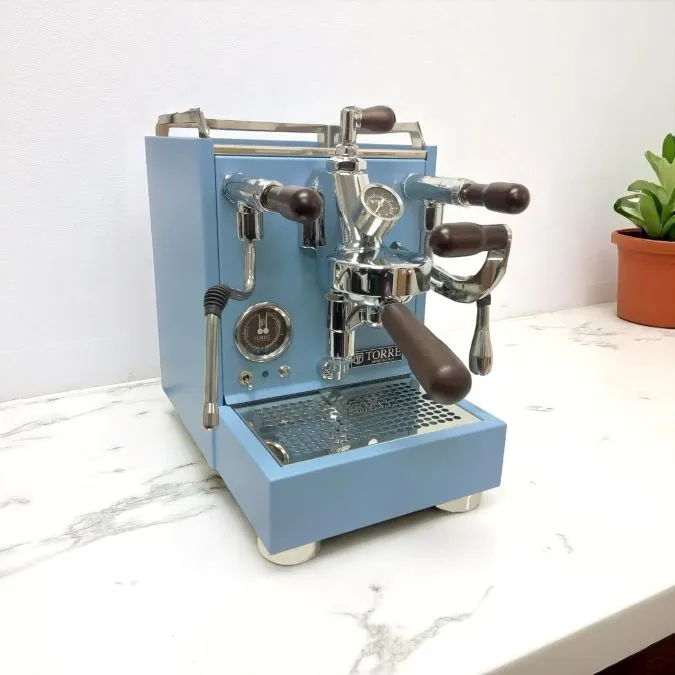
    Torre Luigino Heat Exchange HX Espresso Machine in light blue on a white marble countertop

    Torre Luigino TSP Heat Exchange (HX) Espresso Machine with Flow Control shown in light blue.

    How Does Heat Exchange Technology Work in Espresso Machines?

    Heat exchange technology is a pioneering system used in espresso machines that allows for both brewing and steaming functions to occur simultaneously without significant compromise on temperature control. It utilizes a heat exchanger, typically a brass and/or copper or stainless boiler, that heats water for brewing while also providing steam for milk frothing. This dual functionality results in quick recovery times between brewing shots and steaming milk, ensuring that your espresso is served at the optimal temperature for extraction.

    What Is the Principle Behind Heat Exchanger Boilers?

    Heat exchanger boilers operate on the principle of thermodynamics, where water flows through a copper, stainless, or brass tube heated by steam from the boiler. As the water travels through this heat exchanger, it absorbs heat while moving towards the group head, ensuring that the brewing water reaches the desired temperature. The high thermal conductivity of the materials used in these systems allows for rapid heat transfer, which is essential for maintaining consistent brewing temperatures.

    To further illustrate the effectiveness of this design, a study on boiler heat exchanger systems highlights how specific material choices and boiler configurations enable simultaneous temperature regulation for both brewing and steaming.

    Boiler Heat Exchanger Espresso Machine Design & Performance

    The design of this espresso machine with a boiler heat exchanger system aims to produce two different temperatures for extracting coffee and steaming milk simultaneously, using stainless steel 316 with a thermal conductivity of 13.99 W / m2K and a thermal conduction boiler design, the resulting brewing temperature for Sbesar coffee 90-95 C with a boiler temperature between 100-140 C, a reference for comparison with similar machines, namely the giotto, andreja and rituale espresso machines which also produce an output temperature for brewing in the range of 93-95 C which indicates that this machine according to planning, and with this result you can get a number of brewing variations of 15 variables obtained from a combination of 3 variable pump pressure and 5 coffee temperature variables that can be used. PERANCANGAN MESIN PEMBUAT KOPI ESPRESSO DENGAN SISTEM HEAT EXCHANGER, 2020

    How Does Heat Exchange Affect Brewing Temperature Stability?

    Brewing temperature stability is crucial for producing high-quality espresso, as fluctuations can adversely affect extraction and flavor. Heat exchange systems help stabilize temperature by circulating heated water through the heat exchanger, enabling a more consistent thermal environment over non-PID single boilers for coffee grounds. Compared to traditional single boiler systems, which may suffer from temperature inconsistencies, heat exchange espresso machines allow for a more controlled brewing experience. This stability enhances the overall quality of the espresso, ensuring optimal flavor extraction.

    What Are the Key Benefits of Heat Exchange Espresso Systems?

    Heat exchange espresso systems offer a multitude of advantages that cater to various brewing styles and preferences. Understanding these benefits can help users maximize their espresso experience.

    1. Improved Temperature Control: The ability to maintain consistent brewing temperatures increases uniform extraction based on temperature (not inconsistent grind quality).

    2. Enhanced Steaming Capabilities: The design allows for more efficient steaming while brewing, crucial for creating microfoam.

    3. Greater Versatility for Barista Techniques: Users can experiment with various brewing styles without waiting for the machine to cool down or reheat.

    How Does Heat Exchange Enhance Steaming Power and Efficiency?

    Heat exchange technology dramatically improves steaming power, over single boilers, by allowing steam production to occur while maintaining brewing functions. The system is designed to direct steam directly from the boiler, usually providing consistent pressure and ample steam output. This efficiency is especially beneficial in busy environments, where quick milk frothing directly enhances productivity. Many baristas report improved frothing capabilities with heat exchange machines compared to traditional single-boiler models due to this design.

    Why Is Temperature Stability Critical for Commercial and Home Use?

    Temperature stability is essential for producing high-quality espresso regardless of the setting. For commercial users, fluctuating temperatures can lead to inconsistent drink quality, impacting customer satisfaction. For home users, maintaining temperature stability enhances the overall brewing experience and allows for consistent flavor profiles in every cup. Properly functioning heat exchange systems thus support both the art and science of espresso preparation, making them invaluable in any setting.

    How Do Heat Exchange Machines Compare with Dual Boiler Espresso Machines?

    When comparing heat exchange machines to dual boiler systems, it’s important to consider their performance characteristics and suitability for different user needs. Both systems have their unique strengths.

    What Are the Performance Differences Between HX and Dual Boiler Systems?

    Heat exchange (HX) systems typically have a single boiler design that utilizes a heat exchanger, whereas dual boiler systems have separate boilers for brewing and steaming. This means HX machines can recover more quickly, transitioning smoothly between brewing and steaming without user intervention. While dual boiler systems often provide even greater temperature stability, they tend to be more expensive and complex. For many users, the rapid recovery of heat exchange systems offers a practical balance of performance without excessive cost. 110 volt dual boilers usually need to split power between two boilers. Therefore, efficiency of performance is less versus an HX machine.

    Which System Is Best Suited for Home Baristas Versus Commercial Operations?

    For home baristas, heat exchange machines are often a preferred choice due to their balance of quality and user-friendliness. They offer ample steaming capabilities, suitable for creating café-quality espresso at home, while being less intimidating than dual systems. Conversely, commercial operations may benefit more from dual boiler systems, which provide greater precision and functionality in high-volume settings. Each system serves a unique purpose depending on personal preferences and operational requirements.

    What Are Best Practices for HX Espresso Machine Maintenance and Troubleshooting?

    Prolonging the lifespan and performance of a heat exchange espresso machine requires regular maintenance and attention to potential issues. Implementing best practices can ensure smooth operation and exceptional coffee quality.

    1. Routine Maintenance Checklists: Regularly schedule cleaning of the group head, steam wand, and internal components.

    2. Regular Water Quality Checks: Use softened and filtered water to minimize additional scale buildup within the machine, which can affect performance.

    3. Essential Tools for Upkeep: Have lubricant, cleaning brushes, and descaling solutions on hand for routine tasks.

    How Should Users Perform Routine Heat Exchange Machine Maintenance?

    For effective routine maintenance, owners should develop a checklist that includes cleaning rituals and part inspections:

    • Clean the group head daily after use to remove coffee residue.

    • Backflush the machine every 50 extractions to maintain cleanliness and prevent blockages.

    • Check the water level and refill the boiler as needed to prevent overheating.

    Maintaining these tasks can help ensure your machine operates at peak efficiency, producing outstanding espresso drink after drink.

    What Are Common Heat Exchange System Issues and How Are They Resolved?

    Common issues in heat exchange systems often include pressure fluctuations, inconsistent temperature, and steam-related challenges. Addressing these issues usually involves specific troubleshooting steps:

    • Pressure Fluctuations: Check the pressure gauge and adjust pump pressure as necessary to maintain consistent brewing pressure. Check the gicleurs, if present, in the grouphead and/or HX pipes.

    • Inconsistent Temperature: Inspect the heat exchanger for blockages and ensure that the machine is properly calibrated.

    • Steam Problems: Verify that the steam wand is clean and that there are no blockages in the steam tips or valves.

    Identifying and resolving these issues promptly can greatly enhance the longevity and performance of your espresso machines.

    How to Select Heat Exchange Espresso Machines and Compatible Grinders?

    As the market for espresso machines evolves, understanding what features to prioritize when selecting a heat exchange machine and grinder is crucial.

    1. Key Features to Consider: Look for machines offering PID temperature control, which enhances consistency and precision.

    2. Best Grinder Matches: Choose grinders that complement the machine’s capabilities, ensuring that grind size and consistency align with brewing expectations.

    What Commercial Espresso Machine Features Should Buyers Prioritize?

    When shopping for a commercial espresso machine, buyers should consider features that align with their business needs:

    • Durability: Opt for machines constructed from high-quality materials that withstand heavy use.

    • Temperature Control: Machines equipped with PID controllers provide more predictable brewing and steaming temperatures.

    • User Interface: An intuitive interface enhances ease of use, especially in busy environments.

    Selecting machines with these features can significantly improve workflow and coffee quality in commercial settings.

    Which Espresso Grinders Are Optimal for Heat Exchange Machines?

    Selecting the right espresso grinder is vital for achieving the desired coffee flavor and texture. Optimal grinders for use with heat exchange machines typically include:

    • Burr Grinders: Look for grinders that provide consistent grind size adjustments.

    • Low RPM Models: Grinders designed to operate at lower RPMs minimize heat transfer and preserve flavor extraction.

    • Specific Brands: Brands like Quamar and Eureka offer models that enhance the espresso experience with heat exchange systems.

    • Larger Burr Sizes: Larger burrs can produce more consistent ground coffee particle sizes.

    Ensuring compatibility between the grinder and machine can elevate the quality of your espresso beverages significantly.

    What Industry Trends and Statistical Insights Affect Heat Exchange Espresso Machines?

    The espresso machine market continues to evolve, driven by technological advancements and changing consumer preferences.

    How Are Market Demands Driving Innovation in Heat Exchange Technology?

    Recent trends indicate a growing emphasis on sustainability and efficiency within the coffee industry. Coffee consumers increasingly prioritize ethically sourced beans and environmentally friendly equipment. Innovations in heat exchange technology aim to reduce energy consumption while maintaining high performance, aligning with market demands for sustainability.

    What Data Supports Heat Exchange Systems’ Reliability and Performance Benefits?

    Studies show that heat exchange systems generally demonstrate improved reliability and efficiency compared to traditional brewing approaches. Reports suggest that users experience less downtime and increased coffee output when utilizing heat exchange machines. As the industry progresses, data supporting these benefits will continue to support the transition toward more efficient espresso brewing technologies.

  • VBM Dual Boiler Espresso Machines: Complete Guide to Features, Benefits, and Reviews

    VBM dual boiler espresso machines deliver commercial-grade temperature stability and simultaneous brewing and steaming, transforming home or professional espresso into a precision craft. In this guide, you’ll discover how VBM’s dual boiler system works, compare the Domobar Super Digital and Junior models, explore workflow-boosting features, master maintenance and troubleshooting, refine extraction and frothing techniques, learn about VBM’s storied heritage, and pinpoint where to buy and what to expect. Whether you’re a seasoned home barista or professional barista upgrading your setup, this article maps every key aspect of VBM dual boiler technology, benefits, reviews, and purchase guidance.

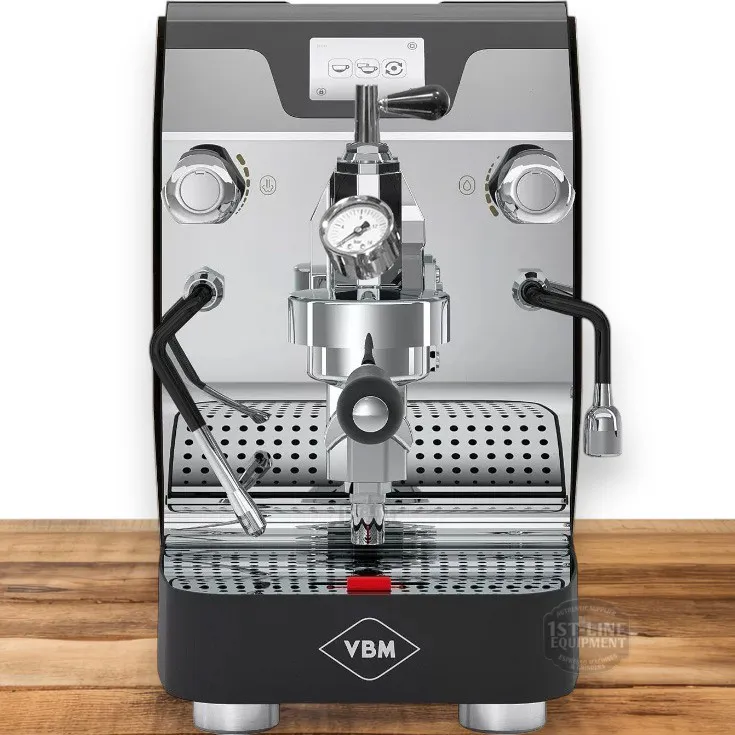
    VBM Super Electronic DUAL PROFILER Dual Boiler Espresso Machine with Flow Control

    What Are VBM Dual Boiler Espresso Machines and How Do They Work?

    A dual boiler espresso machine integrates two independent boilers—one dedicated to brewing and one to steaming—so that baristas can pull shots at precise temperatures while steaming milk without delay. VBM’s implementation uses boilers regulated by PID controllers and an E61 grouphead, enabling thermal stability and mechanical pre-infusion to optimize extraction. For example, the Domobar Super Digital can hold brew water at 92 °C while its steam boiler hovers at 128 °C, ensuring repeatable shot quality and rapid workflow.(External factors may influence stability.)

    What Is a Dual Boiler Espresso Machine?

    A dual boiler espresso machine features two separate heating chambers that independently maintain brewing and steaming temperatures to prevent heat fluctuation. This design mechanism ensures that pulling a shot does not cool the steam wand or vice versa, and baristas experience consistent extraction even during consecutive beverages.

    How Does VBM’s Dual Boiler System Enhance Brewing and Steaming?

    VBM’s dual boiler system uses insulated boilers paired with a rotary gear pump to sustain constant pressure and temperature. This approach minimizes recovery time between shots and steams, enabling simultaneous operation that speeds service and reduces wait times for milk-based drinks while upholding shot consistency.

    Dual Boiler Systems and Thermal Stability

    Studies have shown that dual boiler systems provide superior thermal stability compared to single boiler machines, allowing for simultaneous brewing and steaming without significant temperature fluctuations. This design contributes to more consistent extraction and improved workflow.

    This citation supports the article’s discussion of dual boiler systems and their benefits in terms of temperature stability and workflow efficiency.

    What Role Does the E61 Grouphead Play in VBM Machines?

    The E61 grouphead in VBM machines employs thermosiphonic circulation to preheat coffee pistons and promote mechanical pre-infusion at low pressure before full extraction. By stabilizing brew temperature and evenly soaking grounds, the E61 grouphead enhances crema quality and flavor yield across varying grind sizes and doses.

    How Does PID Temperature Control Improve Espresso Consistency?

    PID (Proportional-Integral-Derivative) controllers continuously monitor boiler temperatures and adjust heating elements in milliseconds. On VBM machines, this precise regulation lessens temperature drift, ensuring each espresso shot extracts at the optimal temperature for balanced acidity, sweetness, and body—even after rapid successive pulls.

    The Science of Espresso Extraction

    Research indicates that precise temperature control is crucial for optimal espresso extraction, influencing the balance of acidity, sweetness, and body in the final shot. Maintaining a stable temperature, often achieved through PID controllers, ensures consistent flavor profiles.

    This research supports the article’s claims about the importance of temperature control in espresso machines and how it affects the quality of the espresso.

    Which Pro-grade VBM Dual Boiler and HX Models Are Best for Home Baristas?

    VBM offers two flagship dual boiler machines—the Domobar Super Digital and the Domobar Super Electronic Digital Dual Profiler. The Super Digital provides advanced pressure profiling and a touchscreen display for programmable extraction. The VBM Junior is a Heat Exchange (HX) espresso machine with PID and focuses on compact size for kitchens with limited counter space.

    Before exploring each model, here is a concise comparison of their core specifications and advantages.

    Model

    Key Feature

    Primary Benefit

    Domobar Super Digital

    Electronic or Manual Pressure profiling & PID

    Customizable extraction curves for flavor

    Domobar Super Electronic

    Electronic or Manual pressure control & PID

    Simplified interface with temperature locks; More Automation

    Domobar Junior

    Compact Heat Exchanger layout

    Space-saving design without compromising speed

    In practice, the Super Digital suits aficionados demanding programmable pressure profiles, while the Junior serves enthusiasts seeking true basic performance in a smaller footprint.

    What Features Define the VBM Domobar Super Digital?

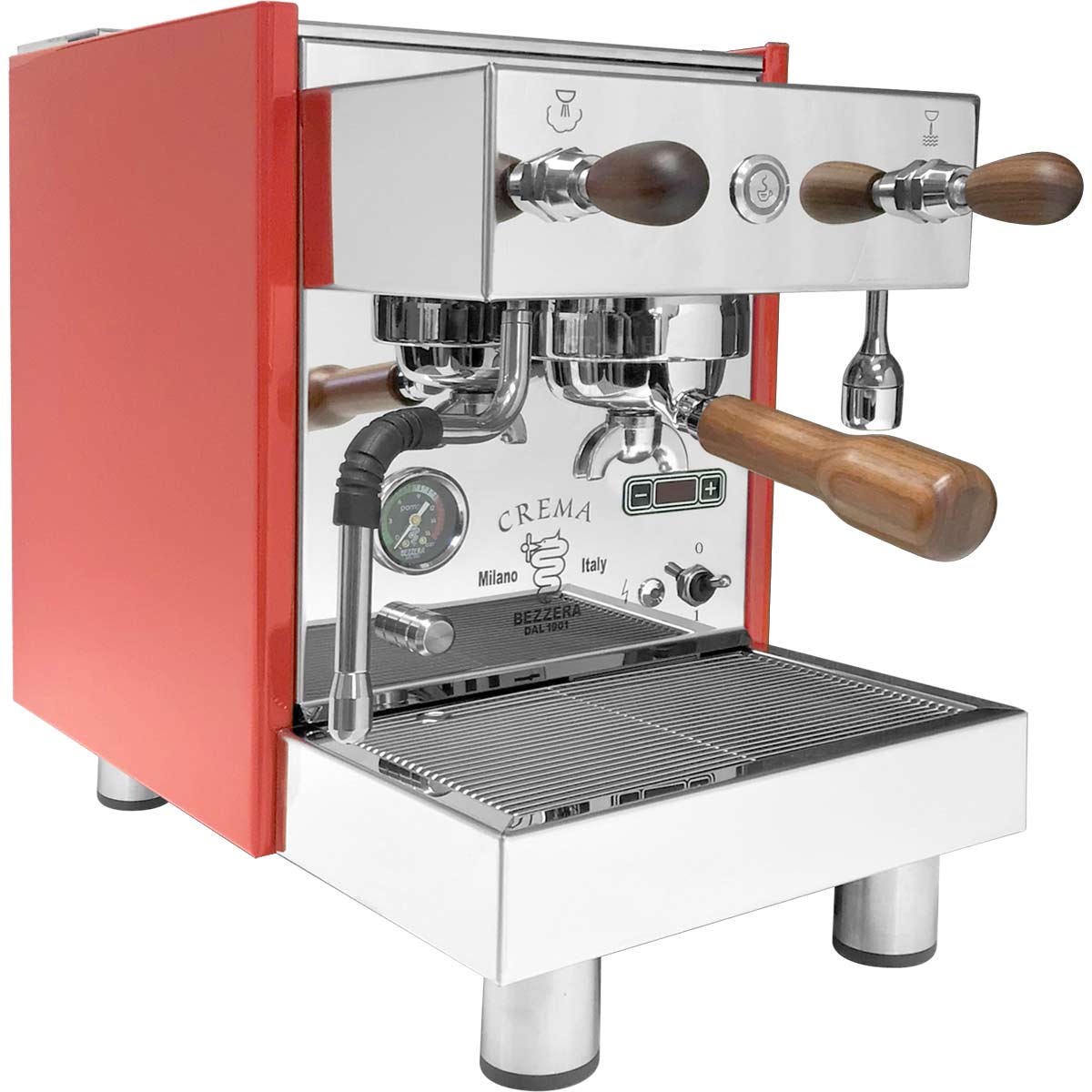
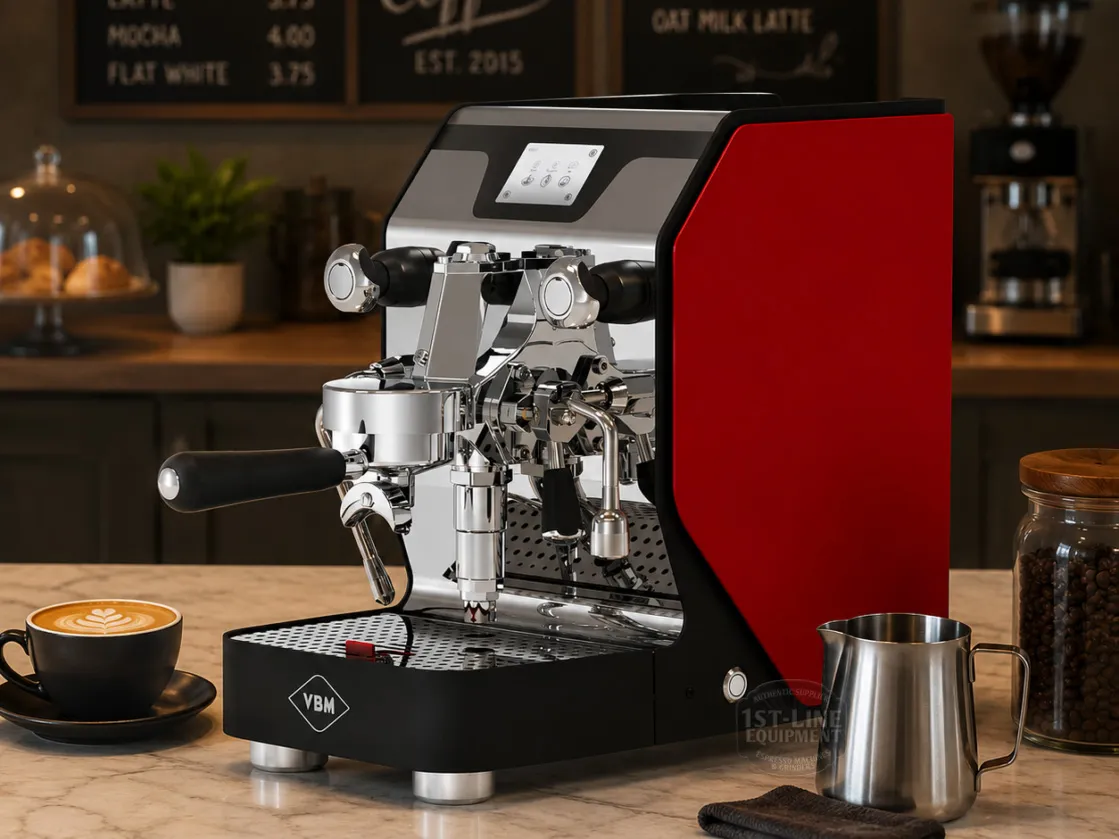
    VBM Super Electronic Digital Dual Profiler Dual Boiler Espresso machine with optional red side panels

    The Domobar Super Digital integrates a 3.5-inch touchscreen, gear-driven rotary pump, two PID-controlled boilers (0.5 L brew, 2 L steam), and full pressure profiling up to 11 bar. These components work in tandem to let baristas program multiple extraction stages, adjusting pre-infusion, ramp-up, and stabilization phases for tailored flavor expression.

    How Does the VBM Domobar Junior Compare in Size and Performance?

    The Domobar Junior retains HX architecture in a 0.45 m² footprint that fits compact kitchens. Although it lacks pump pressure profiling, its independent PID-regulated boiler deliver slightly less temperature consistency and simultaneous brewing and steaming as larger VBM machines, making it ideal for tight spaces without sacrificing shot quality too much.

    What Are the Differences Between Domobar Super Digital and Electronic Models?

    The Super Digital and Super Electronic feature a touchscreen interface for multi-step pressure profiling, the Super Electronic has dosage programming. Both share PID regulation and E61 groupheads and the Electronic automates espresso extraction through dosage programming allowing baristas to focus on milk preparation.

    How Do VBM Models Compare to Competitors Like Lelit Bianca and Profitec Pro 700?

    VBM dual boiler machines stand out through their durable copper boilers, classic true E61 groupheads, and proven rotary gear pumps, whereas some competitors use thin stainless steel boilers or vibration pumps. A VBM Domobar Super Digital often offers more intuitive pressure profiling and a more compact footprint compared to bulkier machines, delivering commercial-grade performance tailored for home environments and commercial applications.

    What Are the Main Benefits of Using a VBM Dual Boiler Espresso Machine?

    VBM dual boiler machines elevate home brewing by combining rapid workflow, unparalleled temperature precision, advanced pressure control, and durable stainless-steel construction—all of which contribute to superior espresso quality and machine longevity.

    How Does Simultaneous Brewing and Steaming Improve Workflow?

    By dedicating separate boilers to brewing and steaming, VBM machines enable baristas to prepare milk-based drinks without interrupting shot pulls or waiting for boiler recovery. This parallel operation reduces cycle time by up to 50 %, supporting café-level efficiency in a home or small-office setting.

    Why Is Precise Temperature Control Important for Espresso Quality?

    Temperature fluctuations of even ±1 °C can alter extraction rates, leading to over- or under-extraction that impacts flavor balance. VBM’s PID controllers help maintain stable brew water temperature within ±0.5 °C, ensuring every shot hits the aroma, acidity, and sweetness targets consistently.

    How Does Pressure Profiling Enhance Flavor Extraction?

    Pressure profiling allows baristas to modulate pump pressure through pre-infusion and ramp-up phases, extracting different compounds at optimized rates. This feature in the Domobar Super Digital unlocks nuanced flavor notes, from bright fruit tones at lower pressures to richer body at higher pressures.

    What Makes VBM’s Build Quality Stand Out?

    VBM constructs its boilers, frames, and panels from marine-grade stainless steel, providing superior corrosion resistance and heat retention. Heavy-duty brass E61 groupheads and commercial-style rotary pumps further reinforce reliability, ensuring decades of consistent performance under regular use.

    How Do You Maintain and Troubleshoot VBM Dual Boiler Espresso Machines?

    Proper care—including regular cleaning, descaling, and mechanical maintenance—preserves boiler health, pump integrity, and grouphead function. VBM machines respond well to routine service, which prolongs longevity and prevents performance degradation.

    What Are the Best Practices for Cleaning and Descaling VBM Machines?

    1. Run a citric acid descaling solution through each boiler every 1–12 months depending upon water hardness.

    2. Rinse thoroughly with fresh water after the descaling cycle.

    3. Wipe down external surfaces and steam wands after each use to prevent milk residue buildup.

    Regular descaling prevents mineral deposits that can compromise heating elements and reduce steam power, so following this schedule keeps your machine operating at peak efficiency.

    How Do You Backflush and Care for the E61 Grouphead?

    Backflushing involves:

    • Locking a blind filter into the portafilter.

    • Adding a small amount of espresso-safe detergent.

    • Running multiple flush cycles to remove coffee oils.

    Afterward, rinse with clean water and lubricate the E61 lever mechanism monthly. This routine preserves pre-infusion performance and grouphead sealing. Review backflushing details here.

    What Are Common Issues and How Can You Troubleshoot Them?

    Typical challenges include low pressure (often remedied by pump lubrication or descaling), erratic temperature readings (resolved by cleaning the PID sensor), and steam wand tip clogging (cleared by soaking in a milk-cleaner solution). Identifying symptoms and following straightforward mechanical checks usually restores normal operation within minutes.

    Which Accessories Enhance VBM Espresso Machine Performance?

    Introducing a precision tamper, conical burr grinder, and in-line water filter can significantly improve shot consistency, grind uniformity, and boiler longevity.

    Accessory

    Purpose

    Value

    Precision Tamper

    Ensures even coffee puck compression

    Promotes uniform extraction

    Larger Burr Grinder

    Provides stable grind size distribution

    Enhances taste clarity and consistency

    In-Line Water Filter / Treatment

    Reduces mineral content before boiler

    Helps prevent scale buildup and corrosion

    How Can You Make the Perfect Espresso with a VBM Dual Boiler Machine?

    Achieving barista-level shots involves dialing in dose, consistent grind size, temperature, pressure profile, and milk texture using the machine’s advanced controls.

    What Are Tips for Optimal Espresso Extraction Using VBM Machines?

    Start with a dose of 18 g finely ground coffee, set brew temperature to 92 °C, and use a 23–27 s extraction window. Adjust grind size until shot volume and flow rate hit a desired ration (of 1:2 or 1:1.5) then refine pressure profiling (if available) to emphasize desired acidity or sweetness.

    How Do You Achieve Ideal Milk Frothing with Dual Boiler Control?

    Use the steam boiler at 128 °C, submerging the steam wand tip just below milk surface. Stretch milk for 2–3 s, then texturize by lowering the pitcher to create glossy microfoam. The dedicated steam boiler delivers consistent steam pressure, enabling silky-smooth milk every time.

    How Does Pressure Profiling Affect Different Coffee Roasts?

    Pressure profiling at 4 bar pre-infusion can gently bloom light roasts to highlight floral and fruity notes, while ramping to 9 bar mid-extraction enhances sweetness in medium roasts. Darker blends can benefit from a flatter 9–10 bar profile to extract rich caramelized sugars without over-extraction.

    Why Choose VBM? Brand Heritage, Innovation, and User Experience

    VBM (Vibiemme) has shaped espresso culture since 1976, pioneering durable E61 machines and advancing dual boiler designs that blend time-tested technology with modern controls.

    What Is the History Behind VBM and Its Espresso Machines?

    Founded by Carlo Ernesto Valente in Italy, VBM began by perfecting the E61 grouphead design under license. Over decades, the brand evolved from workshop prototypes to world-renowned machines recognized for craftsmanship and thermal stability in both domestic and light commercial settings.

    How Has VBM Innovated with the E61 Grouphead and Dual Boiler Technology?

    VBM introduced PID regulation to dual boiler systems in the late 2000s and later added pressure profiling to their models. These innovations married mechanical pre-infusion with digital precision, allowing baristas unprecedented control over extraction variables.

    What Do Users and Experts Say About VBM Espresso Machines?

    Coffee professionals praise VBM for its reliable thermal performance, robust build, and tactile grouphead feel. Enthusiasts highlight the Domobar Super Digital’s programmable curves as “a game-changer for dialing in single-origin beans,” underscoring the brand’s reputation for both tradition and technical leadership.

    Where to Buy VBM Dual Boiler Espresso Machines and What to Expect?

    Acquiring a genuine VBM machine involves understanding price tiers, authorized channels, and support provisions to protect your investment and ensure authentic quality.

    What Are the Price Ranges for VBM Domobar Super and Junior Models? (Subject to Change)

    Price variations reflect configuration options such as reservoir versus plumb-in compatibility and pressure profiling capabilities.

    Where Can You Purchase Authentic VBM Espresso Machines?

    Authorized dealers include specialty espresso retailers and online coffee equipment stores. Purchasing through vetted resellers guarantees factory-warranty coverage and access to genuine spare parts, preserving machine performance and value. VBM’s primary dealer is 1st-line.com.

    What Warranty and Support Options Does VBM Offer?

    VBM backs its machines with a two-year warranty limited to manufacturer’s defect on boilers and internal components, plus lifetime support for E61 groupheads. Registered owners receive priority technical assistance, access to service manuals, and spare parts for ongoing maintenance.

    VBM dual boiler machines combine Italian heritage with cutting-edge controls to deliver unmatched consistency, workflow efficiency, and build quality for home and cafe baristas seeking professional-grade espresso. By understanding the mechanics, comparing models, mastering maintenance, refining extraction techniques, and leveraging VBM’s brand support, you’re equipped to elevate every cup. Explore VBM’s Domobar series today to experience the precision and reliability that sets these machines apart.

Secret Link