
Maintaining peak performance and flavor begins with understanding each component of your espresso machine and following a consistent cleaning routine tailored to those parts. Over time, coffee oils, mineral deposits, and worn seals degrade extraction quality and risk costly repairs. This guide explains the core espresso machine parts and offers step-by-step cleaning, descaling, replacement, and troubleshooting advice to preserve machine longevity and cup quality. You’ll learn about group heads, portafilters, shower screens, steam wands, water filters, and the most effective cleaning products—all while discovering how 1st-line.com’s expert support and parts catalog can streamline your maintenance plan. We begin with an overview of essential components, then explore cleaning frequencies, descaling techniques, part replacements, top products, and practical troubleshooting before outlining recommended schedules for home and commercial use.
What Are the Essential Parts of an Espresso Machine You Need to Know?
An espresso machine comprises several precision-engineered components whose interplay determines extraction consistency, steam performance, and overall reliability. Recognizing each part’s function and maintenance needs is the foundation for optimal coffee quality and machine longevity—insights that 1st-line.com supports through detailed guides and genuine replacement parts.
Which Components Make Up the Espresso Machine Group Head?
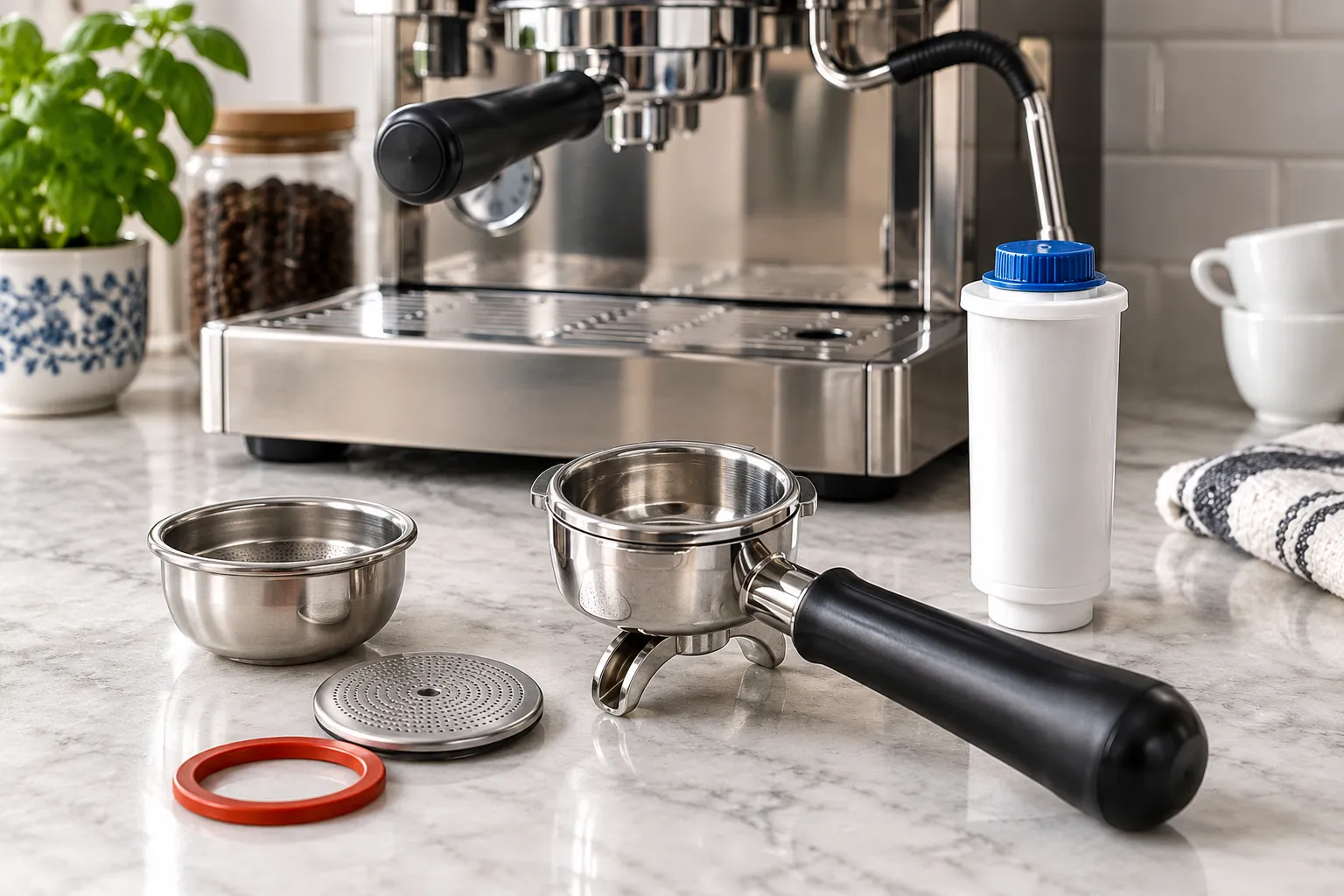
The group head is the heart of extraction, delivering pressurized water through coffee grounds to produce espresso. It contains a shower screen that disperses water evenly, a group gasket that seals the portafilter, and internal channels that maintain temperature stability. Proper care of these sub-parts ensures balanced flow, consistent pressure, and minimal channeling during extraction.
What Is the Role of the Portafilter and Filter Baskets?
The portafilter holds ground coffee and channels brewed espresso into your cup. It secures filter baskets—either single, double, or blind baskets—for tamping and backflushing. Precise basket holes and gasket fit impact extraction uniformity. Regular soaking and brushing prevent oil buildup, preserve basket integrity, and maintain optimal flow rate.
How Do Shower Screens and Group Gaskets Affect Espresso Quality?
Shower screens distribute water across the puck, while group gaskets form a water-tight seal between portafilter and group head. When screens clog with oils or scale and gaskets harden, water flow becomes uneven or leaks occur. Replacing gaskets every 6–24 months at home (3-6 months commercially) and cleaning screens weekly safeguards extraction balance and prevents under- or over-extraction.
Why Is the Steam Wand Important and How Does It Work?
A steam wand injects pressurized steam to froth milk for lattes and cappuccinos. It relies on a small nozzle and one-way valve to purge condensate and maintain steam pressure. Milk residue inside the tip can clog vents and degrade steam quality, so daily purging and weekly deep soaking with a dedicated solution prevent blockages and ensure silky microfoam.
How Do Water Softeners/Filters Contribute to Machine Longevity?
Water softeners and filters reduce hardness minerals and impurities before they enter the boiler and group head, minimizing limescale buildup. Installing and replacing inline or cartridge softeners/filters according to water hardness and manufacturer guidance preserves pump efficiency and reduces the frequency of descaling. For machines with built-in softeners/filtration, 1st-line.com offers compatible cartridges to match various models.
How Often and Why Should You Clean Your Espresso Machine?
Routine backflushing removes coffee oils, descaling removes mineral deposits, and microbes that compromise flavor, hygiene, and machine reliability. Establishing daily, weekly, and periodic habits reduces downtime and repair costs by intercepting buildup before it impairs performance.
What Is the Daily Espresso Machine Cleaning Routine?
Purge steam wand before and after each use to expel milk residue.
Rinse portafilter and filter basket under hot water from the espresso machine immediately after shots.
Wipe group head gasket with a clean brush.
Flush group head for 5–10 seconds after removing portafilter.
Empty and rinse drip tray and grounds drawer.
Remove reservoir, take out water treatment, wash with dish detergent, and rinse.
How to Perform Weekly Deep Cleaning for Optimal Performance?
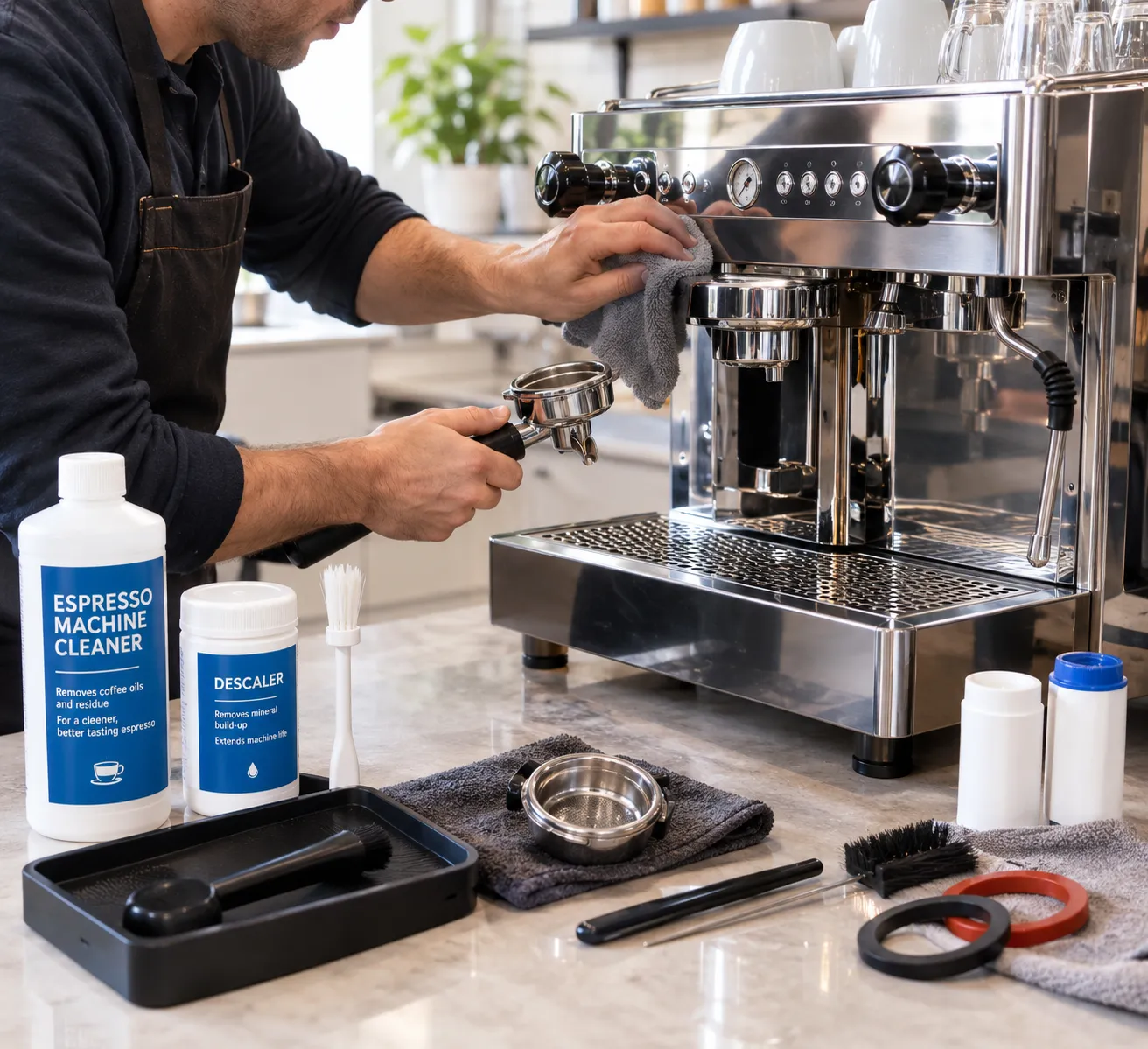
Soak portafilter, filter baskets, and blind basket in a backflushing detergent solution (e.g., Cafiza or Puly Caff) for 15–20 minutes.
If held by a middle screw, remove and clean shower screen with a small brush and warm water.
Wipe group head interior (gasket and metal) with a backflush detergent using blind basket.
Soak steam wand tip in a dedicated steam-wand cleaner (e.g., Urnex Rinza) to dissolve protein.
Replace or rejuvenate water filter/softener cartridge if applicable.
When and How Should You Backflush Your Espresso Machine?
After no more than 50 extractions, you should backflush your espresso machine,
Insert a blind filter basket into the portafilter.
Dose the detergent tablet or powder.
Lock portafilter into group head and run 10-second cycles, pausing between each for drain-down.
Repeat cycle four to six times, then repeat with plain water until no suds appear. Rinse grouphead thoroughly. Make an espresso to absorb any residue and discard.
Home machines benefit from detergent backflushing; commercial units require daily detergent backflushing to sustain consistent group head cleanliness.
What Are the Signs Your Machine Needs Descaling?
Descaling removes mineral scale that insulates heating elements and constricts water flow. Warning signs include:
Sluggish water flow or low steam pressure.
Unusual noises during heating or brewing (crackling or pinging from boiler)
White crusty deposits around group head, boiler fittings, or steam wand.
Altered coffee taste, often metallic or sour.
How Often Should You Replace Cleaning Products Like Cafiza and Puly Caff?
Cleaning agents lose effectiveness over time once opened or exposed to moisture. Replace:
Backflush detergents (Cafiza/Urnex) every 6–12 months.
Steam-wand cleaners (Urnex Rinza) every 12 months.
Descaling solutions according to manufacturer date stamps (typically 1–2 years).
How to Descale Your Espresso Machine: Step-by-Step Guide and Best Products
What Causes Limescale Buildup and How Does It Affect Your Machine?
Hard water rich in calcium and magnesium precipitates minerals under heat, forming adherent scale. Scale reduces thermal conductivity, forces heaters to overwork, and restricts water flow, leading to under-extracted, sour espresso and potential pump strain.
Which Descaling Solutions Are Most Effective?
What Is the Recommended Descaling Frequency Based on Water Hardness?
Soft water (<50 ppm): Every 3–6 months. Usually too soft for most commercial grade espresso machines.
Moderate hard water (50–150 ppm): Every 1–3 months.
Hard water (>150 ppm): Monthly or consider a water filter/softener replacement to reduce scale rate.
Without treatment of moderate to hard water, it is recommended to descale the espresso machine every 3 months. Water treatment is preferred to avoid descale damage to the machine.
How to Safely Perform Descaling Without Damaging Your Machine?
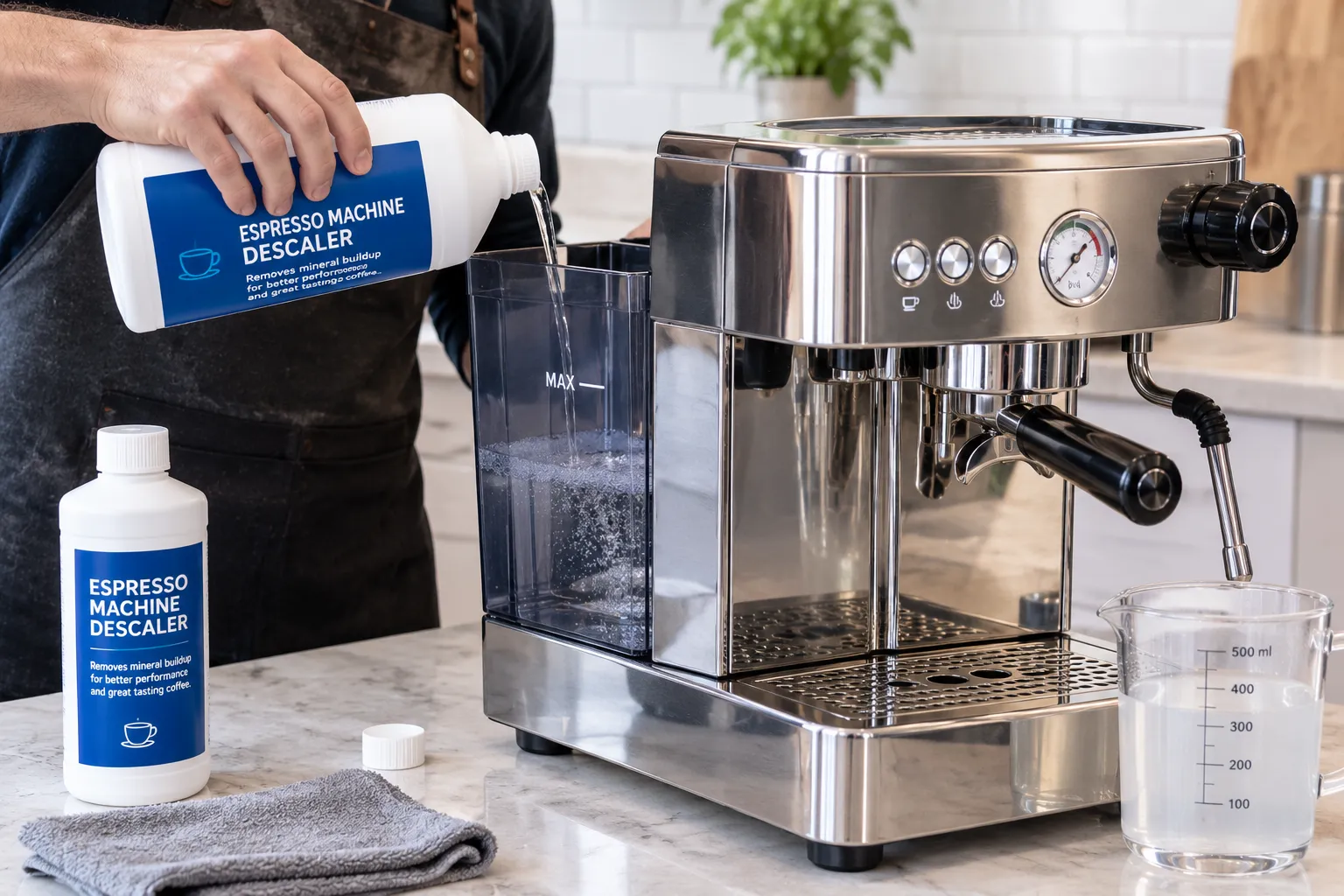
Mix descaling solution per machine manufacturer and descale maker instructions. Please note that many times these instructions will not be the same.
Run half the solution through brew and steam circuits into a container.
Let boiler sit for 15–30 minutes to saturate scale.
Complete solution cycle, then flush with fresh water until no acidity remains.
Purge steam wand by running steam for 30 seconds.
Follow 1st-line’s detailed descaling instructions.
What Are the Benefits of Regular Descaling for Espresso Quality?
Restores optimal water flow for balanced extraction.
Reduces energy consumption by improving heat exchange.
Prolongs pump and heater lifespan by minimizing scale buildup.
Enhances flavor clarity, eliminating metallic off-notes from scale contamination.
What Are the Downsides of Regular Descaling?
Clears scale from seams and joints which turns into a leak.
Strips metal from internal parts.
Heavier wear on internal seals.
Weakens boiler’s structural integrity and welds.
Dissolved limescale can cause blockages to internal pathways and create damage.
How to Replace and Maintain Key Espresso Machine Parts for Longevity
When Should You Replace the Group Head Gasket?
Group gaskets lose elasticity from heat and pressure cycling. Replace when you notice:
Water seepage around portafilter during extraction.
Portafilter creep, where it is pushed out by pressure.
Difficulty engaging or releasing the portafilter.
These signs typically appear after 6–24 months of home use or 3 months commercially.
How to Replace a Group Gasket: Step-by-Step for Popular Brands
Remove portafilter and power off machine.
Pry out the old gasket using a gasket pick or small flat tool.
Clean the gasket bore with a soft brush and warm water and backflush detergent.
Insert the new gasket evenly into the groove with letters facing into grouphead.
Re-engage portafilter and run a water cycle to seat the gasket.
Many brands like La Marzocco and Breville share similar procedures; replacement gaskets from 1st-line.com include model-specific gaskets and tools.
How to Clean and Replace the Shower Screen Properly?
Unscrew group head dispersion screw. If not screw, pry out with flathead screwdriver, which will damage the shower screen.
Scrub screen with a small brush and backflush detergent solution.
Inspect for corrosion; replace if pitted or warped.
Do not reassemble with a mild thread sealant.
What Are the Best Practices for Cleaning and Soaking Portafilters and Baskets?
Soak baskets and portafilter bodies (not plastic, metal, or wood handles) separately in a hot detergent solution for at least 15 minutes, then:
Rinse under high-pressure water.
Dry completely before reassembly to avoid corrosion.
Ensure that the handle bolt (between the handle and body) is not in the solution to avoid rust.
How to Maintain and Unclog the Steam Wand Effectively?
Purge immediately before and after each use and:
Soak detachable tips in a steam-wand cleaning solution for 10–15 minutes.
Use a fine wire, paper clip end, or dedicated wand brush to clear tip holes.
Rinse and purge again to ensure no residual chemicals remain.
When and How to Replace Your Direct Plumbed Espresso Machine Water Filter?
Change inline or cartridge filters every 4-6 months or per water hardness:
Turn off water supply and relieve pressure.
Swap filter cartridge and purge system until water runs clear.
Monitor TDS (total dissolved solids), chlorimides and chlorides, to gauge filter efficacy.
What Are the Best Espresso Machine Cleaning Products and How to Use Them?
How Do Cafiza and Urnex Compare for Backflushing and Soaking?
What Cleaning Powders, Tablets, and Solutions Are Recommended?
Puly Caff Backflushing Detergent for soaking baskets and group heads.
Dusty Caff Backflushing Detergent for soaking baskets and group heads.
Puly Cleaner Powder for descaling.
Cafiza Espresso Machine Cleaning Powder for soaking baskets and group heads.
Puly Milk Cleaner for protein residue removal from wands.
Urnex Rinza Steam Wand Cleaner for protein residue removal from wands.
How to Choose the Right Blind Filter Basket for Effective Backflushing?
Blind baskets seal the group head to redirect water flow through internal channels. Select one matching portafilter brand and diameter. A snug fit prevents detergent leakage and ensures full circuit cleaning. However, the portafilter wiggle with a blind filter and detergent can clean the gasket.
What Are Safe and Effective Steam Wand Cleaning Solutions?
Steam wands benefit from plant-based, non-caustic cleaners like Puly Milk Cleaner that dissolve milk solids without attacking rubber seals or paint finishes. Avoid acidic mixtures that can damage internal valves.
Where to Buy High-Quality Replacement Parts and Cleaning Supplies?
For genuine group gaskets, shower screens, portafilter baskets, and industry-trusted cleaners, 1st-line.com offers some model-specific kits, free online technical support pages, and fast turnaround to streamline maintenance at home or in commercial settings.
How to Troubleshoot Common Espresso Machine Issues Related to Parts and Cleaning?
Why Is My Espresso Machine Leaking from the Group Head?
Leaking often indicates a worn group gasket, an overfilled portafilter, or debris on the gasket surface. Inspect and replace gaskets, ensure proper portafilter insertion, and clean debris from the gasket groove.
How to Diagnose and Fix a Clogged Portafilter Basket?
A clogged portafilter basket causes uneven flow and channeling. Remove and soak the basket in a backflush detergent, then carefully clear each hole with a fine wire or needle (may break or disrupt hole size). Rinse thoroughly before reinstalling to restore uniform water distribution.
What to Do When Your Steam Wand Produces No Steam?
No steam usually stems from a blocked tip or low boiler pressure. Purge and soak the wand tip in a steam-wand cleaner, clear orifices with a dedicated needle or paper clip, then verify boiler pressure is within the manufacturer-specified range.
How to Improve Poor Espresso Extraction Through Maintenance?
Under-extraction can result from scale buildup, oil-clogged screens, or worn gaskets. Follow a combined regimen of descaling (based on water hardness), backflushing, and part replacement—focusing on group head components—to restore consistent pressure and temperature for balanced flavor.
When to Seek Professional Repair vs. DIY Maintenance?
DIY covers routine cleaning, gasket and screen replacement, backflushing, and descaling. Professional service is advisable for pump replacements, electronic faults, or boiler repairs beyond user-level disassembly.
What Are the Recommended Maintenance Schedules for Home and Commercial Espresso Machines?
What Daily, Weekly, and Monthly Tasks Should Home Baristas Follow?
How Do Commercial Cleaning Schedules Differ from Home Use?
Commercial units handle higher volumes and require:
Daily detergent backflush to prevent heavy oil buildup (usually every 50 shots).
Bi-weekly steam wand deep clean to manage constant milk usage.
Descaling based on water hardness to maintain uptime.
How Often Should Group Gaskets and Shower Screens Be Replaced Commercially?
In high-traffic settings, replace:
Group gaskets every 2–3 months.
Shower screens every 6 months or sooner if pitting appears.
What Preventative Maintenance Tips Extend Machine Lifespan?
Use filtered/softened water to reduce scale rate.
Maintain logs of cleaning and part replacements.
Calibrate brew pressure and temperature periodically.
Inspect hoses and fittings for signs of wear or leakage.
How to Track and Log Your Espresso Machine Maintenance?
Keep a simple maintenance journal—digital or printed—with dates for:
Cleaning routines (daily, weekly).
Backflush and descaling cycles.
Part replacements with serial numbers.
Proper maintenance rhythms and part care form the backbone of dependable espresso performance. By following the routines, using the right products, and replacing parts at recommended intervals, home baristas and commercial operators alike can preserve machine health and coffee quality for years to come.
Maintaining an espresso machine is both a technical art and a preventative practice that ensures flavor fidelity and equipment longevity. With clear understanding of each component and disciplined cleaning routines, you’ll avoid common pitfalls of scale, oil buildup, and seal degradation. Embrace these guidelines, leverage model-specific kits and cleaning supplies from 1st-line.com, and enjoy reliable, barista-quality espresso at home or in any professional setting. Proper care today translates to fewer repairs, consistent extraction, and a more rewarding coffee experience every day.