
VBM dual boiler espresso machines deliver commercial-grade temperature stability and simultaneous brewing and steaming, transforming home or professional espresso into a precision craft. In this guide, you’ll discover how VBM’s dual boiler system works, compare the Domobar Super Digital and Junior models, explore workflow-boosting features, master maintenance and troubleshooting, refine extraction and frothing techniques, learn about VBM’s storied heritage, and pinpoint where to buy and what to expect. Whether you’re a seasoned home barista or professional barista upgrading your setup, this article maps every key aspect of VBM dual boiler technology, benefits, reviews, and purchase guidance.
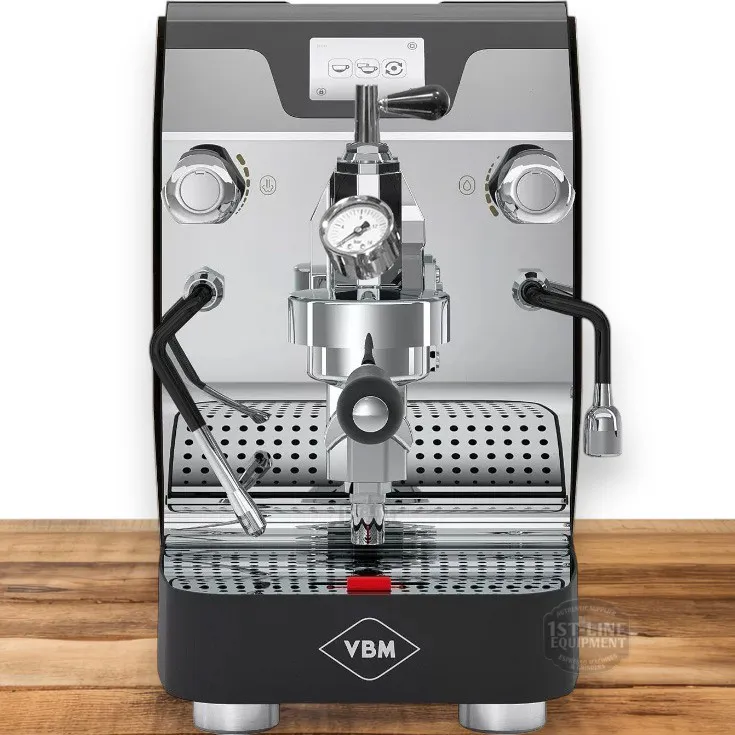
VBM Super Electronic DUAL PROFILER Dual Boiler Espresso Machine with Flow Control
What Are VBM Dual Boiler Espresso Machines and How Do They Work?
A dual boiler espresso machine integrates two independent boilers—one dedicated to brewing and one to steaming—so that baristas can pull shots at precise temperatures while steaming milk without delay. VBM’s implementation uses boilers regulated by PID controllers and an E61 grouphead, enabling thermal stability and mechanical pre-infusion to optimize extraction. For example, the Domobar Super Digital can hold brew water at 92 °C while its steam boiler hovers at 128 °C, ensuring repeatable shot quality and rapid workflow.(External factors may influence stability.)
What Is a Dual Boiler Espresso Machine?
A dual boiler espresso machine features two separate heating chambers that independently maintain brewing and steaming temperatures to prevent heat fluctuation. This design mechanism ensures that pulling a shot does not cool the steam wand or vice versa, and baristas experience consistent extraction even during consecutive beverages.
How Does VBM’s Dual Boiler System Enhance Brewing and Steaming?
VBM’s dual boiler system uses insulated boilers paired with a rotary gear pump to sustain constant pressure and temperature. This approach minimizes recovery time between shots and steams, enabling simultaneous operation that speeds service and reduces wait times for milk-based drinks while upholding shot consistency.
Dual Boiler Systems and Thermal Stability
Studies have shown that dual boiler systems provide superior thermal stability compared to single boiler machines, allowing for simultaneous brewing and steaming without significant temperature fluctuations. This design contributes to more consistent extraction and improved workflow.
This citation supports the article’s discussion of dual boiler systems and their benefits in terms of temperature stability and workflow efficiency.
What Role Does the E61 Grouphead Play in VBM Machines?
The E61 grouphead in VBM machines employs thermosiphonic circulation to preheat coffee pistons and promote mechanical pre-infusion at low pressure before full extraction. By stabilizing brew temperature and evenly soaking grounds, the E61 grouphead enhances crema quality and flavor yield across varying grind sizes and doses.
How Does PID Temperature Control Improve Espresso Consistency?
PID (Proportional-Integral-Derivative) controllers continuously monitor boiler temperatures and adjust heating elements in milliseconds. On VBM machines, this precise regulation lessens temperature drift, ensuring each espresso shot extracts at the optimal temperature for balanced acidity, sweetness, and body—even after rapid successive pulls.
The Science of Espresso Extraction
Research indicates that precise temperature control is crucial for optimal espresso extraction, influencing the balance of acidity, sweetness, and body in the final shot. Maintaining a stable temperature, often achieved through PID controllers, ensures consistent flavor profiles.
This research supports the article’s claims about the importance of temperature control in espresso machines and how it affects the quality of the espresso.
Which Pro-grade VBM Dual Boiler and HX Models Are Best for Home Baristas?
VBM offers two flagship dual boiler machines—the Domobar Super Digital and the Domobar Super Electronic Digital Dual Profiler. The Super Digital provides advanced pressure profiling and a touchscreen display for programmable extraction. The VBM Junior is a Heat Exchange (HX) espresso machine with PID and focuses on compact size for kitchens with limited counter space.
Before exploring each model, here is a concise comparison of their core specifications and advantages.
In practice, the Super Digital suits aficionados demanding programmable pressure profiles, while the Junior serves enthusiasts seeking true basic performance in a smaller footprint.
What Features Define the VBM Domobar Super Digital?
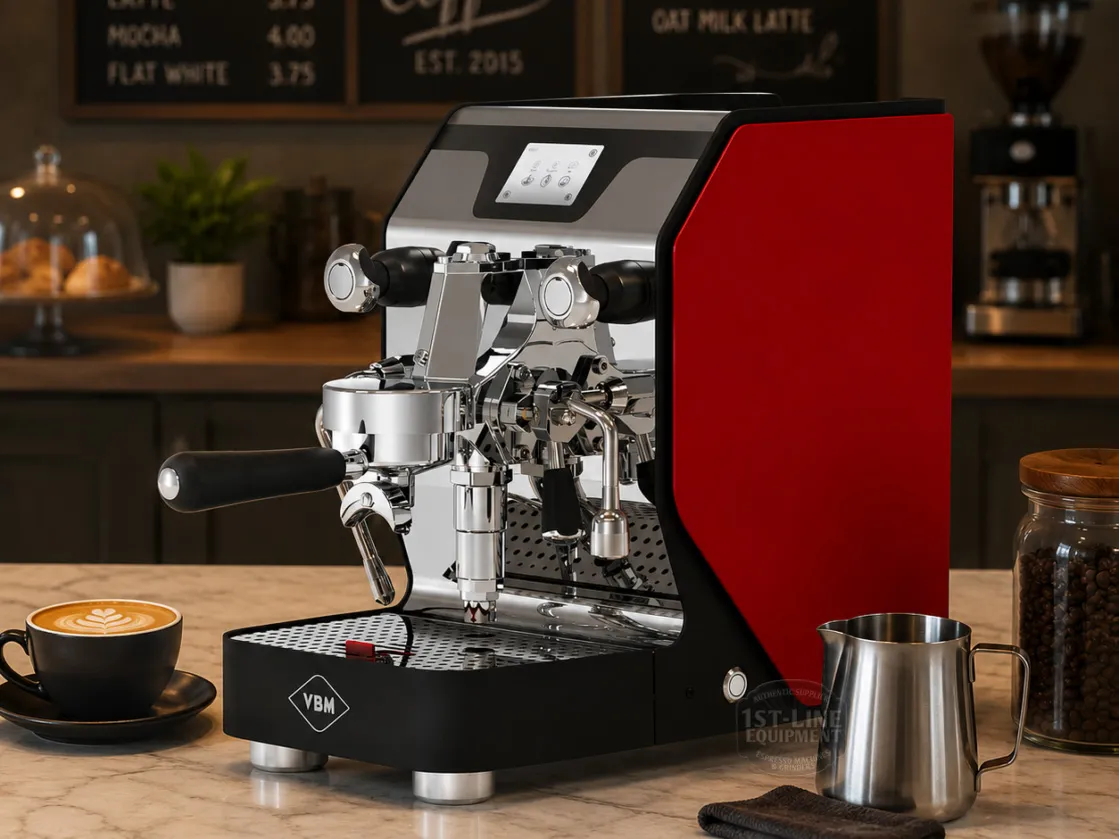
The Domobar Super Digital integrates a 3.5-inch touchscreen, gear-driven rotary pump, two PID-controlled boilers (0.5 L brew, 2 L steam), and full pressure profiling up to 11 bar. These components work in tandem to let baristas program multiple extraction stages, adjusting pre-infusion, ramp-up, and stabilization phases for tailored flavor expression.
How Does the VBM Domobar Junior Compare in Size and Performance?
The Domobar Junior retains HX architecture in a 0.45 m² footprint that fits compact kitchens. Although it lacks pump pressure profiling, its independent PID-regulated boiler deliver slightly less temperature consistency and simultaneous brewing and steaming as larger VBM machines, making it ideal for tight spaces without sacrificing shot quality too much.
What Are the Differences Between Domobar Super Digital and Electronic Models?
The Super Digital and Super Electronic feature a touchscreen interface for multi-step pressure profiling, the Super Electronic has dosage programming. Both share PID regulation and E61 groupheads and the Electronic automates espresso extraction through dosage programming allowing baristas to focus on milk preparation.
How Do VBM Models Compare to Competitors Like Lelit Bianca and Profitec Pro 700?
VBM dual boiler machines stand out through their durable copper boilers, classic true E61 groupheads, and proven rotary gear pumps, whereas some competitors use thin stainless steel boilers or vibration pumps. A VBM Domobar Super Digital often offers more intuitive pressure profiling and a more compact footprint compared to bulkier machines, delivering commercial-grade performance tailored for home environments and commercial applications.
What Are the Main Benefits of Using a VBM Dual Boiler Espresso Machine?
VBM dual boiler machines elevate home brewing by combining rapid workflow, unparalleled temperature precision, advanced pressure control, and durable stainless-steel construction—all of which contribute to superior espresso quality and machine longevity.
How Does Simultaneous Brewing and Steaming Improve Workflow?
By dedicating separate boilers to brewing and steaming, VBM machines enable baristas to prepare milk-based drinks without interrupting shot pulls or waiting for boiler recovery. This parallel operation reduces cycle time by up to 50 %, supporting café-level efficiency in a home or small-office setting.
Why Is Precise Temperature Control Important for Espresso Quality?
Temperature fluctuations of even ±1 °C can alter extraction rates, leading to over- or under-extraction that impacts flavor balance. VBM’s PID controllers help maintain stable brew water temperature within ±0.5 °C, ensuring every shot hits the aroma, acidity, and sweetness targets consistently.
How Does Pressure Profiling Enhance Flavor Extraction?
Pressure profiling allows baristas to modulate pump pressure through pre-infusion and ramp-up phases, extracting different compounds at optimized rates. This feature in the Domobar Super Digital unlocks nuanced flavor notes, from bright fruit tones at lower pressures to richer body at higher pressures.
What Makes VBM’s Build Quality Stand Out?
VBM constructs its boilers, frames, and panels from marine-grade stainless steel, providing superior corrosion resistance and heat retention. Heavy-duty brass E61 groupheads and commercial-style rotary pumps further reinforce reliability, ensuring decades of consistent performance under regular use.
How Do You Maintain and Troubleshoot VBM Dual Boiler Espresso Machines?
Proper care—including regular cleaning, descaling, and mechanical maintenance—preserves boiler health, pump integrity, and grouphead function. VBM machines respond well to routine service, which prolongs longevity and prevents performance degradation.
What Are the Best Practices for Cleaning and Descaling VBM Machines?
Run a citric acid descaling solution through each boiler every 1–12 months depending upon water hardness.
Rinse thoroughly with fresh water after the descaling cycle.
Wipe down external surfaces and steam wands after each use to prevent milk residue buildup.
Regular descaling prevents mineral deposits that can compromise heating elements and reduce steam power, so following this schedule keeps your machine operating at peak efficiency.
How Do You Backflush and Care for the E61 Grouphead?
Backflushing involves:
Locking a blind filter into the portafilter.
Adding a small amount of espresso-safe detergent.
Running multiple flush cycles to remove coffee oils.
Afterward, rinse with clean water and lubricate the E61 lever mechanism monthly. This routine preserves pre-infusion performance and grouphead sealing. Review backflushing details here.
What Are Common Issues and How Can You Troubleshoot Them?
Typical challenges include low pressure (often remedied by pump lubrication or descaling), erratic temperature readings (resolved by cleaning the PID sensor), and steam wand tip clogging (cleared by soaking in a milk-cleaner solution). Identifying symptoms and following straightforward mechanical checks usually restores normal operation within minutes.
Which Accessories Enhance VBM Espresso Machine Performance?
Introducing a precision tamper, conical burr grinder, and in-line water filter can significantly improve shot consistency, grind uniformity, and boiler longevity.
How Can You Make the Perfect Espresso with a VBM Dual Boiler Machine?
Achieving barista-level shots involves dialing in dose, consistent grind size, temperature, pressure profile, and milk texture using the machine’s advanced controls.
What Are Tips for Optimal Espresso Extraction Using VBM Machines?
Start with a dose of 18 g finely ground coffee, set brew temperature to 92 °C, and use a 23–27 s extraction window. Adjust grind size until shot volume and flow rate hit a desired ration (of 1:2 or 1:1.5) then refine pressure profiling (if available) to emphasize desired acidity or sweetness.
How Do You Achieve Ideal Milk Frothing with Dual Boiler Control?
Use the steam boiler at 128 °C, submerging the steam wand tip just below milk surface. Stretch milk for 2–3 s, then texturize by lowering the pitcher to create glossy microfoam. The dedicated steam boiler delivers consistent steam pressure, enabling silky-smooth milk every time.
How Does Pressure Profiling Affect Different Coffee Roasts?
Pressure profiling at 4 bar pre-infusion can gently bloom light roasts to highlight floral and fruity notes, while ramping to 9 bar mid-extraction enhances sweetness in medium roasts. Darker blends can benefit from a flatter 9–10 bar profile to extract rich caramelized sugars without over-extraction.
Why Choose VBM? Brand Heritage, Innovation, and User Experience
VBM (Vibiemme) has shaped espresso culture since 1976, pioneering durable E61 machines and advancing dual boiler designs that blend time-tested technology with modern controls.
What Is the History Behind VBM and Its Espresso Machines?
Founded by Carlo Ernesto Valente in Italy, VBM began by perfecting the E61 grouphead design under license. Over decades, the brand evolved from workshop prototypes to world-renowned machines recognized for craftsmanship and thermal stability in both domestic and light commercial settings.
How Has VBM Innovated with the E61 Grouphead and Dual Boiler Technology?
VBM introduced PID regulation to dual boiler systems in the late 2000s and later added pressure profiling to their models. These innovations married mechanical pre-infusion with digital precision, allowing baristas unprecedented control over extraction variables.
What Do Users and Experts Say About VBM Espresso Machines?
Coffee professionals praise VBM for its reliable thermal performance, robust build, and tactile grouphead feel. Enthusiasts highlight the Domobar Super Digital’s programmable curves as “a game-changer for dialing in single-origin beans,” underscoring the brand’s reputation for both tradition and technical leadership.
Where to Buy VBM Dual Boiler Espresso Machines and What to Expect?
Acquiring a genuine VBM machine involves understanding price tiers, authorized channels, and support provisions to protect your investment and ensure authentic quality.
What Are the Price Ranges for VBM Domobar Super and Junior Models? (Subject to Change)
Domobar Super Digital: $3,299–$3,599
Domobar Super Electronic: $3,599
Domobar Junior: $1,799–$2,490
Price variations reflect configuration options such as reservoir versus plumb-in compatibility and pressure profiling capabilities.
Where Can You Purchase Authentic VBM Espresso Machines?
Authorized dealers include specialty espresso retailers and online coffee equipment stores. Purchasing through vetted resellers guarantees factory-warranty coverage and access to genuine spare parts, preserving machine performance and value. VBM’s primary dealer is 1st-line.com.
What Warranty and Support Options Does VBM Offer?
VBM backs its machines with a two-year warranty limited to manufacturer’s defect on boilers and internal components, plus lifetime support for E61 groupheads. Registered owners receive priority technical assistance, access to service manuals, and spare parts for ongoing maintenance.
VBM dual boiler machines combine Italian heritage with cutting-edge controls to deliver unmatched consistency, workflow efficiency, and build quality for home and cafe baristas seeking professional-grade espresso. By understanding the mechanics, comparing models, mastering maintenance, refining extraction techniques, and leveraging VBM’s brand support, you’re equipped to elevate every cup. Explore VBM’s Domobar series today to experience the precision and reliability that sets these machines apart.